Saint Bartholomew Statue – A Striking Renaissance Sculpture in Duomo Milan

A saint holding his own skin is not something you forget easily.

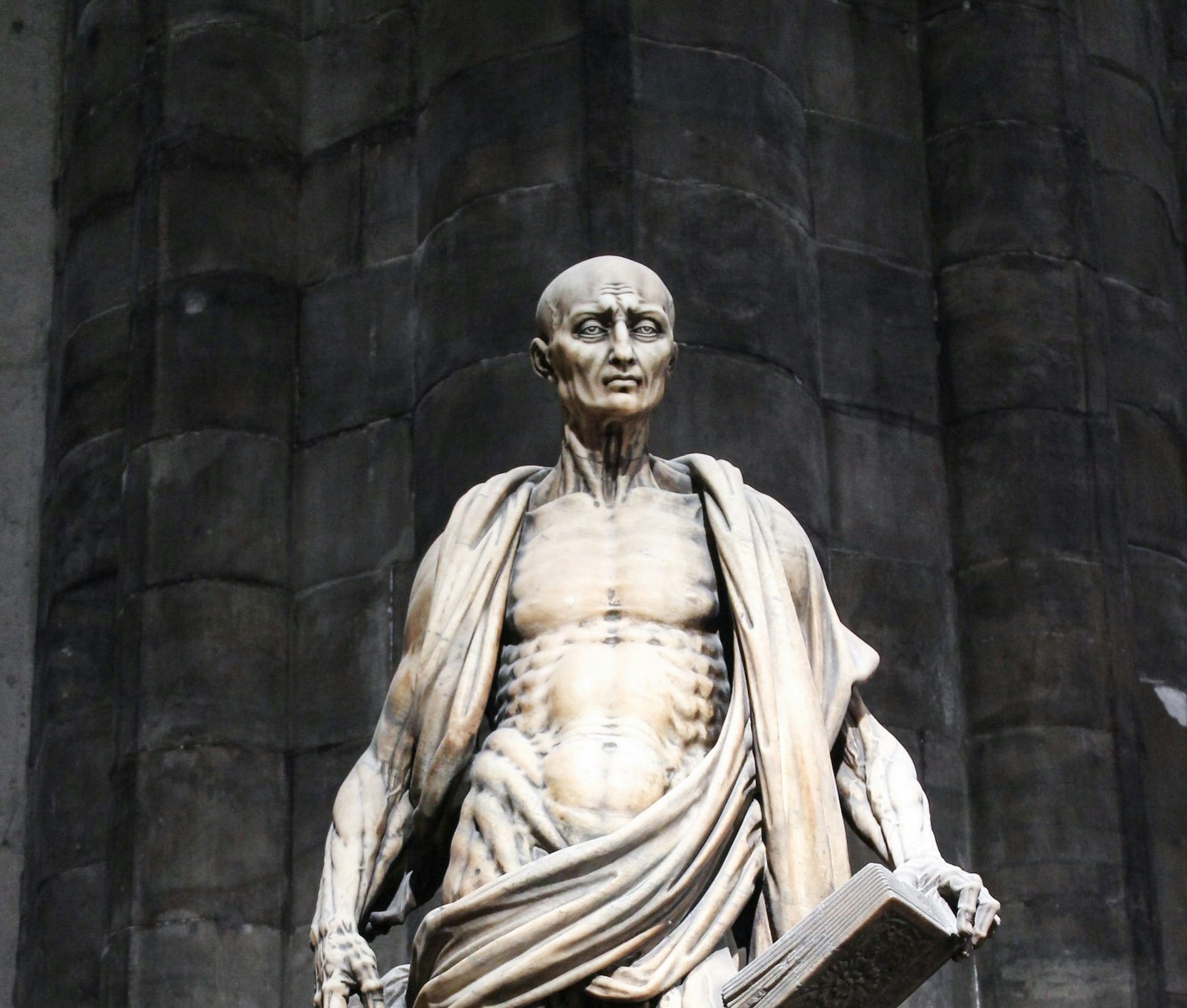
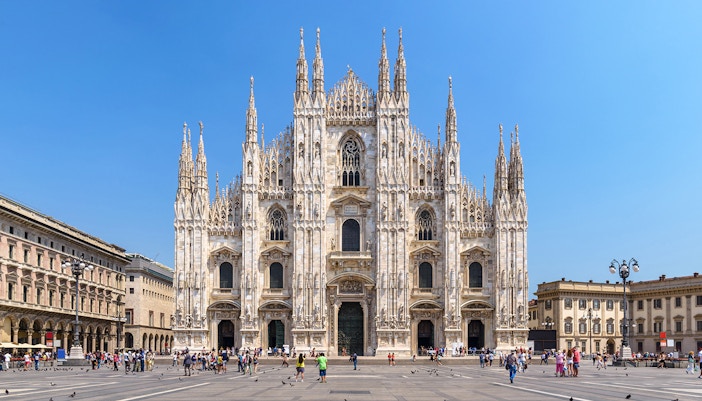
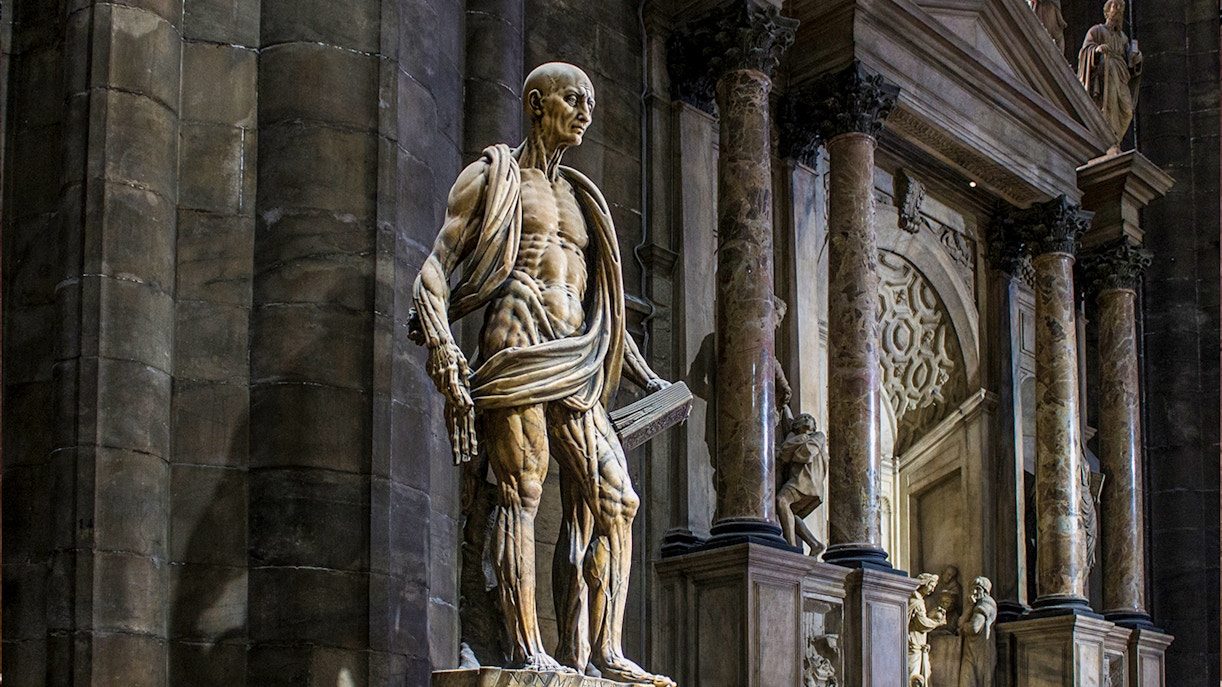
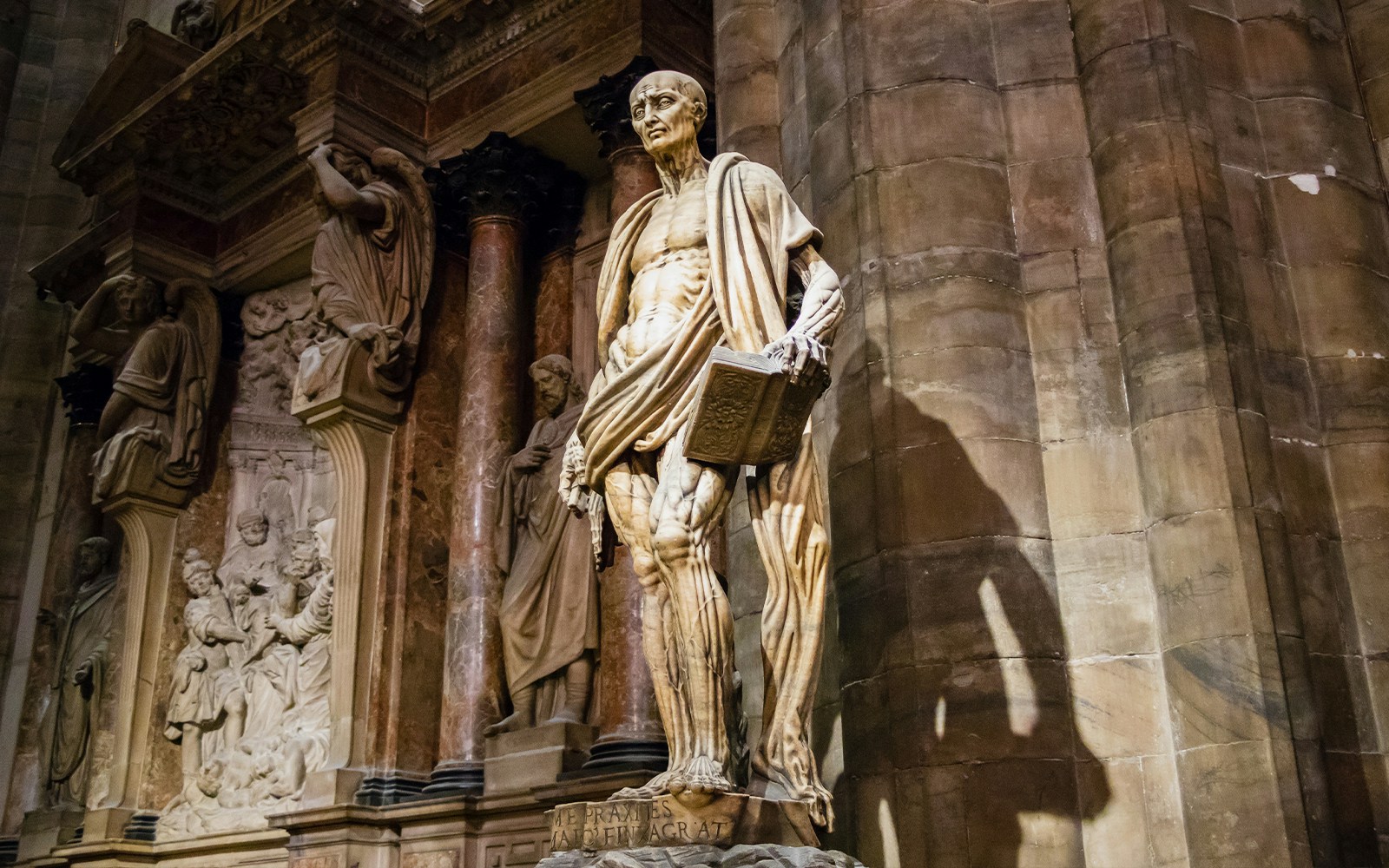
The Saint Bartholomew statue is one of the most unsettling and memorable sculptures inside Duomo Milan. Carved in marble in the 16th century, it shows the apostle after his martyrdom, draped in his flayed skin like a cloak. The sculpture blends intense realism with deep religious symbolism, making it a powerful Renaissance work. You’ll find it inside Duomo Milan, and access is included with standard Duomo Milan tickets, no separate ticket required.

Where is the Saint Bartholomew statue located?

The Saint Bartholomew statue is displayed inside duomo milan, along one of the cathedral’s interior aisles, surrounded by other Renaissance and late Gothic sculptures. Carved by Marco d’Agrate in the 16th century, it stands at eye level, making its intense anatomical detail impossible to miss.

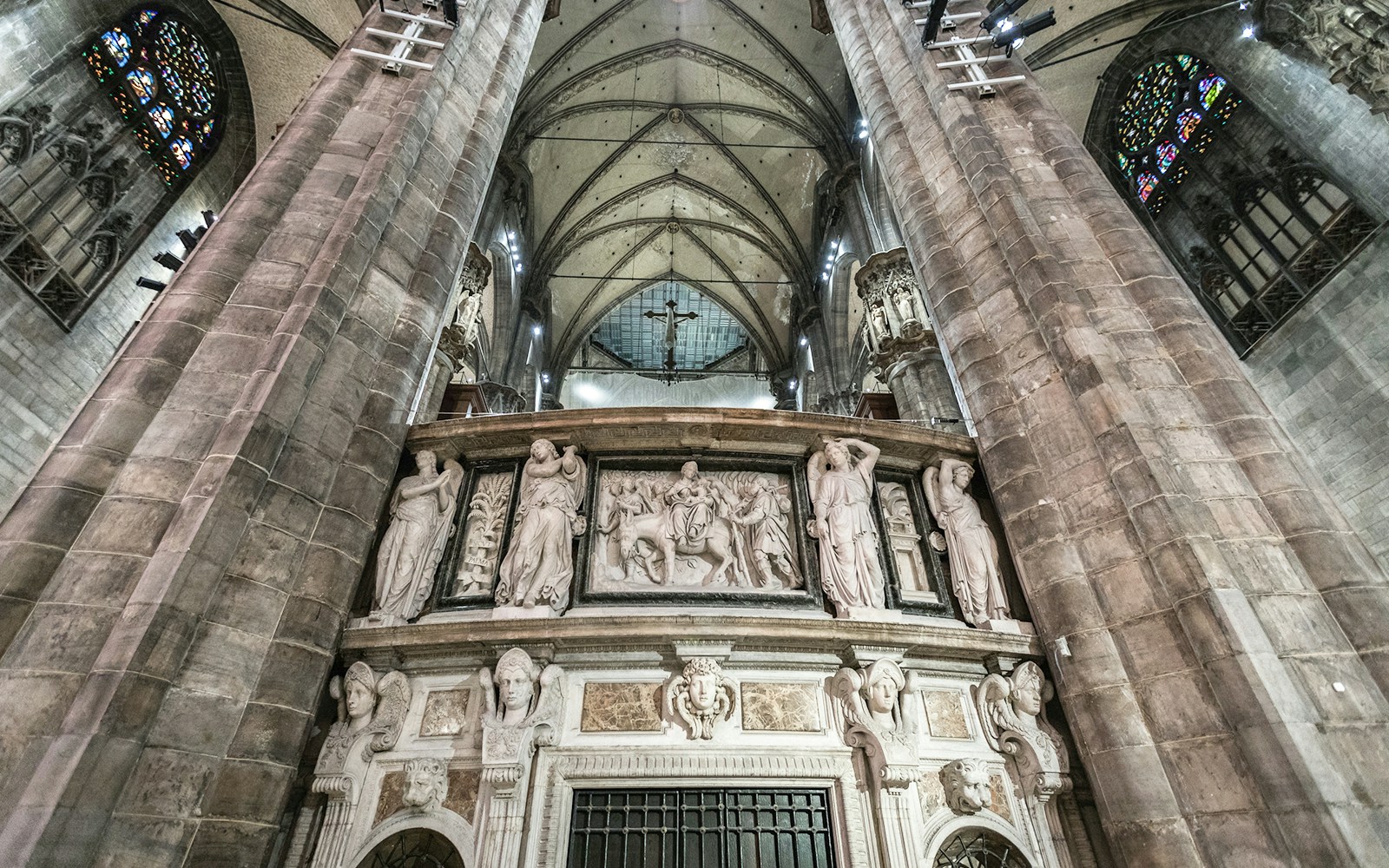
Located within the main body of the cathedral, the statue is easy to spot during a self-guided visit and is often pointed out on guided tours of duomo milan. Natural light filtering through the stained-glass windows enhances the marble’s texture, especially the carved folds of the flayed skin.

📍 Visit tip: Weekday afternoons or early evenings are usually quieter, giving you more space to view the statue closely without large tour groups.
Directions to Duomo Milan

How to view it best?

  • Choose a guided visit: A guided tour or audio guide explains the shocking iconography and why this sculpture caused controversy. Without context, many visitors miss its deeper meaning.
  • View it from the front first: The frontal angle reveals the calm expression and upright stance, contrasting with the brutal subject.
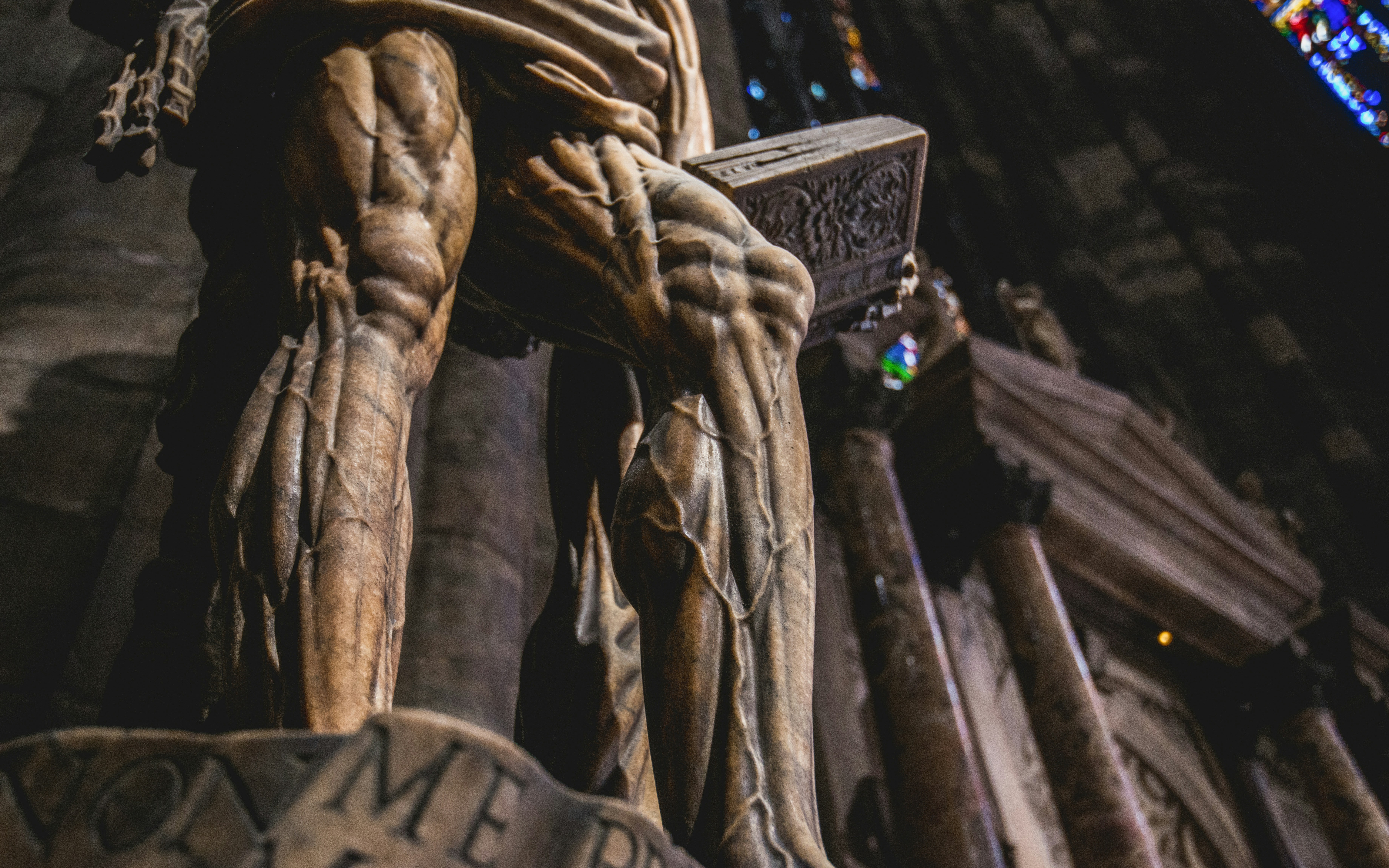
  • Circle the statue slowly: From the sides and back, you’ll notice how the flayed skin hangs naturally, carved with astonishing anatomical detail.
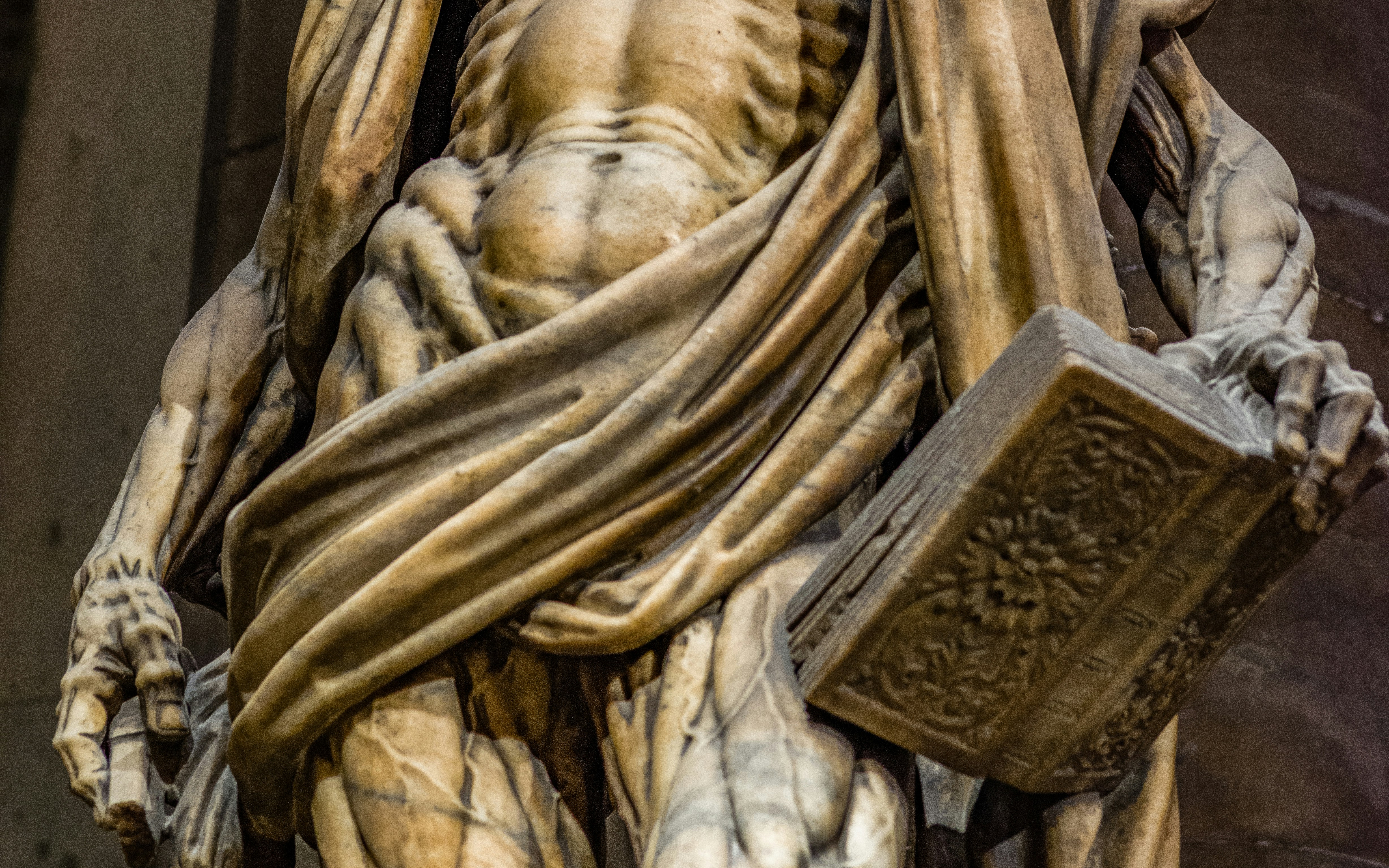
  • Focus on the skin-cloak: Look closely at the folds and texture—it represents both suffering and spiritual transcendence.
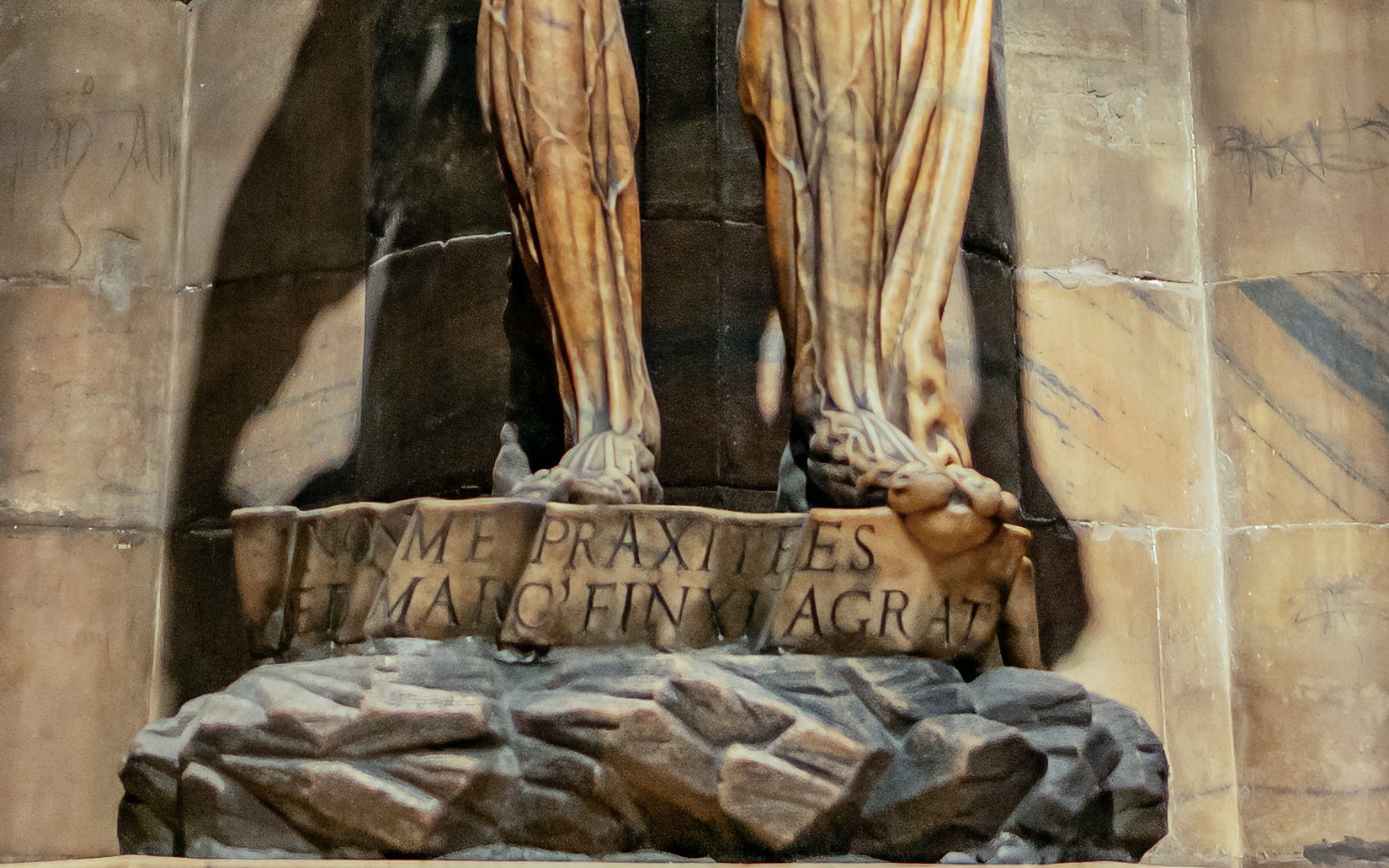
  • Notice the inscription: The base bears the sculptor’s name, a bold move at the time and a clue to its artistic pride.
  • Photography tips: Photography is usually allowed without flash. Step slightly back to capture the full figure and skin drapery clearly.
  • Best time to visit: Late afternoon or early evening is quieter than midday, especially on weekdays.
  • Time needed: Allocate about 10–15 minutes to observe it properly without rushing.

Did you know?

Saint Bartholomew is shown holding his own skin, not clothing making it an extremely rare artistic choice.

The statue was sculpted in 1562 by Marco d’Agrate, a Lombard Renaissance artist.

His muscles are exposed, but the pose remains calm, almost serene.

The skin is carved to look heavier than fabric, enhancing realism.

The statue reflects Renaissance fascination with anatomy and the human body.

The story behind the Saint Bartholomew statue

Few sculptures confront martyrdom as directly as this one. Saint Bartholomew, one of Christ’s twelve apostles, was traditionally believed to have been flayed alive. Instead of showing the act itself, Marco d’Agrate chose its aftermath.

Commissioned in the mid-16th century for duomo milan, the statue reflects the late Renaissance shift toward realism and emotional intensity. Bartholomew stands upright, dignified, and composed, holding the knife of his execution while wearing his own skin like a mantle. The contrast is deliberate to showcase physical suffering versus spiritual strength.

At the time, this anatomical realism was bold and unsettling. Some viewers found it disturbing, while others admired its honesty and technical mastery. The sculptor even signed the work prominently, signaling confidence in its impact.

Today, the statue still provokes strong reactions. It reminds visitors that faith, sacrifice, and art were deeply intertwined in Renaissance Milan, and that religious art was never meant to be comfortable.

Who created the Saint Bartholomew statue?

Statue of St. Bartholomew Flayed Alive inside Duomo Milan Cathedral, Italy.

Marco d’Agrate (active mid-16th century) was an Italian Renaissance sculptor working primarily in Lombardy. Though less famous than Michelangelo, he was deeply influenced by the era’s obsession with anatomy, realism, and expressive human forms.

The Saint Bartholomew statue is his most recognized work and shows his technical ambition clearly. Marco d’Agrate focused on muscular structure, natural posture, and physical truth rather than idealized beauty. His decision to sign the sculpture openly was unusual and suggests pride in both concept and execution.

While his body of work is limited, this sculpture secured his legacy. It stands today as one of the most talked-about pieces inside Duomo Milan.

What makes the Saint Bartholomew statue a masterpiece? See for yourself

Statue of St. Bartholomew Flayed Alive inside Duomo Milan Cathedral, Italy.
Statue of Saint Bartholomew holding a book at Duomo Milan.
Statue of Saint Bartholomew Flayed Alive in Milan Cathedral, Italy.
Statue of St. Bartholomew Flayed Alive inside Duomo Milan Cathedral, Italy.
Statue of Saint Bartholomew Flayed Alive in Milan Cathedral, Italy.
1/6

Full statue view

A full-length view shows Bartholomew standing calmly, his flayed skin draped over his shoulders. The contrast between posture and subject is striking and intentional.

Facial expression close-up

Notice his composed face. There is no agony here. Only quiet acceptance, reinforcing spiritual resilience over physical pain.

Anatomical detail

Zoom in on the exposed muscles. The carving reflects Renaissance anatomical studies and near-scientific precision.

The skin as garment

The skin hangs like heavy fabric. Its weight and folds make the illusion unsettlingly real.

The inscription base

The sculptor’s name is carved clearly, asserting authorship and confidence in a daring artistic choice.

Context within Duomo Milan

Seen among other sculptures, its raw realism stands apart, making it one of the cathedral’s most memorable works.

Frequently asked questions about the Saint Bartholomew statue

Yes. The statue is inside Duomo Milan, and access is included with standard Duomo Milan entry tickets. You don’t need to buy a separate ticket to see it.

More reads

About Duomo Milan

Plan your visit

Guided tours