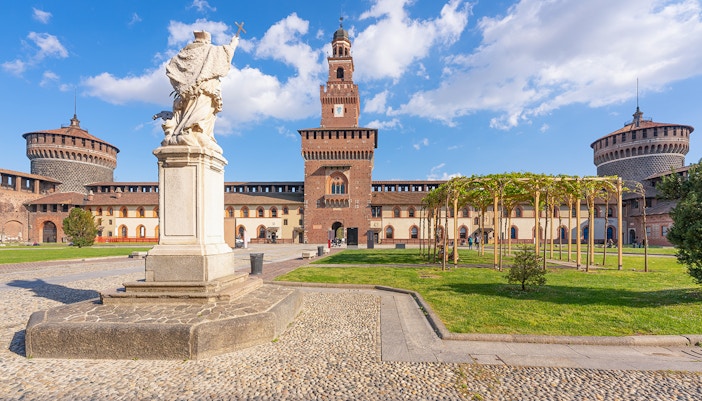
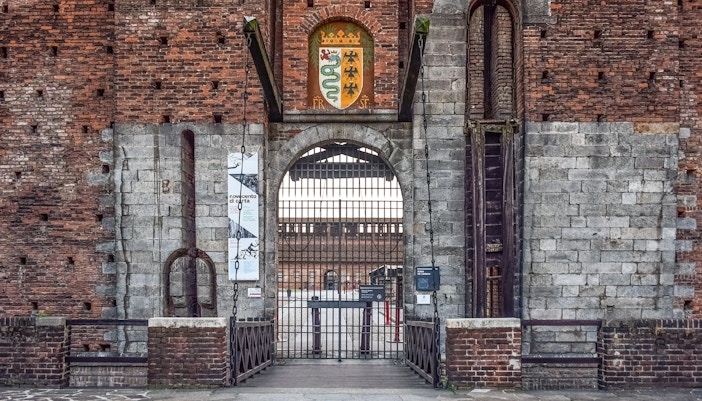
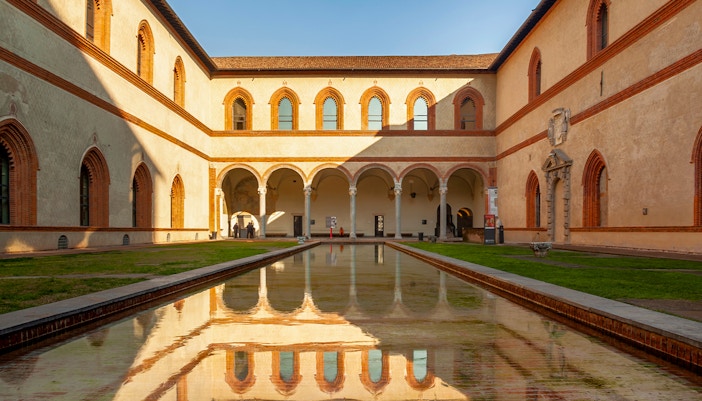
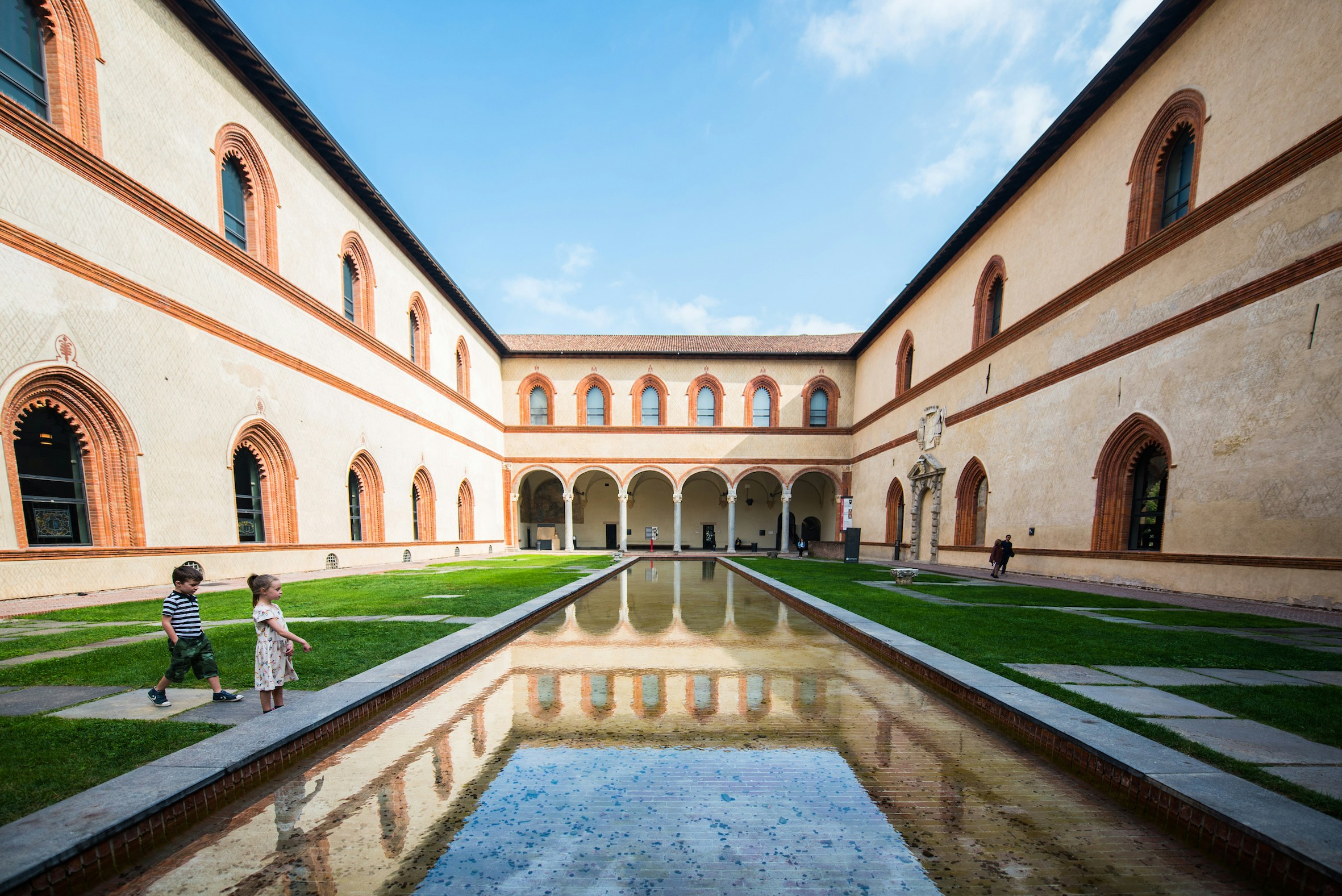
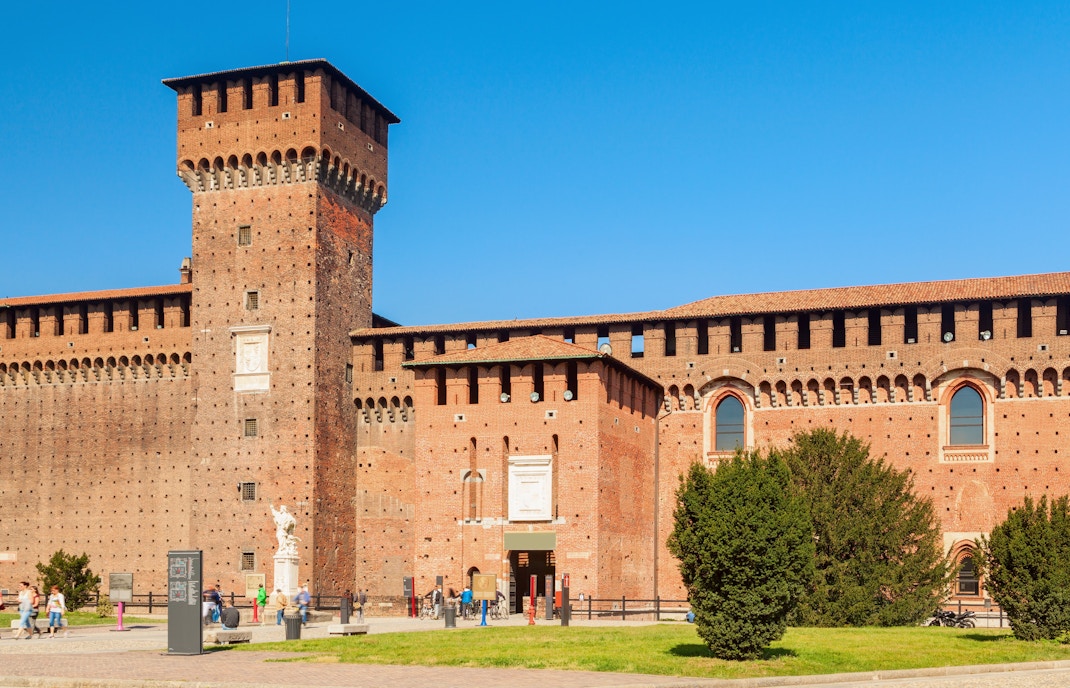
Castello Sforzesco is Milan’s vast medieval fortress and museum complex, best known for Michelangelo’s Pietà Rondanini, Leonardo-linked rooms, and a surprisingly broad mix of civic collections. The free courtyards make it look like a quick stop, but the paid museum route is bigger, denser, and more fragmented than most visitors expect. The real difference between a rushed visit and a rewarding one is knowing which rooms to prioritize before you enter. This guide covers timings, entrances, pacing, and the highlights worth slowing down for.
If you want the short version before you plan, start here.
| Visit type | Route | Duration | Distance | What you get |
|---|---|---|---|---|
Highlights only | Torre del Filarete → Cortile delle Armi → Corte Ducale → Sala delle Asse → exit via Parco Sempione gate | 1.5–2 hrs | ~1 km | Courtyards, Leonardo room, and castle scale; skips upper galleries. Best for basic-ticket visitors short on time. |
Balanced visit | Add the Museo d'Arte Antica and the Pinacoteca del Castello to the highlights route | 2.5–3 hrs | ~1.5 km | Medieval sculpture plus Mantegna/Bellini/Canaletto gallery; best with audio guide. |
Full exploration | All of the above plus the Museo degli Strumenti Musicali, the Egyptian and Archaeological collections, and the Ghirlanda rampart walk | 4–5 hrs | ~2.5 km | Every museum under the standard ticket and the perimeter walk most visitors never find. Stamina becomes a factor after hour three — breaking the visit across two entries is reasonable. |
Castle + Torre Branca guided route | Castle highlights → exit through Parco Sempione → 10-minute park walk → Torre Branca summit | 3.5-4 hrs | ~3 km | Castle interiors plus 108m views with one guide; trades museum depth for park walk and panorama. |
| Ticket type | What's included | Best for | Price range |
|---|---|---|---|
Sforza Castle standard entry | Entry to all castle museums | A full museum visit where you want the freedom to explore independently | From €8 |
Sforza Castle guided tour | Entry to all castle museums + multilingual audio guide | A visit where you want context and route help without joining a fixed guided group | From €20 |
Sforza Castle combo tours | Museum entry with expert insights from a certified guide | Sforza Castle in a curated route with a seasoned guide who sheds context along the way | From €22 |
Sforza Castle special access | Multi-museum access that includes Castello Sforzesco, Pinacoteca di Brera, and a panoramic bus tour | A Milan museum-heavy itinerary where you’re pairing the castle with other civic museums over a short stay | From €40 |
Access to the castle's ramparts and a guided climb to Torre Branca in Parco Sempione | Explorers seeking to unlock niche areas that are less tourist-heavy | From €42 |
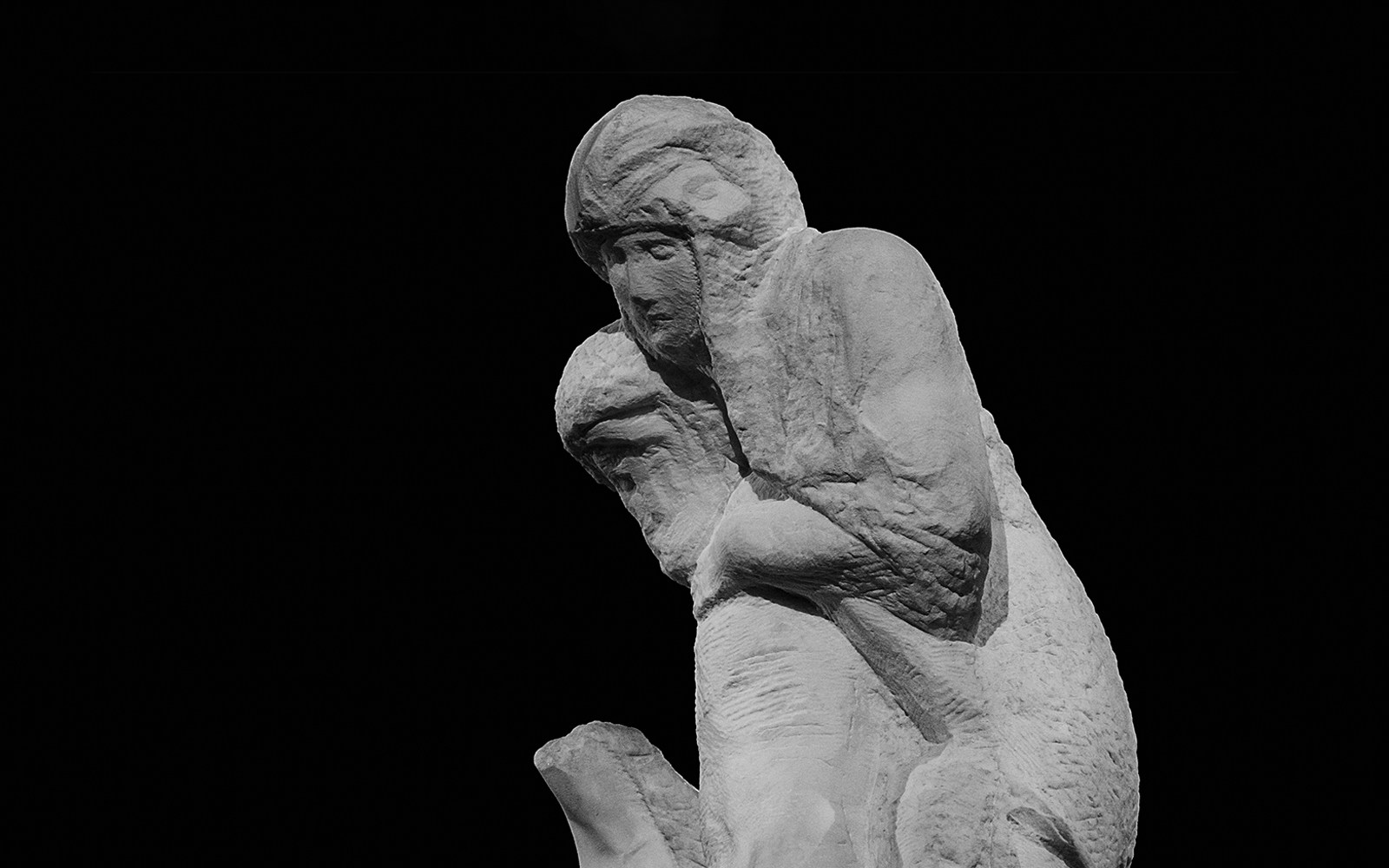
Artist: Michelangelo
Michelangelo worked on Pietà Rondanini until the end of his life, and that unfinished quality is exactly what gives it its pull. It feels less polished and far more intimate than visitors expect from a final masterpiece. While focusing on the rough surface, don't miss how radically vertical and fragile the figures feel from a slight side angle.
Where to find it: In the Pietà Rondanini Museum, housed in the former hospital hall within the castle museums.
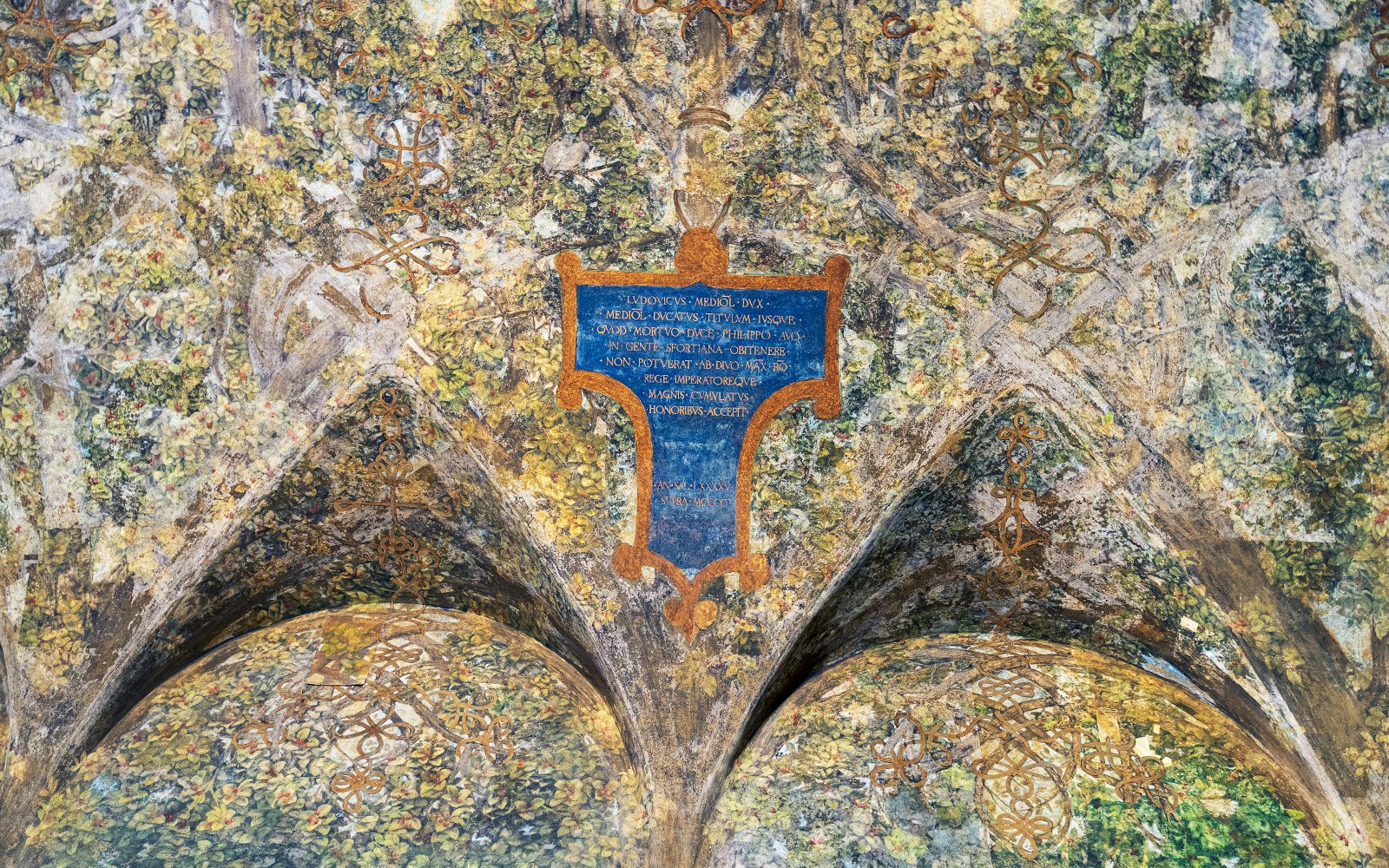
Artist: Leonardo da Vinci
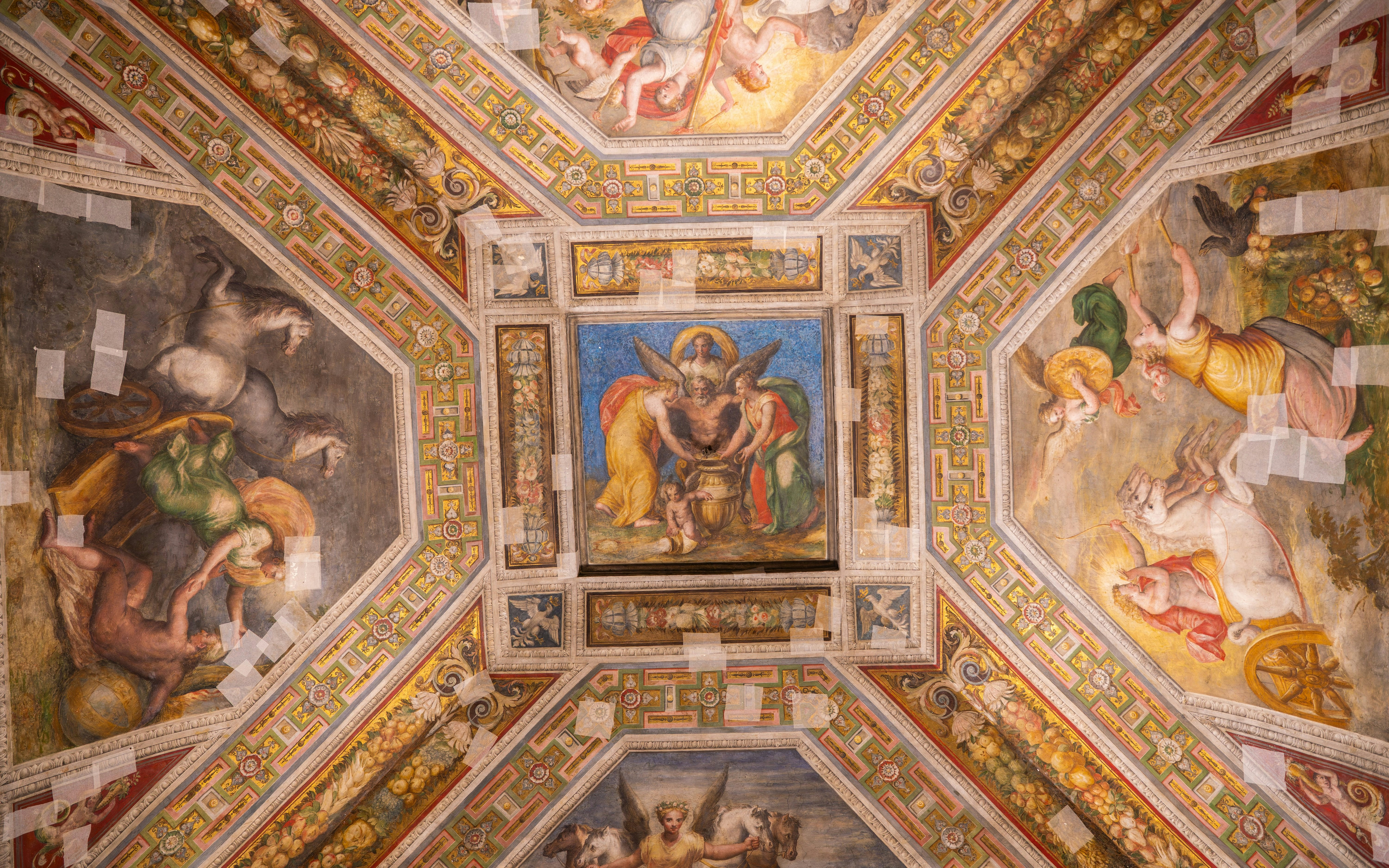
This is one of the strongest Leonardo connections in Milan after The Last Supper — a room transformed into a canopy of branches, knots, and illusionistic plant forms. The ceiling pulls your eye up immediately, but most visitors rush the lower wall fragments and restoration details that explain how much of Leonardo’s original idea survives. Timed access matters here more than at almost any other room in the castle.
Where to find it: In the Sala delle Asse / timed-access Leonardo room within the castle museum route. Currently treat it as closed unless a special timed restoration visit is officially listed.
Collection: Lombard and Italian painting, 15th–18th centuries
The Pinacoteca rewards slow looking more than checklist behavior. You’ll see works tied to Lombard painting schools and artists such as Luini, Foppa, Bramantino, and Mantegna, but the real value is seeing them in a quieter, less overrun setting than Milan’s biggest headline museums.
Where to find it: On the first floor of the west wing, signed as the Pinacoteca del Castello.
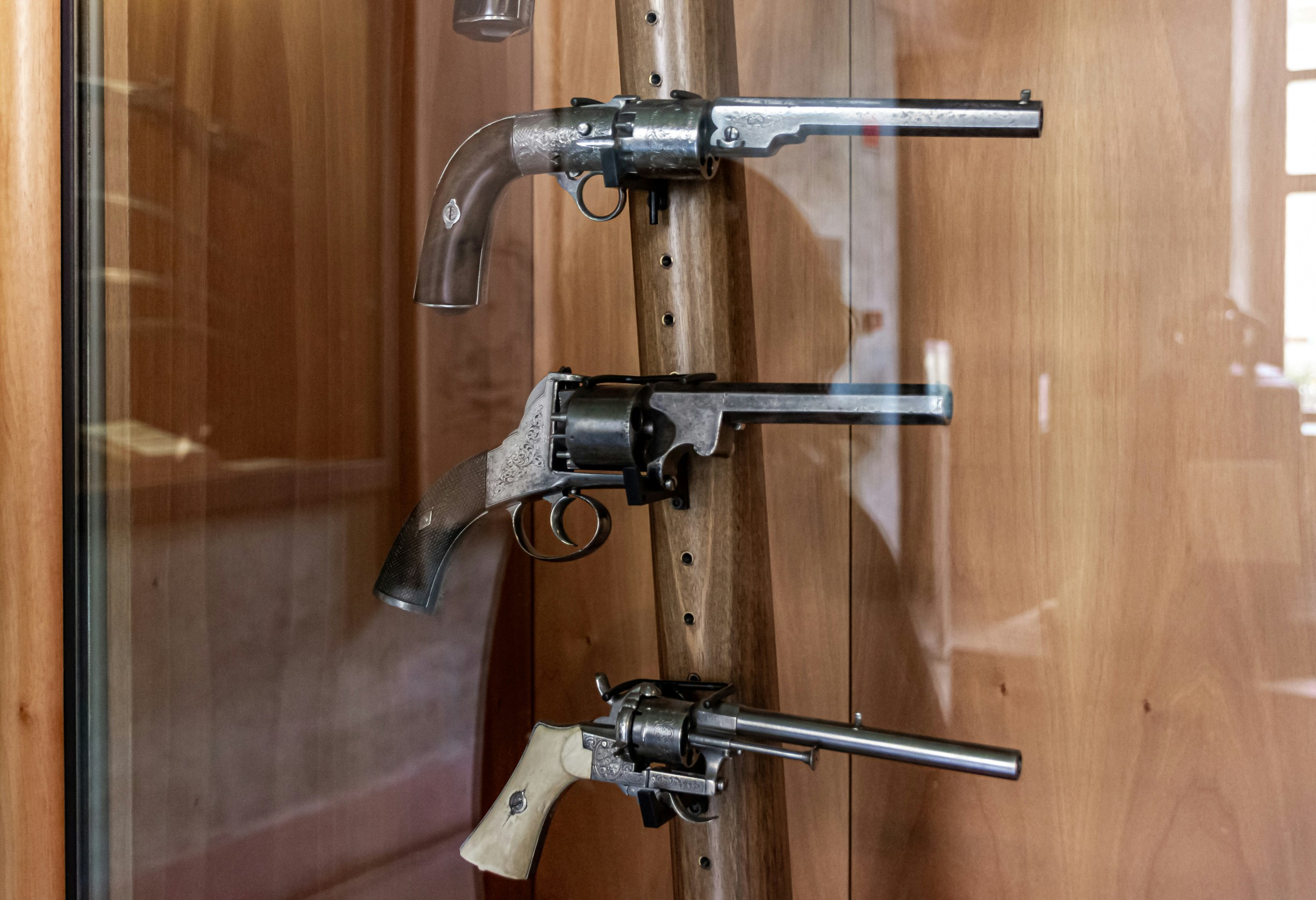
Collection: Medieval and Renaissance sculpture, arms, armor, and tapestries
If you want the castle to make sense as more than an art stop, this is the section that does it. The armor, sculpture, and military objects bring the Sforza-era setting back into focus, and the halls are often less crowded than the star rooms. The collection explains power, ceremony, and warfare together.
Where to find it: In the Museum of Ancient Art galleries on the main museum route.
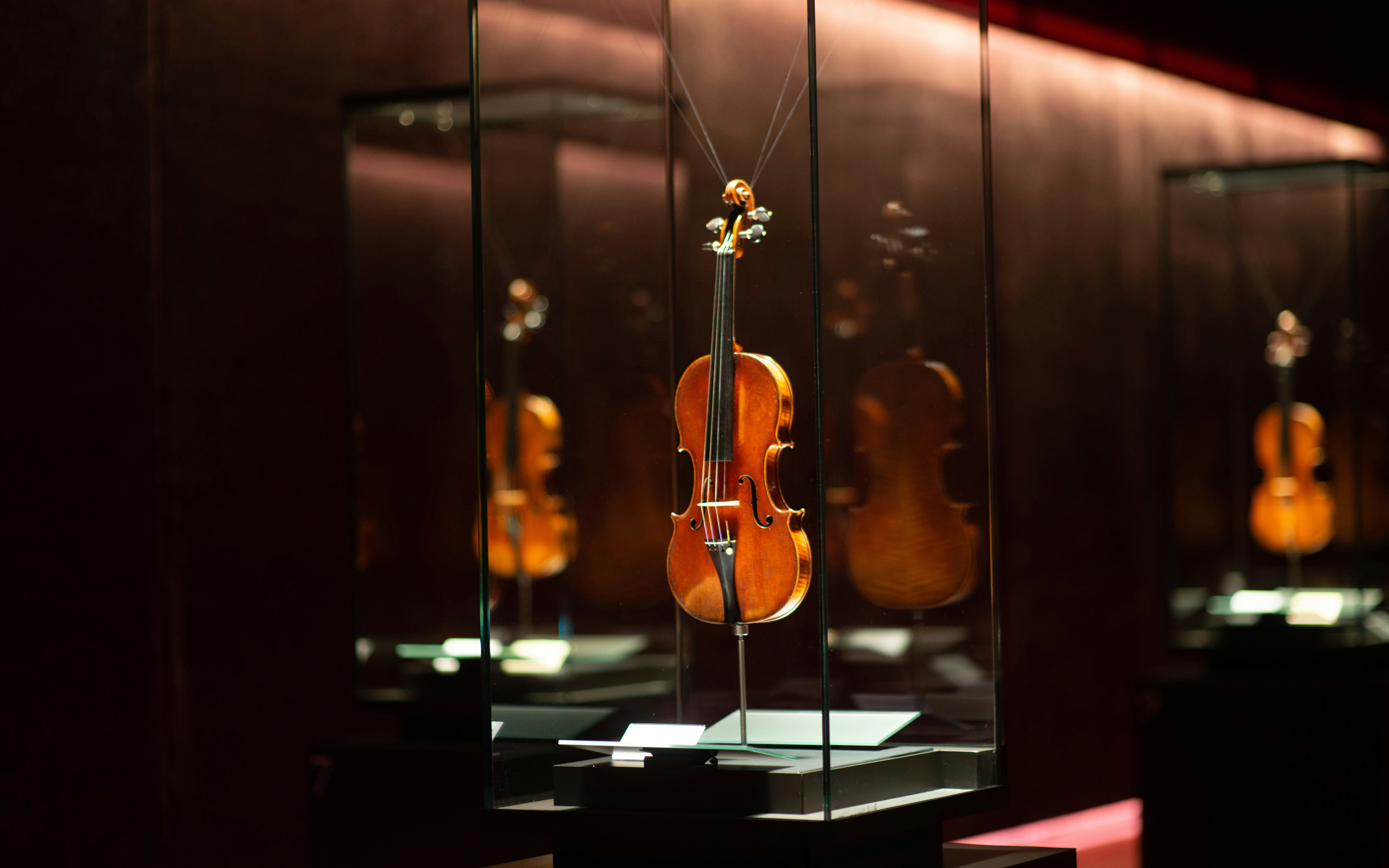
Collection: Historic musical instruments
The collection ranges across centuries and gives the castle a more human, less fortress-heavy side. Most visitors overlook the audio component and move on too fast, even though hearing the instruments explained makes the whole room more vivid.
Where to find it: Within the Museum of Musical Instruments in the castle museums.
Era: 15th-century ducal devotional space
The Ducal Chapel is small, atmospheric, and easy to miss precisely because it doesn’t advertise itself like the bigger collections do. Its Renaissance decoration gives you one of the clearest glimpses of court life inside the fortress.
Where to find it: In the castle’s ducal chapel area within the museum complex, subject to opening times.
Castello Sforzesco works well with children if you treat it as a mix of fortress, open space, and a few smart museum stops rather than trying to conquer every room.
Yes — if you want a walkable, central base with quick access to Milan’s biggest first-time sights. The area around Castello Sforzesco is practical rather than intimate, but it works very well for short stays because you can reach the Duomo, Brera, and La Scala on foot. If you want nightlife or a more neighborhood feel, this is better for convenience than character.
Most visits take 2–3 hours. That is enough time for Pietà Rondanini, the Museum of Ancient Art, the Pinacoteca, and at least one quieter specialty museum. If you use an audioguide, read labels carefully, or include timed rooms such as Sala delle Asse, plan closer to 3 hours.
No, you usually don’t need to book far in advance for a standard weekday museum visit. It matters more on free-admission Sundays, holiday weekends, and for timed spaces or special exhibitions, when the castle feels much busier and the smallest rooms lose their calm quickly.
Arrive 15–20 minutes early if you have a timed room or reservation. The courtyards are large enough to tempt you into wandering first, but that’s exactly how people end up rushing the smaller priority rooms.
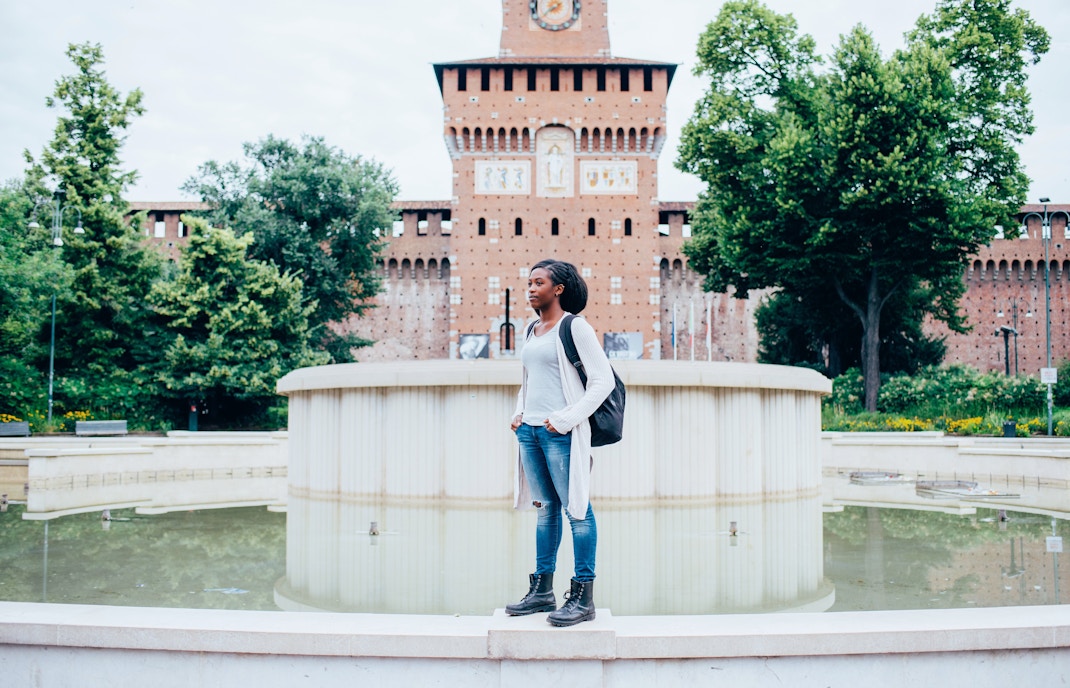
Yes, a small bag is the most practical choice. Castello Sforzesco is a spread-out museum complex rather than a single short route, so a bulky backpack makes the visit slower and less comfortable, especially if you’re moving between multiple wings.
Yes, photography is generally allowed. The main restriction is no flash in the exhibits, and you should always follow any room-specific signs in timed or special-access spaces.
Yes, Castello Sforzesco works well for groups, especially if you want a guided introduction to the castle’s mix of art, arms, and Renaissance history. The main practical issue is that the best rooms are not all large, so groups feel smoother with a clear route and priorities.
Yes, it is one of the easier major Milan sights to do with children because the free courtyards and nearby park give you room to break up the museum visit. Families usually do best with a 90-minute to 2-hour indoor plan rather than trying to cover every museum section.
The outer courtyards are the easiest part of the site to navigate, and the overall complex is pedestrian-friendly. Inside the museums, the experience is less simple because this is a historic fortress with multiple sections rather than one modern, linear building, so it’s worth checking the easiest route when you arrive.
Food is easier to find near the castle than inside it. There is no indoor café in the museum route, but Piazza Castello, Foro Bonaparte, Brera, and Parco Sempione all give you quick options within a short walk.
While Leonardo's Sala delle Asse** is one of the main draws of the castle, visitors must note that it is currently closed for restoration**, and sources speculate only a late 2027 reopening. Beyond the Sala delle Asse, Leonardo’s legacy appears in hidden tunnels, defensive walls, rare manuscripts, and court designs, revealing his role as Milan’s artist-engineer.
Yes, the outer courtyards are free to enter every day during courtyard opening hours. The common mistake is assuming that this free access also covers the museums, but the indoor collections require a separate museum ticket.
Castello Sforzesco offers free museum entry on designated city museum free-admission periods, including the first Sunday of the month and certain Tuesday afternoon windows. These are excellent for value, but they are also among the busiest times to visit.
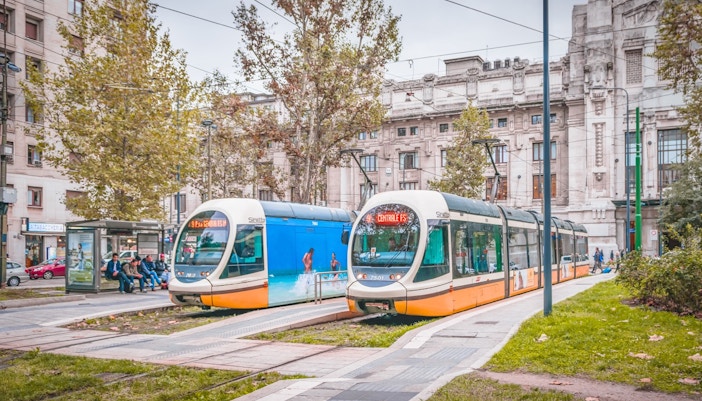
Castello Sforzesco sits on Piazza Castello in central Milan, a short walk from the Duomo and right beside Parco Sempione.
Piazza Castello, Milan, Italy
→ Open in Google Maps
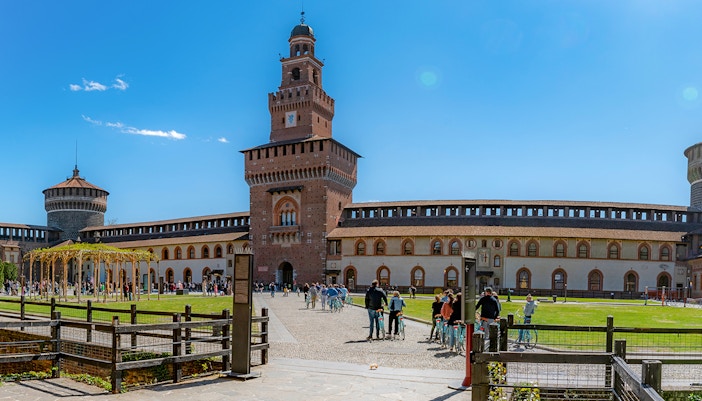
The biggest mistake visitors make is treating Castello Sforzesco like a single museum entrance. The courtyards are free to enter, but museum access is ticketed, so choose your entrance based on whether you’re sightseeing outdoors, heading straight to the museums, or visiting the Pietà Rondanini side first.
Multi-entrance venues:
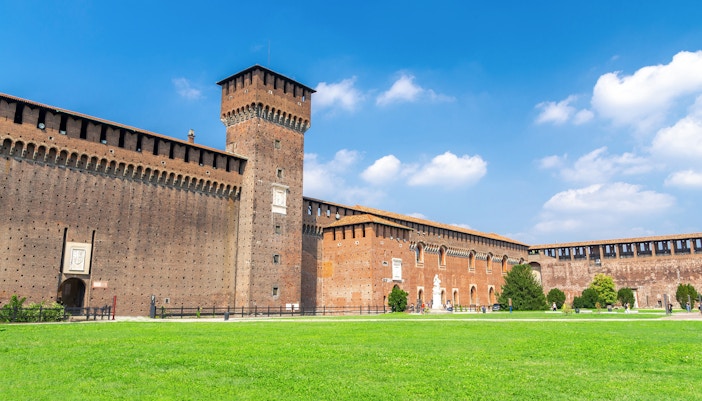
When is it busiest? First Sundays of the month, Saturday late mornings, and summer holiday weekends are the hardest times for the smaller rooms, especially if you want a quiet look at Pietà Rondanini.
When should you actually go? Tuesday–Thursday after 3pm usually gives you more breathing room in the Pinacoteca and specialty museums, and the free courtyard traffic has already thinned.
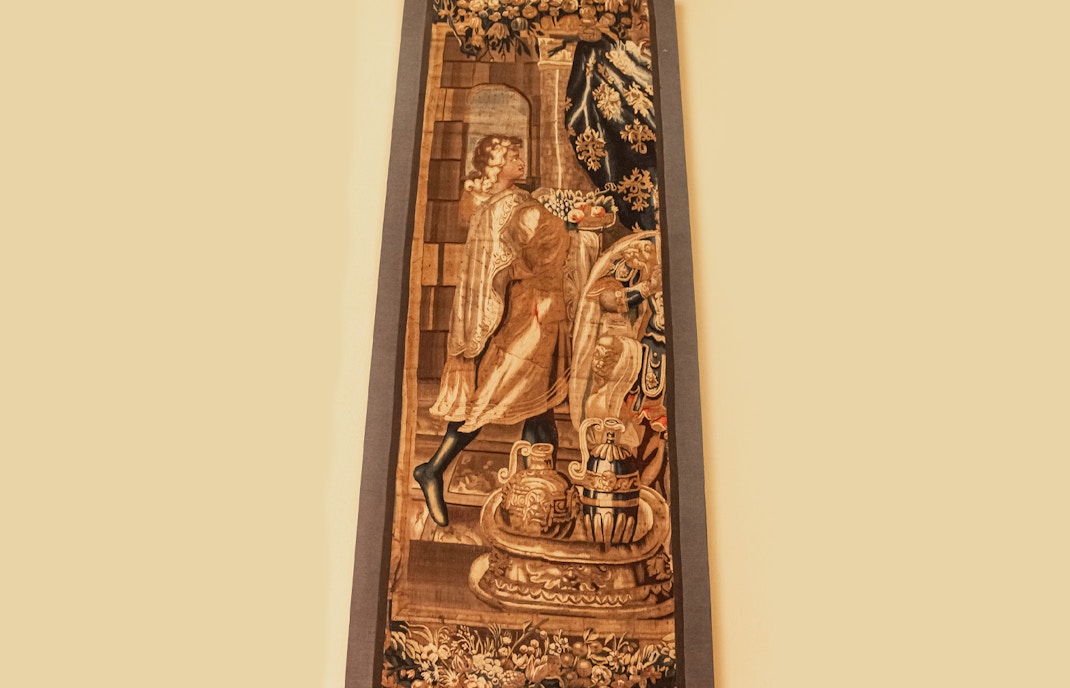
Suggested route: Start with Pietà Rondanini while your attention is fresh, move into Ancient Art and Arms for historical context, then tackle the Pinacoteca before your energy drops. Most visitors miss the Musical Instruments Museum and Ducal Chapel because they feel less headline-grabbing on paper, but both improve the rhythm of the visit.
💡 Pro tip: Don’t spend your first 20 minutes wandering the free courtyards deciding what to do — choose your top 3 indoor priorities before you buy the ticket, or the castle’s size will do the choosing for you.
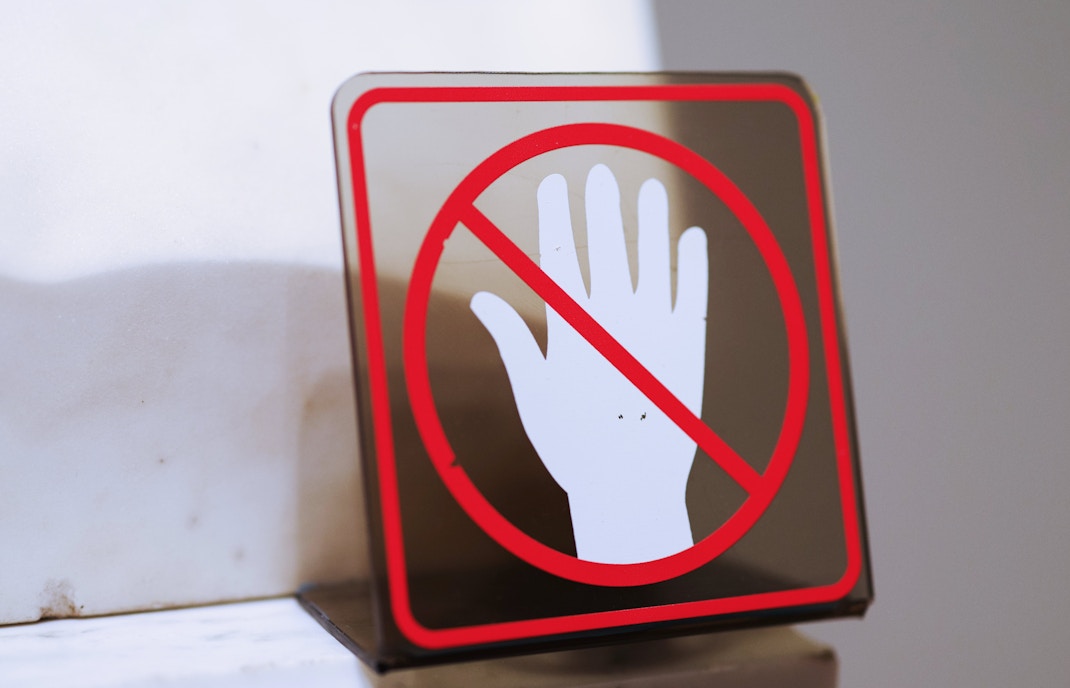
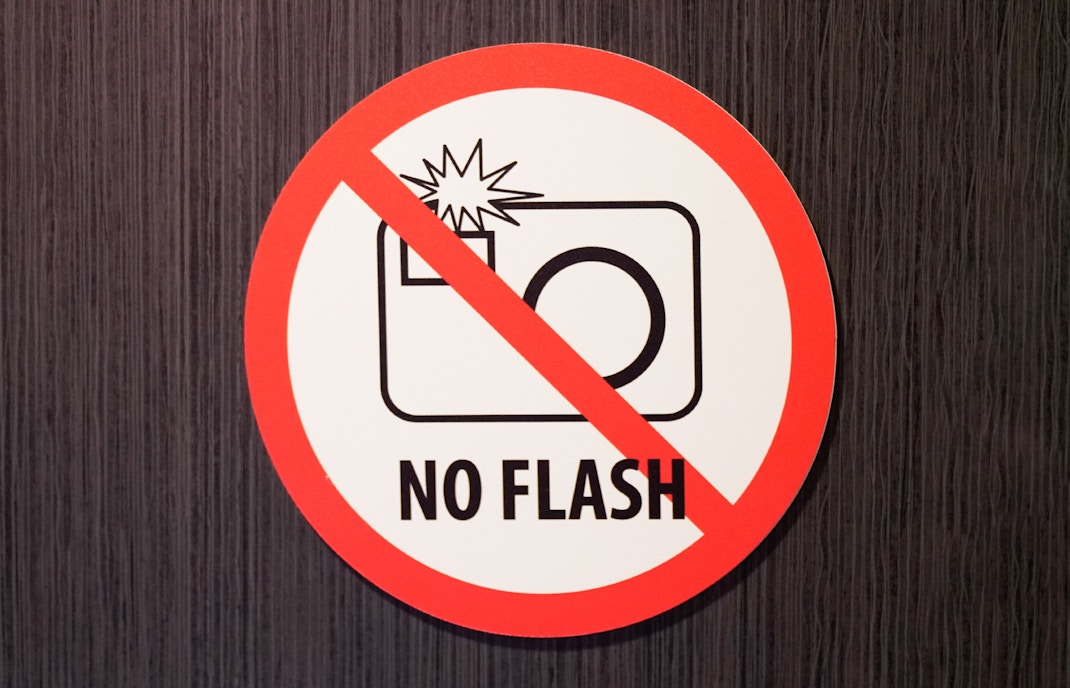
Photography is generally allowed in Castello Sforzesco, but flash is not allowed in the exhibits. The safest rule is to treat the museum galleries as photo-friendly unless a room-specific sign says otherwise, and to keep your setup simple rather than planning around tripods or bulky equipment. In the smaller special rooms, always follow the posted instructions first.
Distance: 500m — 5–10 min walk
Why people combine them: This is Milan’s most natural same-day pairing, because both are central, both are major first-time sights, and the castle makes a good contrast to the Duomo’s vertical, high-impact visit.
Distance: 1.2km — 15–20 min walk
Why people combine them: People pair them when they want a stronger art day, since the castle’s civic collection works well as a wider historical lead-in to Brera’s more concentrated painting highlights.
Parco Sempione
Distance: 200m — 2–5 min walk
Worth knowing: It sits directly behind the castle and is the easiest place to decompress if you’ve just done several indoor museum sections back to back.
Avail the cheapest way to enjoy a self-paced visit to Milan's most formidable citadel.
Inclusions #
Access to Sforza Castle and its museums
Self-guided audio tour of the castle (as per option selected)
Guided tour of Torre Branca with Parco Sempione visit (as per option selection)
Exclusions #
Access to Leonardo's Sala delle Asse (closed for restoration)
Access to Prehistory and Protohistory section (closed)
Explore Milan's most famous fortress independently and go on a city tour, with both experiences led by audio guides.
Inclusions #
Entry to Sforza Castle and its museums
Self-guided audio tour of the Sforza Castle in English, German, French, Italian, or Spanish
Self-guided audio tour of Milan
Guided tour of Torre Branca and Sforza Castle (as per option selected)
Exclusions #
Mobile device
Headphones
Public transportation tickets
Visit two of Milan’s gems – a masterpiece and a medieval fortress, alongside an expert guide.
Inclusions #
Guided tour of Santa Maria delle Grazie with entry
Access to Leonardo's Last Supper Museum
15-minute reserved viewing of The Last Supper painting
Guided tour of Sforza Castle with entry
City Sightseeing: Milan Hop-on Hop-off Bus Tour
City Sightseeing: Milan Hop-on Hop-off Bus Tour
Sforza Castle (with Audio Guide)
City Sightseeing: Milan Hop-on Hop-off Bus Tour
Sforza Castle (with Audio Guide)
City Sightseeing: Milan Hop-on Hop-off Bus Tour
Inclusions #
City Sightseeing: Milan Hop-on Hop-off Bus Tour
24/48/72-hour unlimited hop-on hop-off tour
Access to 4 lines
Audio guide in Portuguese, Arabic, Italian, English, French, German, Spanish, Chinese, Japanese & Russian
Free Wi-Fi onboard
Mobile app with free walking tours, a detailed map, and live bus tracking
Sforza Castle (with Audio Guide)
Reserved entry to the Sforza Castle and the museum
Self-guided audio tour of the Sforza Castle
Multilingual audio commentary in English, German, French, Italian, and Spanish
Exclusions #
Live tour guide at Sforza Castle
Entry to other Milan attractions
Explore two of Milan’s defining legacies, from a celebrated art sanctuary to one of its largest fortresses, all in one booking.
Inclusions #
Timed entry to Brera Art Gallery
Entry to the Sforza Castle museum
Audio guide
Exclusions #
Meals and beverages
Hotel transfers
Personal expenses