Is Castello Sforzesco worth visiting?

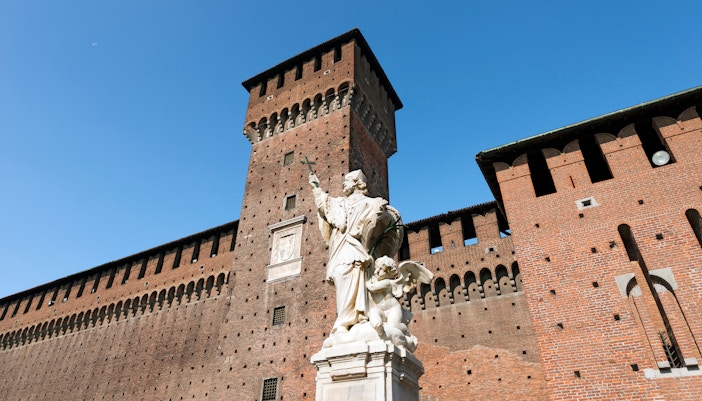
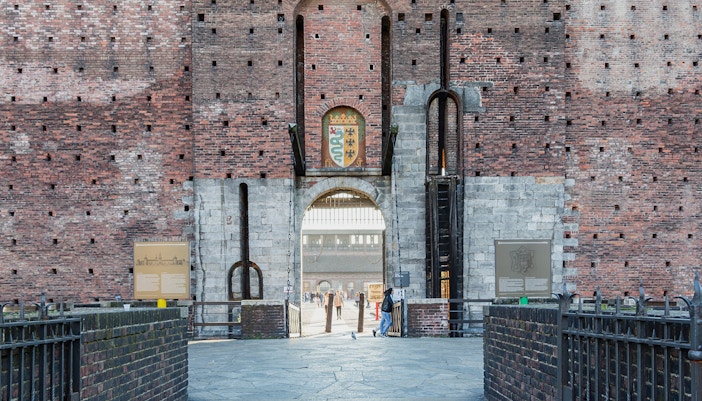
Most of central Milan is elegant, neoclassical, and pale. The Castello is none of those things: it's enormous, rust-red brick, militant in its geometry, and built to intimidate before it impresses.

It was raised in the 15th century by Francesco Sforza on the ruins of a Visconti fortress, designed to project ducal power at a moment when Milan was one of the wealthiest courts in Europe. Inside, that ambition softens: courtyards open into one another, and the rooms hold collections accumulated over five centuries of Milanese history.

Skip it if you have under 90 minutes and prefer single-focus museums. The Castello rewards wandering, and a rushed visit loses what makes it different.

What to see at the Castello Sforzesco?
Placeholder Image Headout Blimp
1/7

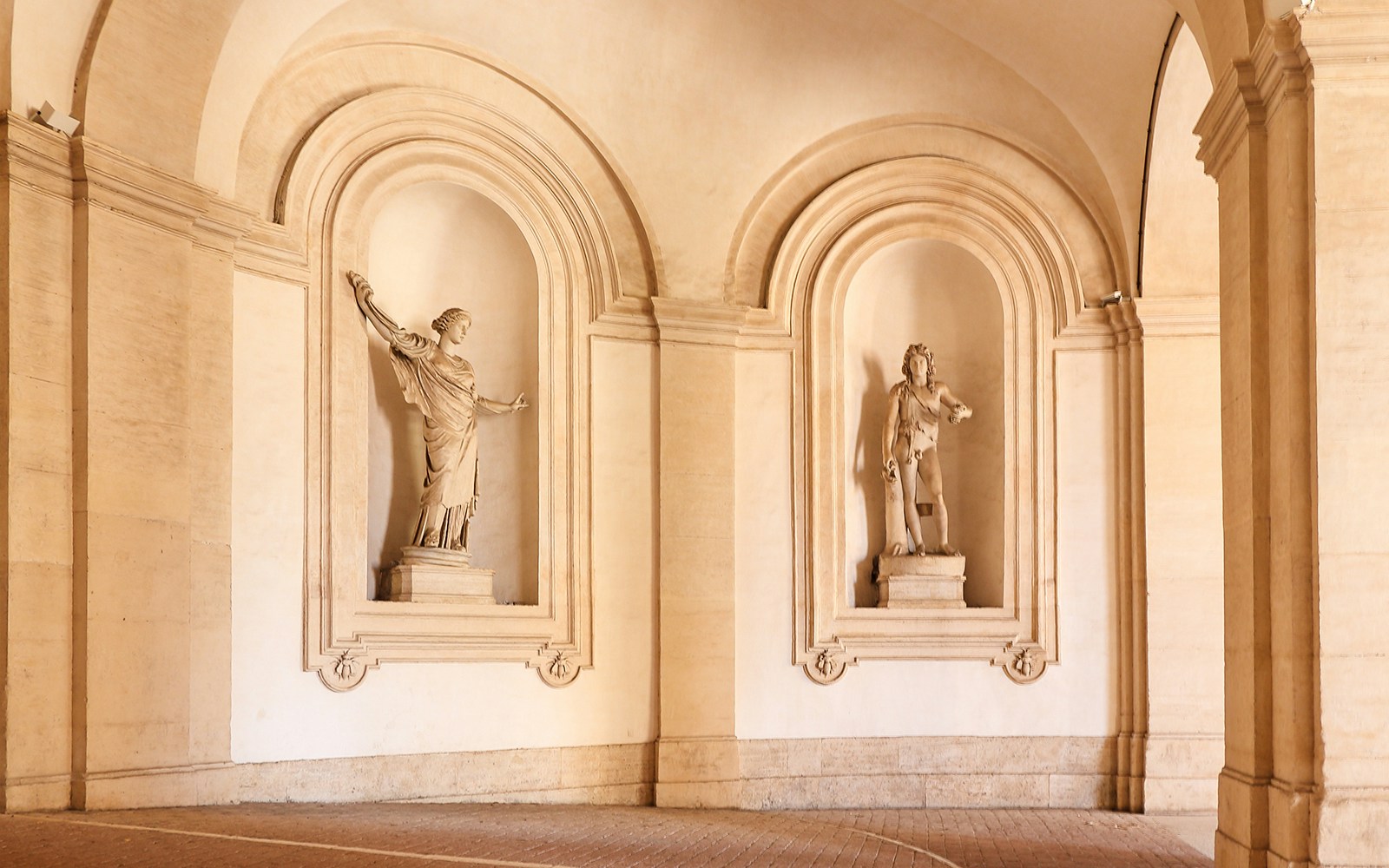
Museo d'Arte Antica

The ground-floor sculpture rooms hold Milan's medieval and Renaissance civic art, including the funerary monument to Bernabò Visconti. Displayed in the rooms they were originally meant to occupy. Budget 45 minutes.

The Sforza courtyards

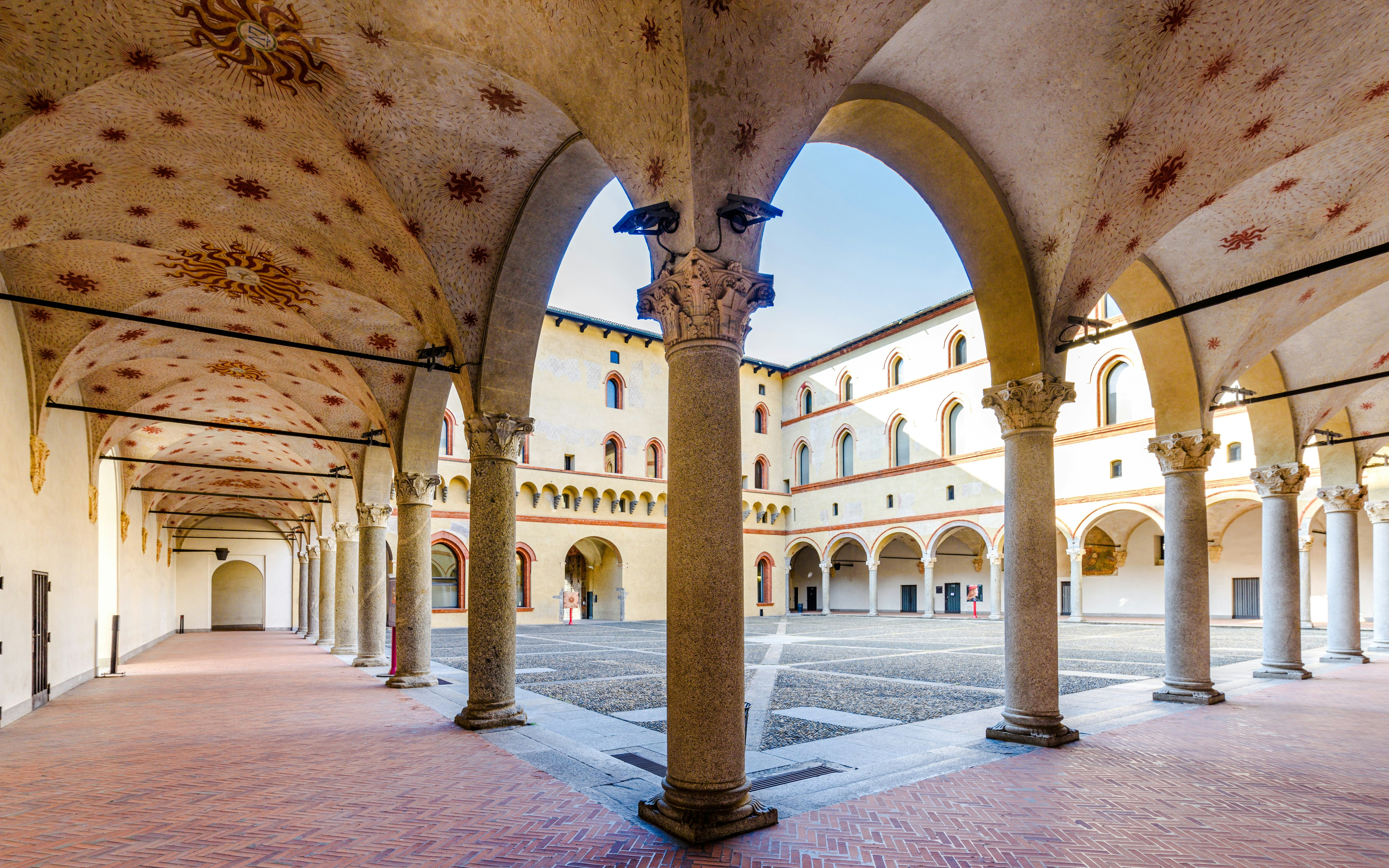
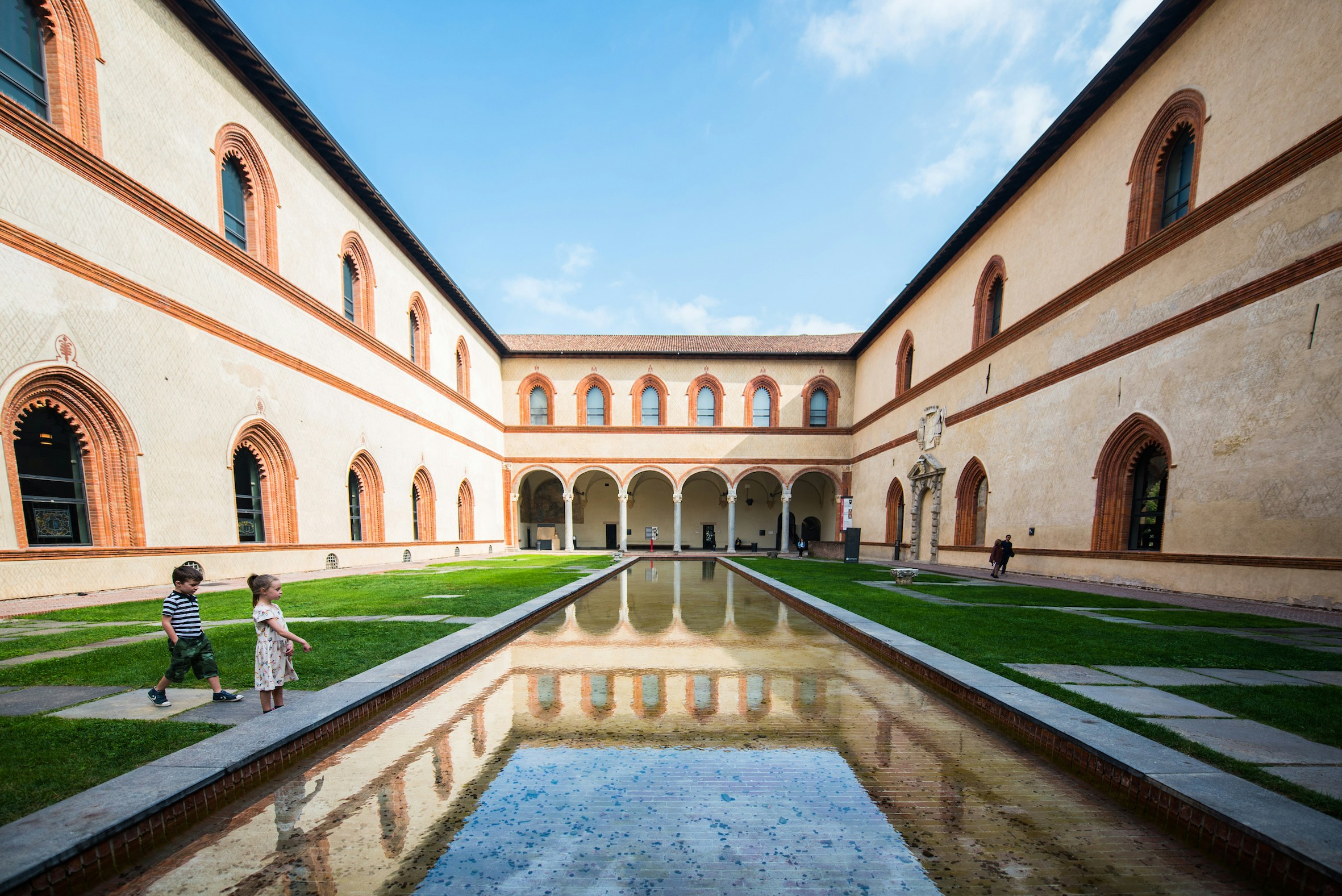
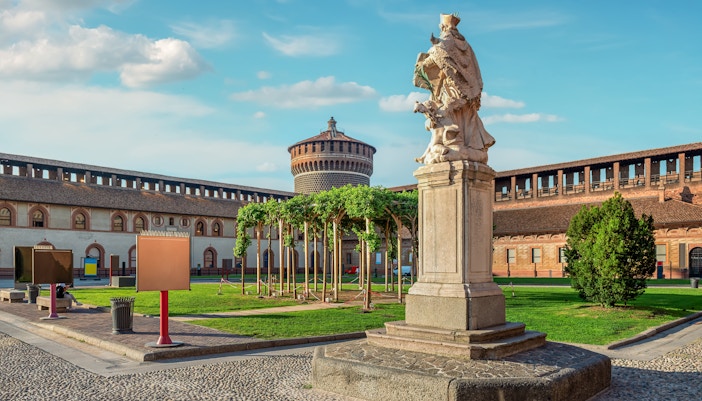
Three distinct spaces — the vast Cortile delle Armi parade ground, the courtly Corte Ducale, and the defensive Rocchetta. Walking between them is the clearest read on how a fortress doubled as a duke's residence.

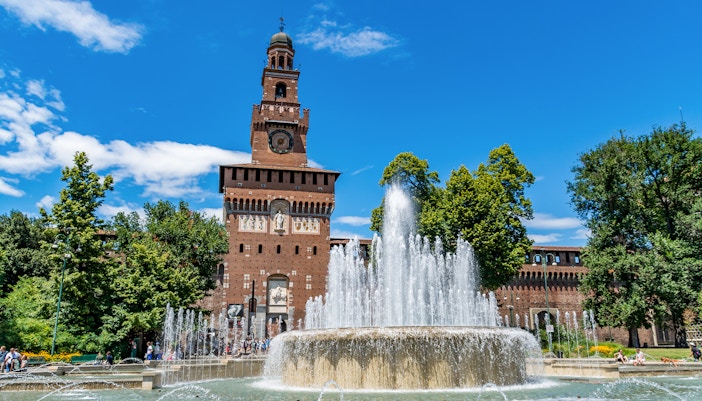
Torre del Filarete

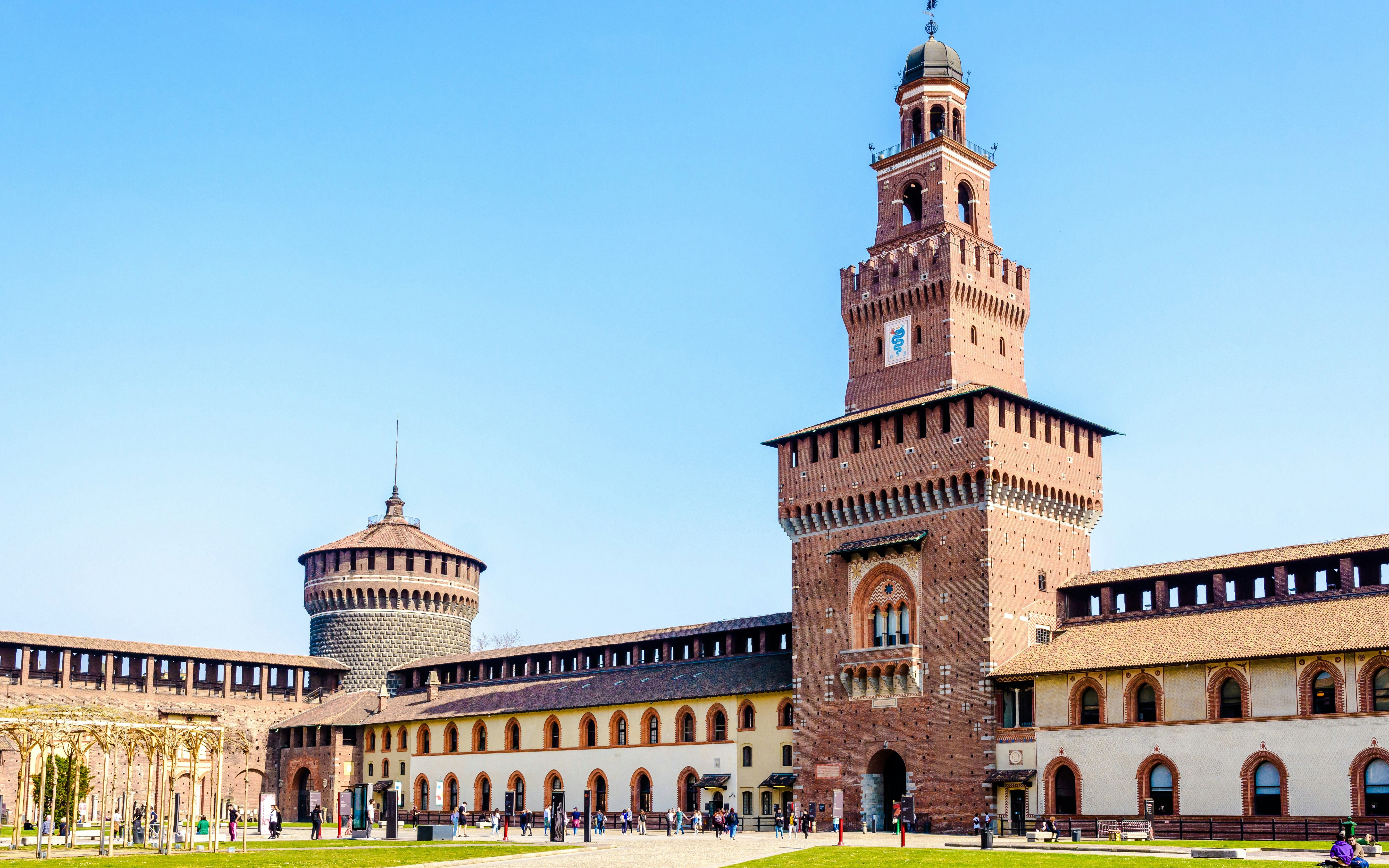
The central clock tower that defines the castle's silhouette on the Milan skyline. The current structure is a faithful early-1900s reconstruction of the original, which exploded in 1521 when its gunpowder store was struck by lightnin

Pinacoteca del Castello

The picture gallery, with works by Mantegna, Bellini, Correggio, Lotto, Tiepolo and Canaletto. A serious collection that most visitors underestimate because the castle is famous for other things. Draws fewer crowds than its quality deserves.

The ramparts and Ghirlanda walk

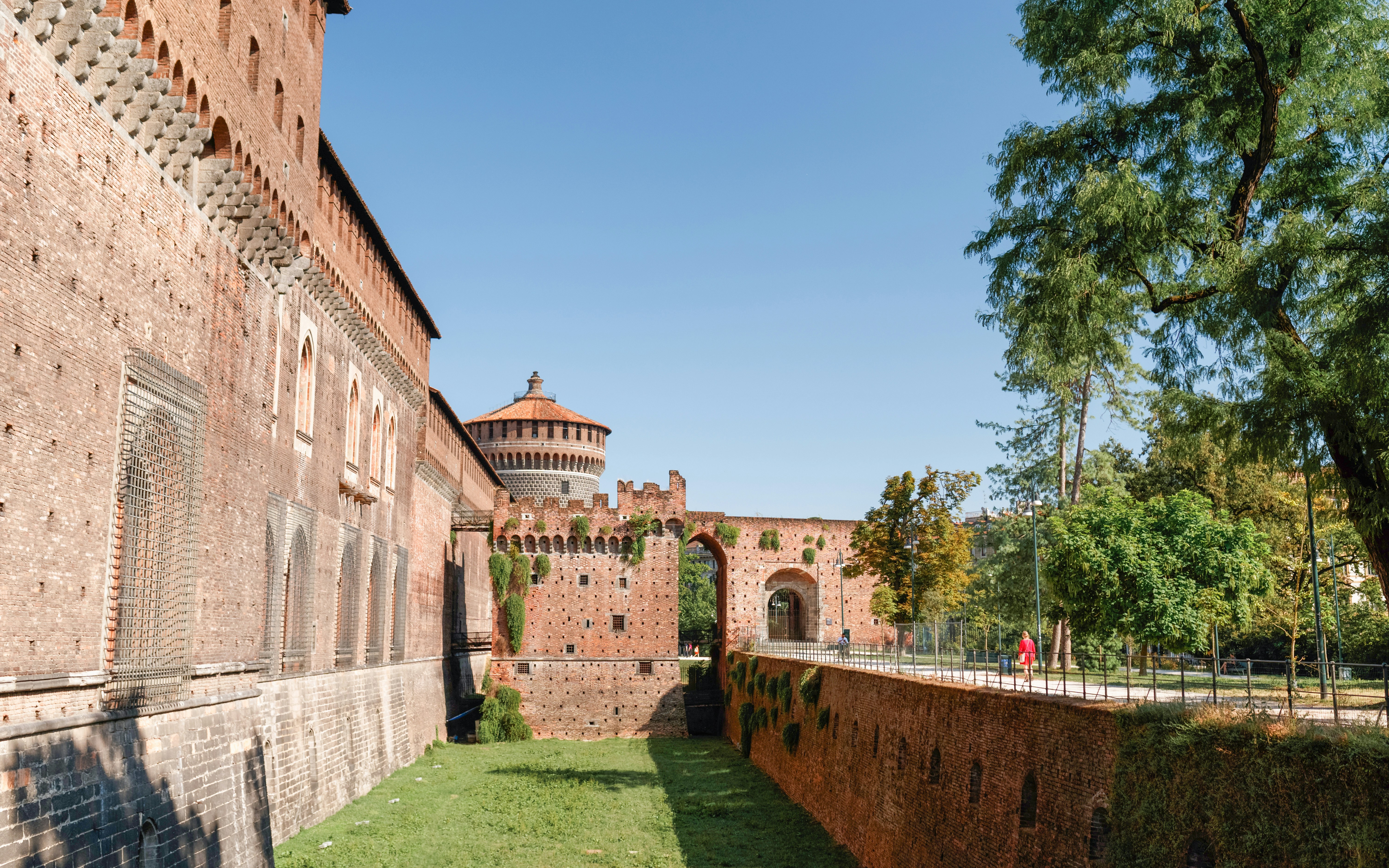
The outer defensive walls and the path along the former moat. The only way to read the full military footprint of the Sforza compound, and a quiet stretch that most ticket-holders never find.

Museum of Musical Instruments

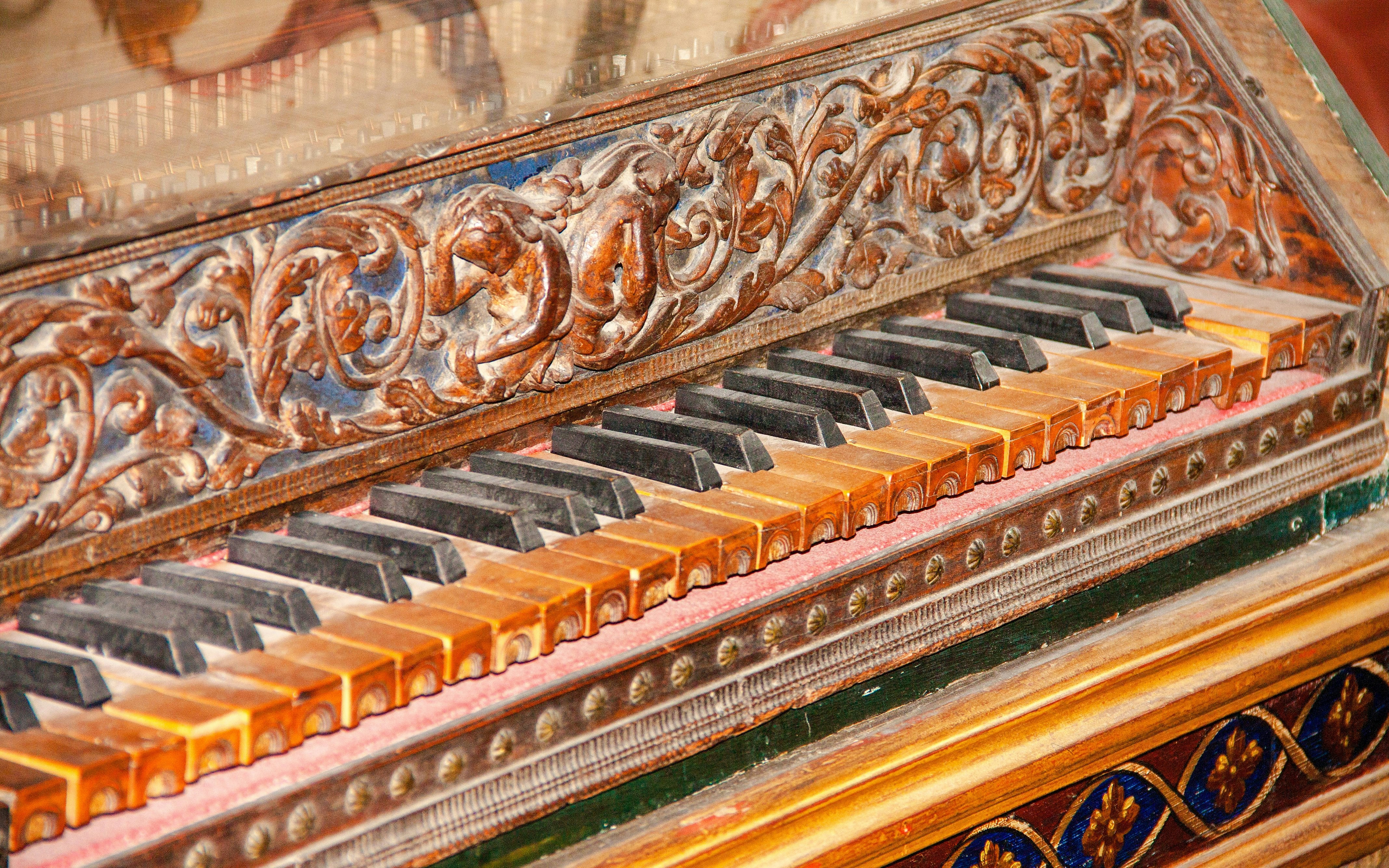
One of Europe's most important historical instrument collections, including a Stradivari. A niche-interest highlight that consistently surprises visitors who wander in without expectations.

Sala delle Asse and the Leonardo restoration

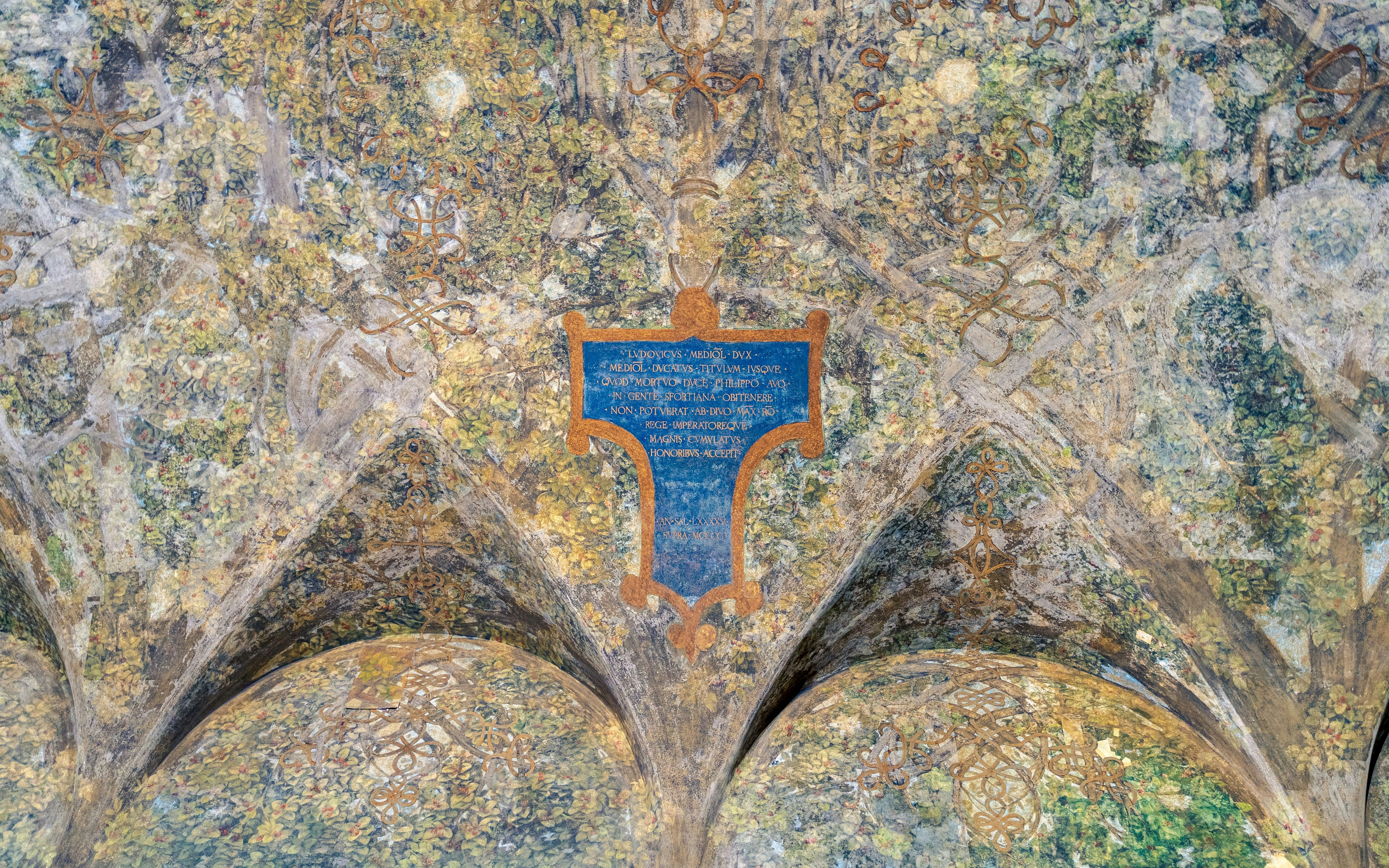
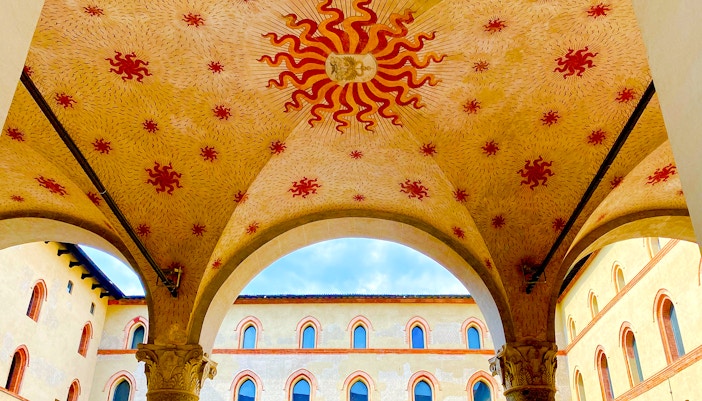
Leonardo da Vinci painted the ceiling of this ground-floor room in 1498 for Ludovico il Moro: sixteen mulberry trees with their branches interwoven across the vault, knotted with golden cord. The room is currently undergoing a long-running restoration that has revealed earlier monochrome sketches beneath later overpaint.
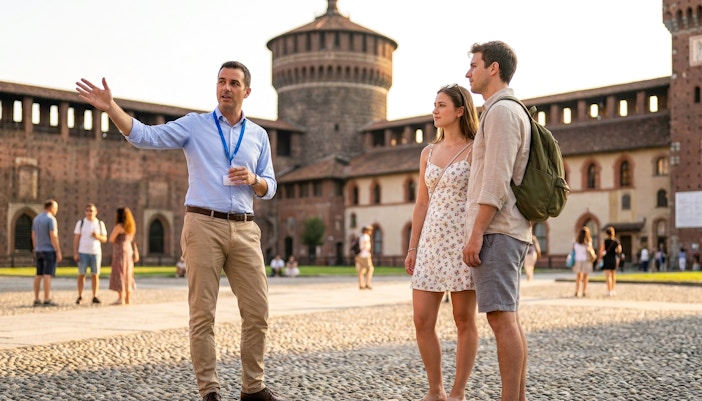
How to explore Castello Sforzesco

Budget a minimum of 2 hours; 3 if you plan to visit more than one of the internal museums. The Castello is larger than it looks from the entrance, and first-time visitors routinely underestimate the ground to cover.

Suggested route

Enter through the Torre del Filarete into the Cortile delle Armi to take in the scale of the parade ground. Move into the Corte Ducale and visit the Museo d'Arte Antica on the ground floor, then continue up to the Pinacoteca. Exit through the Rocchetta and walk a stretch of the ramparts before leaving via the rear gate into Parco Sempione.

Must-see

The courtyards, the Museo d'Arte Antica, and the Pinacoteca. Optional: The Museo degli Strumenti Musicali and the Ghirlanda walk add an hour but are the quietest parts of the complex.

Guided vs. self-paced

A guided tour is genuinely useful here. The Castello houses several distinct museums under one ticket, and a guide makes the connections between them legible in a way the signage does not. An audio guide is a reasonable middle ground for self-paced visitors.

Brief history of Castello Sforzesco

  • 1360s: The Visconti family builds the original fortress, the Castello di Porta Giovia, as a defensive stronghold at the edge of medieval Milan.
  • 1447: The fortress is partially destroyed during the short-lived Ambrosian Republic, when Milanese citizens revolt against Visconti rule.
  • 1450: Francesco Sforza, having married into the Visconti line and taken Milan by force, begins rebuilding the castle as the seat of the new Sforza dynasty.
  • 1490s: Under Ludovico il Moro, the castle becomes one of Europe's most cultured courts. Leonardo da Vinci and Donato Bramante are both in his employ; Leonardo paints the Sala delle Asse.
  • 1521: The Torre del Filarete explodes after lightning strikes its gunpowder store, killing the castellan and damaging much of the central facade.
  • 16th to 19th century: Successive foreign rulers — Spanish, French, and Austrian — use the castle as a military barracks. Much of the original decoration is lost.
  • 1893–1905: The architect Luca Beltrami leads a major restoration, reconstructing the Torre del Filarete and converting the complex into a civic museum.
  • Today: The Castello houses several of Milan's most important municipal collections and remains free to enter through its courtyards.

Additional information

The Castello's courtyards are open to the public free of charge, and locals use them as a through-route between the historic centre and Parco Sempione. The ticketed museums are what most visitors come for, but the courtyards alone are worth a 20-minute walk-through even without a museum visit. The Castello also hosts temporary exhibitions in the Sala Viscontea throughout the year, often included with standard admission.

Frequently Asked Questions about Castle Sforza

Yes. The Castello is one of the largest Renaissance fortresses in Europe and houses several of Milan's most significant museum collections under a single ticket. Booking in advance lets you skip the Torre del Filarete queue during peak season.

More reads