Hours, directions, entrances and the best time to arrive
Leonardo3 Museum visitor guide for Milan
Leonardo3 Museum is a compact interactive museum in central Milan best known for bringing Leonardo da Vinci’s machines, manuscripts, and paintings to life through working models and digital reconstructions. The visit is easy to fit into a Duomo-area itinerary, but it feels more rewarding if you slow down at the codex screens instead of rushing from one big machine to the next. The biggest difference between an average visit and a strong one is timing around school groups and midday crowds. This guide covers when to go, what to prioritize, and how to plan your visit well.
Quick overview: Leonardo3 Museum at a glance
If you want a short, central Milan museum that feels more hands-on than most art stops, Leonardo3 is an easy fit.
- When to visit: Daily: 9:30am–8pm. The first 60–90 minutes after opening and entry after 6pm are noticeably calmer than 11am–3pm, because school groups and central-Milan walk-ins build through the middle of the day.
- Getting in: From €16 for standard entry. Priority entry from €16. You can often book 0–2 days ahead, but summer weekends and spring school-trip dates are better locked in earlier.
- How long to allow: 1–2 hours for most visitors. It pushes toward the longer end if you spend time with the codex screens, audio content, and the restored painting displays.
- What most people miss: The digitally restored Last Supper room and the manuscript touchscreens, which add far more context than the headline machine models alone.
- Is a guide worth it? A guide is worth it if you want the engineering logic behind the models; if you mainly want a compact, interactive visit, the audio guide usually does enough for less.
Jump to what you need
🕒 Where and when to go
🗓️ How much time do you need?
Visit lengths, suggested routes and how to plan around your time
🎟️ Which ticket is right for you?
Compare all entry options, tours and special experiences
🗺️ Getting around
How the galleries are laid out and the route that makes most sense
🖼️ What to see
Mechanical Lion, flying machines, digital Last Supper
♿ Facilities and accessibility
Restrooms, lockers, accessibility details and family services
Where and when to go
How do you get to Leonardo3 Museum?
Leonardo3 Museum is in Milan’s historic center at Piazza della Scala, inside the Galleria Vittorio Emanuele II entrance area, about a 5-minute walk from the Duomo.
Piazza della Scala, ingresso Galleria Vittorio Emanuele II, 20121 Milan, Italy
- Metro: Duomo (M1, M3) → 2-minute walk → enter through the Galleria and follow Leonardo3 signage.
- Tram: Manzoni Scala (Lines 1, 2) → 3-minute walk → easiest if you are arriving from Brera or Castello.
- Taxi / rideshare: Drop-off at Piazza della Scala → 1-minute walk → best for a fast central-Milan stop.
Which entrance should you use?
The museum uses one main entrance through the Galleria side, but visitors with online tickets and same-day buyers don’t always move at the same speed. The most common mistake is assuming there is no benefit to booking ahead because the museum is small.
- Pre-booked tickets: For timed-entry visitors. Expect 0–5 minutes’ wait most of the year, and up to 10 minutes when school groups arrive together.
- On-the-day tickets: For walk-up buyers. Expect 5–15 minutes’ wait on spring weekends, summer afternoons, and weekday school-trip windows.
When is Leonardo3 Museum open?
- Monday–Sunday: 9:30am–8pm
- Evening ticket window: Entry after 6pm
- Last practical entry: Around 7pm if you want more than a rushed walkthrough
When is it busiest? Weekends from late morning to mid-afternoon, plus weekday late mornings in April, May, and June, are the busiest because family visitors and school groups overlap in a compact space.
When should you actually go? Tuesday–Thursday at opening, or after 6pm, gives you easier access to the touchscreens and more room around the machine models.
How much time do you need?
| Visit type | Route | Duration | Walking distance | What you get |
|---|---|---|---|---|
Highlights only | Entrance → main machine gallery → digital *Last Supper* room → exit | 45–60 min | ~0.2 km | You’ll see the signature inventions and the best-known digital restoration, but you’ll skim the codices and miss much of the explanatory content. |
Balanced visit | Entrance → flying machines → mechanical lion → codex stations → digital paintings → exit | 75–90 min | ~0.3 km | This gives you the strongest all-round visit, adding the manuscript screens and enough time to understand why the models matter beyond their visual appeal. |
Full exploration | Entrance → all machine zones → codex stations → restored paintings → audio-guide stops → return to favorites → exit | 1.5–2 hr | ~0.4 km | You’ll cover the museum properly, including the deeper engineering and art context, but only if you’re willing to linger at the quieter digital stations rather than stopping only for photos. |
Which Leonardo3 Museum ticket is best for you
| Ticket type | What's included | Best for | Price range |
|---|---|---|---|
Leonardo3 Museum standard admission | Entry to all permanent exhibits + interactive stations | A self-guided visit where you want full access and the freedom to move at your own pace through a compact museum. | From €16 |
Reduced admission | Entry to all permanent exhibits + reduced-rate access | A budget-conscious visit where you qualify for youth, senior, disability, or group pricing and still want the full museum route. | From €12 |
Evening ticket | Entry after 6pm + full exhibit access during final hours | A same-day Milan plan near Duomo where you want a quieter, cheaper visit and don’t need more than about an hour. | From €8 |
Guided tour | Entry + museum-led guided visit | A visit where you want the engineering, manuscripts, and restored artworks explained in sequence instead of figuring out the context yourself. | |
Leonardo3 Museum + *The Last Supper* combo | Leonardo3 Museum entry + timed access or guided visit for Leonardo’s *Last Supper*, depending on option | A Leonardo-focused day in Milan where you want one plan that covers both the original masterpiece and the broader inventions story. |
How do you get around Leonardo3 Museum?
Layout and suggested route
Leonardo3 is a compact, mostly linear museum rather than a sprawling multi-wing one, so it is easy to self-navigate. What matters in practice is not distance, but stopping in the right places before the crowd clusters around the headline machines.
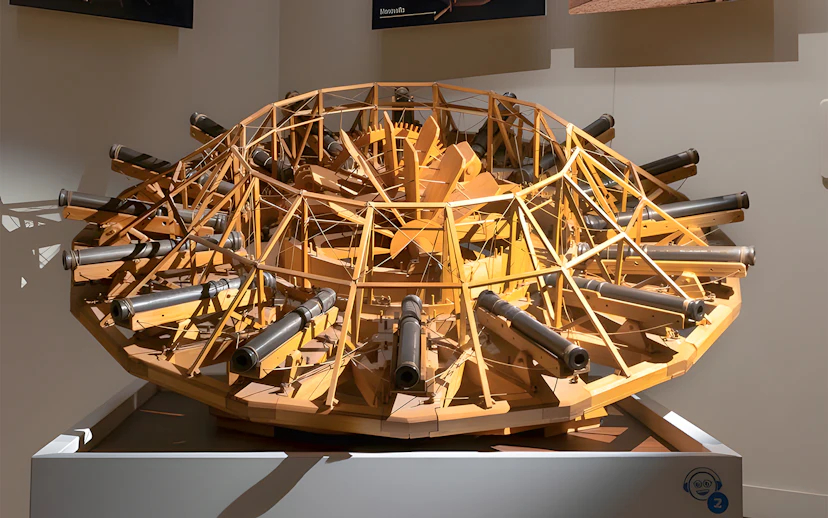
- Main machines gallery: Mechanical reconstructions and large inventions → budget 20–30 minutes.
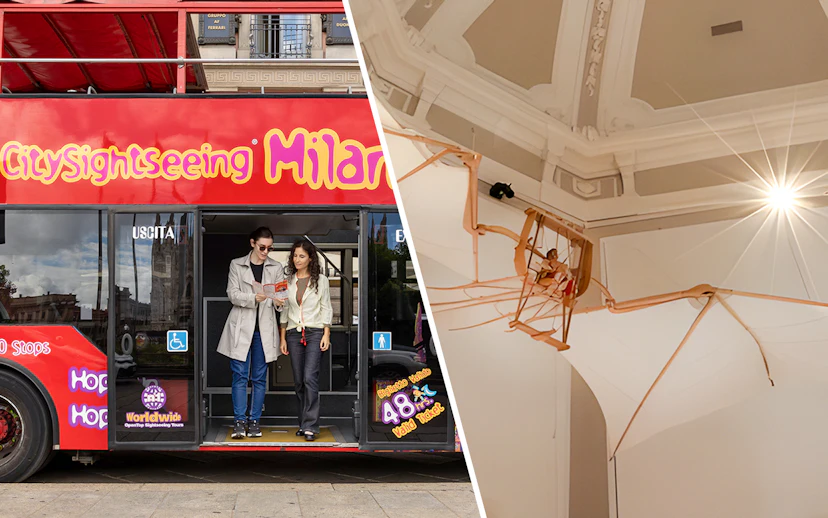
- Flying machines area: Leonardo’s aviation studies and flight concepts → budget 10–15 minutes.
- Codex stations: Digital manuscripts, sketches, and close-reading screens → budget 15–20 minutes.
- Digital paintings room: Restored views of works like The Last Supper → budget 10–15 minutes.
Suggested route: Start with the larger machine models while the room is still open, then move to the codex screens before finishing in the restored paintings room. Most visitors do the reverse once they notice the biggest objects first, which is why they often rush the quieter manuscript stations.
Maps and navigation tools
- Map: On-site orientation at entry → covers the main exhibit sequence → check it as soon as you enter.
- Signage: Good enough for a compact visit, but you still need to choose intentionally to avoid skipping the codex and painting sections.
- Audio guide / app: Audio guide available in multiple languages on-site → adds art and engineering context → worth it if you want more than a visual walkthrough.
💡 Pro tip: Do the codex screens before the museum feels full — they look secondary, but they explain the machines better than the labels do once the room gets busy.
Where are the masterpieces inside Leonardo3 Museum?

1/6
Mechanical Lion
Attribute — Creator: Leonardo da Vinci reconstruction by Leonardo3
This full-scale automaton is one of the museum’s most memorable pieces because it turns a famous sketch into something you can actually visualize as a working Renaissance machine. Most visitors focus on the theatrical idea of a walking lion, but the real payoff is noticing the internal mechanics that make the motion possible. It’s a good reminder that Leonardo designed spectacle and engineering together.
Where to find it: In the main machines gallery, among the large reconstructions near the central part of the route.
Flying machines
Attribute — Creator: Leonardo da Vinci aviation studies
Leonardo’s flight designs are some of the strongest examples of the museum’s interactive approach, because they move from notebook sketches to models and digital testing. What most visitors rush past is the way these displays show Leonardo studying bird movement rather than simply inventing a fantasy aircraft. If you linger here, the museum starts feeling less like a collection of gadgets and more like a record of scientific thinking.
Where to find it: In the flight-focused section just beyond the main reconstruction area.
Digital *Last Supper*
Attribute — Artwork: Leonardo da Vinci
This is one of the museum’s smartest displays, especially if you could not get a ticket to see the original fresco. The digital restoration helps you read details and color contrasts that are much harder to grasp in person at Santa Maria delle Grazie. Most visitors stop for the image itself, but the real value is in comparing what has faded in the original with what scholars believe Leonardo intended.
Where to find it: In the digital paintings room toward the later part of the visit.
Codex Atlanticus interactive stations
Attribute — Source: Leonardo da Vinci manuscripts
These touchscreens let you zoom into sketches, notes, and designs that would otherwise feel abstract in a book or on a wall panel. They are easy to miss because they don’t have the scale of the larger models, but they often explain the logic behind the machines better than the physical reconstructions do. If you want the museum to feel more substantial, spend time here.
Where to find it: At the quieter digital stations set between the machine displays and the painting section.
War machines
Attribute — Category: Leonardo da Vinci military engineering
The war machine reconstructions are striking because they show how Leonardo’s imagination worked under real technical constraints, not just artistic ones. Visitors tend to photograph the large forms and move on, but the interesting detail is how many designs solve problems of force, leverage, and repeat motion rather than pure firepower. This section adds needed range to the visit.
Where to find it: In the broader machines gallery alongside the larger engineering models.
Musical instruments
Attribute — Category: Leonardo da Vinci sound and instrument design
These pieces are easy to overlook because they sit outside the museum’s more dramatic military and flight narratives, but they show Leonardo’s range especially well. The most useful detail to notice is how the instrument designs combine visual beauty with mechanical curiosity, which ties the art and engineering sides of the museum together. They help round out the visit.
Where to find it: Near the machine displays, typically in the sections devoted to smaller reconstructions.
Facilities and accessibility
- 🚻 Restrooms: Restrooms are available on-site, so you do not need to leave the museum mid-visit for a basic stop.
- 🍽️ Café: There is no large museum café experience here, but the Galleria and Piazza della Scala cafés are directly outside and easy to use before or after your visit.
- 🪑 Seating / rest areas: Limited seating is available through the route, which helps if you want to pace the visit or stop for the audio content.
- ♿ Mobility: The museum is wheelchair accessible, and staff can direct you to the elevator that works around the small stair within the exhibition route.
- 👁️ Visual impairments: Audio guide content helps with interpretation, but much of the museum experience depends on screens, models, and visual comparison rather than tactile tools.
- 🧠 Cognitive and sensory needs: The calmest windows are right after opening and after 6pm, while school-group periods can make the interactive areas feel louder and more crowded.
- 👨👩👧 Families and strollers: The compact route is manageable with a stroller, though it is still worth asking staff for the easiest path if the museum is busy.
Leonardo3 works well for children who like pressing, building, zooming, and figuring out how things work, and it is one of the easier central Milan museums to do without losing their attention.
- 🕐 Time: 60–75 minutes is realistic with younger children, and the flying machines, lion, and digital Last Supper are the sections to prioritize first.
- 🏠 Facilities: The short route and on-site restrooms make this easier than a long art museum day, especially if you are visiting from the Duomo area.
- 💡 Engagement: Let children choose one machine to ‘decode’ properly instead of trying to race through every station, because the museum rewards focused curiosity more than quantity.
- 🎒 Logistics: Bring a small bag, arrive near opening, and avoid the late-morning school-group window if you want easier access to the touchscreens.
- 📍 After your visit: The Galleria Vittorio Emanuele II is right outside and gives children an easy, low-effort next stop before you decide on lunch or another museum.
Rules and restrictions
What you need to know before you go
- Bring your booking confirmation or e-ticket, and carry ID if you are using a reduced-rate ticket or a child fare.
- A small bag is much easier than a bulky backpack because the museum is compact and built around interactive stations.
- Plan to do the museum in one pass before a café stop, because the route is short and stepping out breaks the flow more than it helps.
Not allowed
- 🚫 Food and drink: Keep meals and open drinks for before or after the visit rather than carrying them through the galleries.
- 🚬 Smoking / vaping: Smoking and vaping are not allowed inside the museum.
- 🐾 Pets: Leave pets elsewhere unless they are service animals needed for access.
- 🖐️ Touching exhibits: Use the interactive stations as intended, but do not climb on reconstructions or force moving parts.
Photography
Personal photography is generally fine for a self-guided visit, but this is not a tripod-friendly museum and you should avoid blocking interactive screens while stopping for photos. Flash, bulky camera setups, and anything that disrupts the compact galleries are best avoided. If staff restrict photography around a specific installation or event setup, follow the room-specific instruction rather than assuming the rule is the same everywhere.
Good to know
- Some visitors miss useful content because they do not switch touchscreen language settings early in the visit.
- If one large model is crowded, move to the codex or paintings section and loop back 10 minutes later rather than waiting in place.
Practical tips
- Booking and arrival: You usually do not need to book more than 1–2 days ahead, but Saturday afternoons in spring and summer, plus weekday late mornings in May and June, are worth locking in because that is when families and school groups overlap.
- Pacing: Start with the larger machines while the galleries still feel open, then slow down properly at the codex stations, because that is where the museum shifts from ‘interesting objects’ to a real Leonardo story.
- Crowd management: Opening hour and entry after 6pm work especially well here because the museum is compact, so even moderate midday traffic changes how easy it is to use the touchscreens.
- What to bring or leave behind: Carry a small day bag rather than shopping bags or luggage, since narrow circulation and interactive displays make bulky items more annoying here than at a larger museum.
- Food and drink: Eat before you go or plan lunch after, because Leonardo3 is short enough to do straight through and the Galleria cafés outside are more convenient than interrupting your visit halfway.
What else is worth visiting nearby?
Commonly paired: *The Last Supper*
The Last Supper
Distance: 1.6 km — 20-minute walk or about 10 minutes by metro
Why people combine them: They are Milan’s strongest Leonardo pairing — one shows the original masterpiece, while the other helps you understand the wider mind behind it.
Book / Learn more
Commonly paired: Duomo di Milano
Duomo di Milano
Distance: 400 m — 5-minute walk
Why people combine them: It is an easy same-day central Milan pairing, and Leonardo3 works especially well as the shorter, indoor cultural stop between Duomo visits, terraces, and the Galleria.
Book / Learn more
Also nearby
La Scala Museum
Distance: 120 m — 2-minute walk
Worth knowing: This is the most natural nearby culture add-on if you want to keep the visit compact and stay around Piazza della Scala.
Galleria Vittorio Emanuele II
Distance: next door — 1-minute walk
Worth knowing: You will pass through it anyway, and it is the easiest place nearby for coffee, shopping, or a short break before your next stop.
Eat, shop and stay near Leonardo3 Museum
- On-site: There is no full museum café, so most visitors eat before or after in the Galleria or around Duomo.
- Luini Panzerotti (5-minute walk, Via Santa Radegonda 16, Milan): Fast, inexpensive, and practical if you want a quick pre- or post-museum bite without turning lunch into a long stop.
- Marchesi 1824 Galleria (2-minute walk, Galleria Vittorio Emanuele II, Milan): Coffee, pastries, and a polished Milan setting that works well if you want a calmer, more classic break.
- Terrazza Aperol (6-minute walk, Piazza del Duomo, Milan): Better after the museum than before, since the view is good but lunch service can take longer at busy times.
- Pro tip: Eat before 12 noon or after 2:30pm around Duomo — Leonardo3 is too short to build a whole midday meal break around peak lunch queues.
- Libreria Bocca: Art books, design titles, and Milan-themed gifts inside Galleria Vittorio Emanuele II; a better fit than generic souvenir stalls if you want something tied to culture.
- La Rinascente Milano Duomo: Italian design, food gifts, and fashion near Piazza del Duomo; useful if Leonardo3 is one stop in a wider central-shopping afternoon.
Staying around Duomo and La Scala is convenient if Leonardo3 is part of a short Milan trip, because you can walk to the museum, the Duomo, and major transit without spending time on logistics. The trade-off is price: this is one of the city’s more expensive hotel zones, and it feels polished and busy rather than especially local. It suits short stays better than travelers who want neighborhood character.
- Price point: This area skews upscale, with the biggest premium going to hotels closest to the Duomo and Galleria.
- Best for: Short city breaks, first-time Milan visits, and travelers who want to walk almost everywhere in the historic center.
- Consider instead: Brera if you want a more atmospheric, café-filled base nearby, or Porta Venezia if you want better value and an easier mix of local life and transit.
Frequently asked questions about visiting Leonardo3 Museum
Most visits take 1–2 hours. If you move quickly through the large models and focus only on the headline displays, you can finish in about an hour. If you use the codex stations, audio guide, and painting restorations properly, you will want closer to 90 minutes or a little more.
Usually, no — 0–2 days ahead is often enough. Leonardo3 does not have the long sellout window of Milan’s Last Supper, but booking ahead still makes sense for summer weekends, rainy days, and weekday school-trip periods when the museum feels fuller than its size suggests.
It is helpful, but not essential most of the year. This is not a venue where you should expect hour-long queues, yet pre-booked entry does remove uncertainty and usually gets you in faster on spring weekends, summer afternoons, or when school groups arrive together.
Arrive about 5–10 minutes early. That gives you enough time to find the Galleria entrance, show your ticket, and start on time without standing around too long. The museum is central, but the entrance is easier if you are not rushing from the Duomo at the last minute.
Yes, but a small bag is much better than a bulky one. The museum is compact and built around interactive displays, so large backpacks or shopping bags quickly become annoying. If you are using a reduced ticket, keep ID handy as well.
Yes, personal photos are generally fine, but keep them quick and low-impact. Avoid flash, tripods, and blocking touchscreens or narrow circulation points while shooting. If staff set a specific restriction around one installation or event, follow the room-specific rule.
Yes, and the museum is especially popular with school and educational groups. That said, the galleries are compact, so independent visitors often have a better experience by choosing times outside late-morning school windows. If you are organizing a group, guided formats make more sense than a loose self-guided entry.
Yes — it is one of the more family-friendly central museums in Milan. Children tend to engage well with the moving models, touchscreens, and problem-solving angle, and the short visit length helps. It works best for school-age kids who like building, testing, and figuring out how things work.
Yes, the museum is wheelchair accessible. Staff can direct visitors to the elevator that helps around the small stair in the route. Because the space is compact, it is also easier to manage than a large museum, though it is still smartest to visit during quieter hours for more room.
Yes, but mostly near rather than inside the museum. The Galleria Vittorio Emanuele II and Duomo area immediately outside have cafés, pastries, and sit-down options. Since the visit is short, most people are better off eating before or after rather than trying to build a mid-visit meal stop around it.
Yes, especially if you still want a strong Leonardo experience in Milan. It does not replace seeing the original fresco, but the digital restoration of The Last Supper, the codex material, and the machine reconstructions give you a broader understanding of Leonardo than the fresco visit alone.