San Siro Stadium: Milan’s temple of football

San Siro Stadium, officially known as Stadio Giuseppe Meazza, stands at the heart of Milan’s football culture. Home to AC Milan and Inter Milan, this iconic arena has hosted legendary matches, Champions League finals, and unforgettable concerts since 1926.

Why is the San Siro Stadium a must visit attraction?

You don’t have to be a die-hard football fan to feel the energy at San Siro Stadium. The moment you step inside, you sense the weight of history. Generations of players have walked through its tunnels, and millions of fans have filled its stands with chants that echo far beyond match day.

San Siro brings together two rival clubs—AC Milan and Inter Milan—under one roof. That rare coexistence creates a layered identity you won’t find anywhere else in the world. As you explore the stadium, you move through shared locker rooms, walk pitchside, and imagine the roar of nearly 80,000 supporters rising around you.

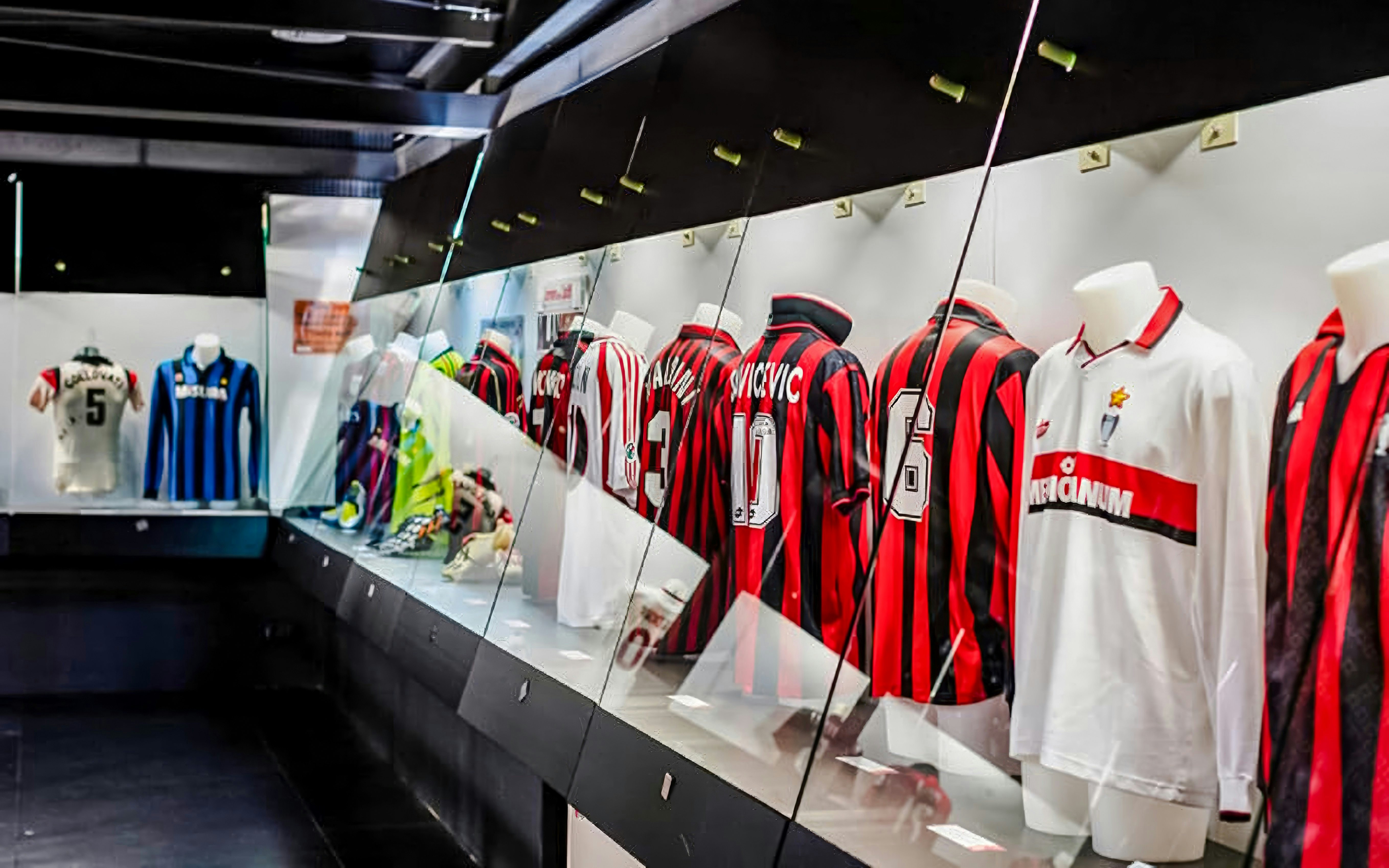
The attached San Siro Museum deepens the experience. It displays jerseys, trophies, historic balls, and memorabilia that trace more than a century of Italian and European football. Interactive exhibits highlight defining goals, dramatic derbies, and global icons who shaped the sport.


What to see at San Siro Stadium

The pitch and stands

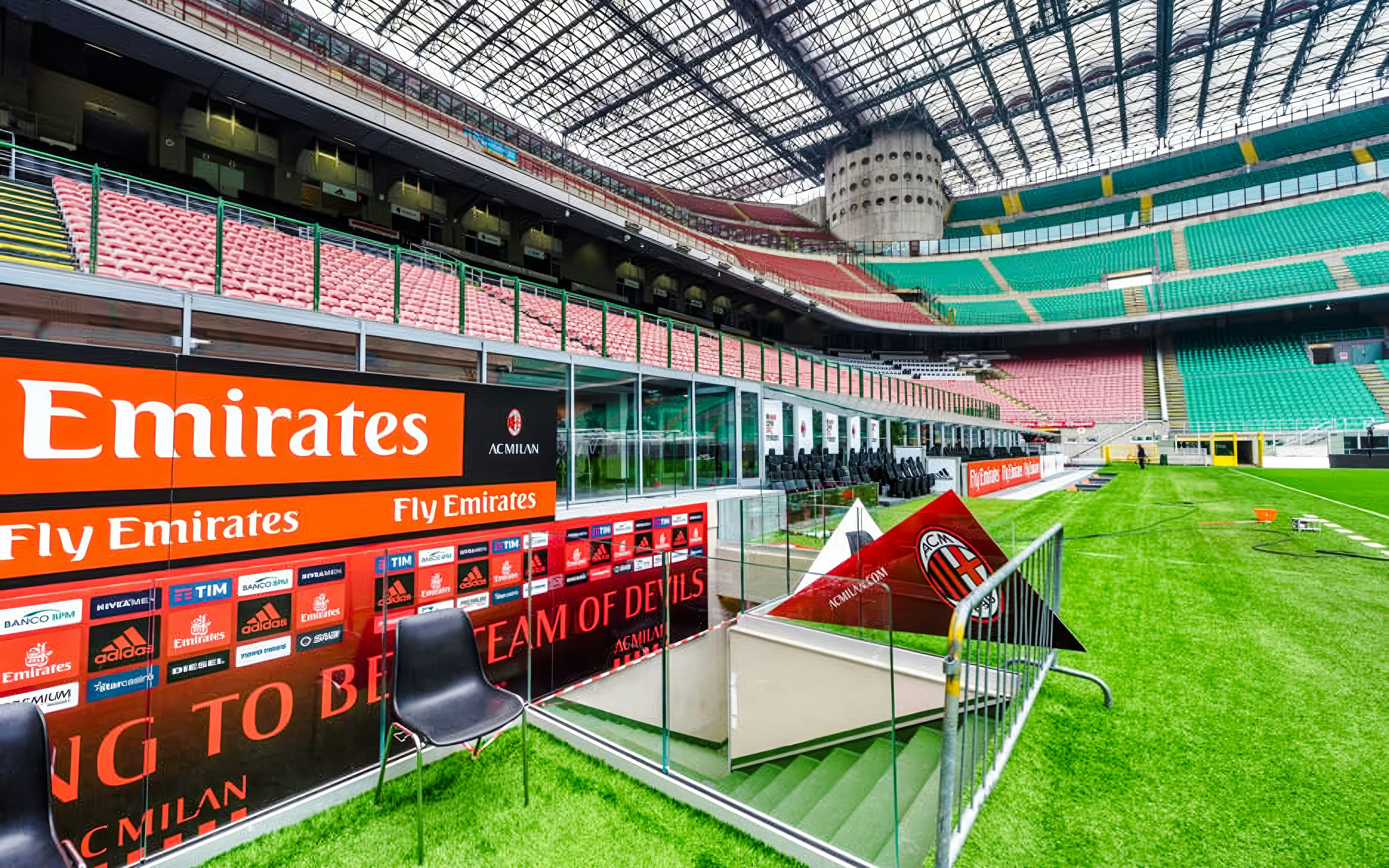
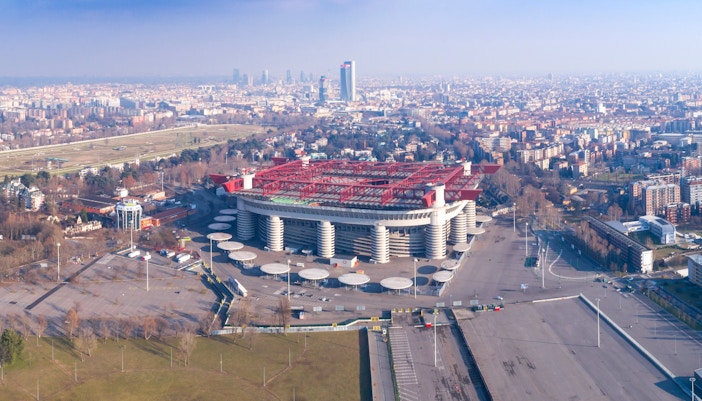
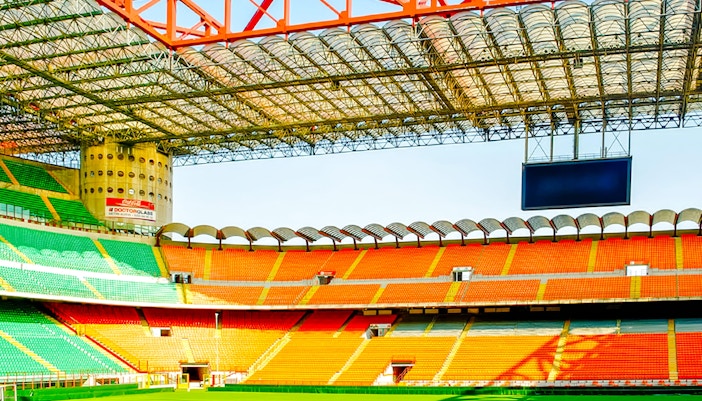
Step out toward the edge of the pitch and take in sweeping views of the seating tiers. With a capacity of around 75,000, the scale feels immense. Imagine the intensity of a Milan derby as you stand where legends once played.

Players’ tunnel and locker rooms

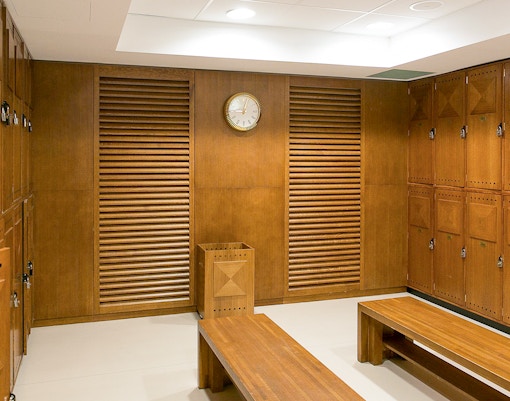
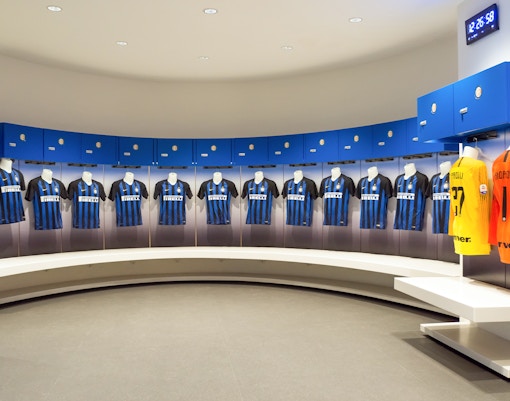
Walk through the same tunnel used by AC Milan and Inter players on match days. Visit the locker rooms, see where teams prepare, and experience the pre-match atmosphere from a player’s perspective.

San Siro Museum

Explore a shared museum dedicated to both clubs. Discover historic jerseys, Champions League trophies, rare photographs, and multimedia installations that celebrate more than 100 years of football excellence.

Press conference room

Sit where managers address the media after high-stakes matches. This stop offers a behind-the-scenes look at the strategic and emotional side of professional football.

Highlights of San Siro Stadium in Milan

Placeholder Image Headout Blimp

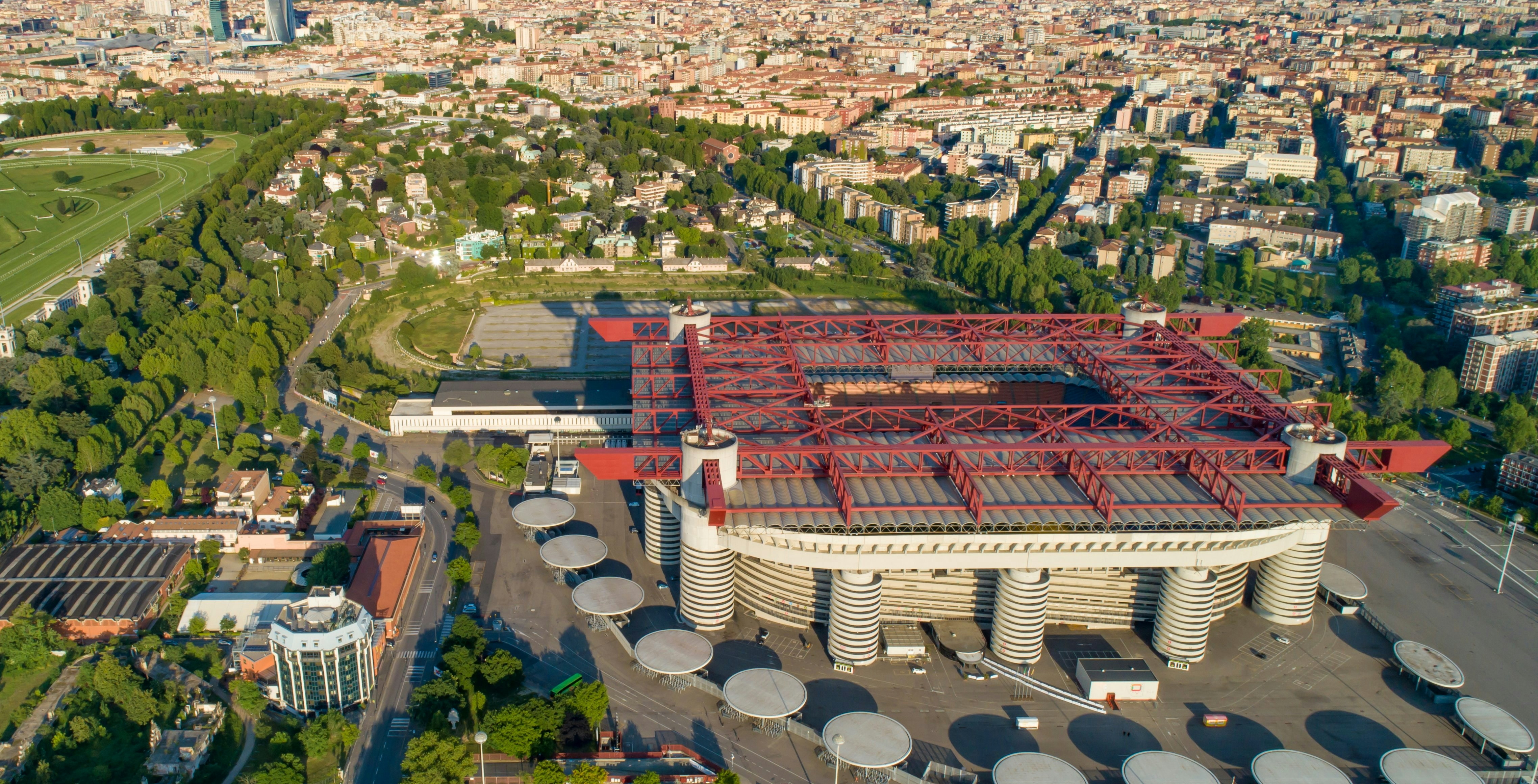
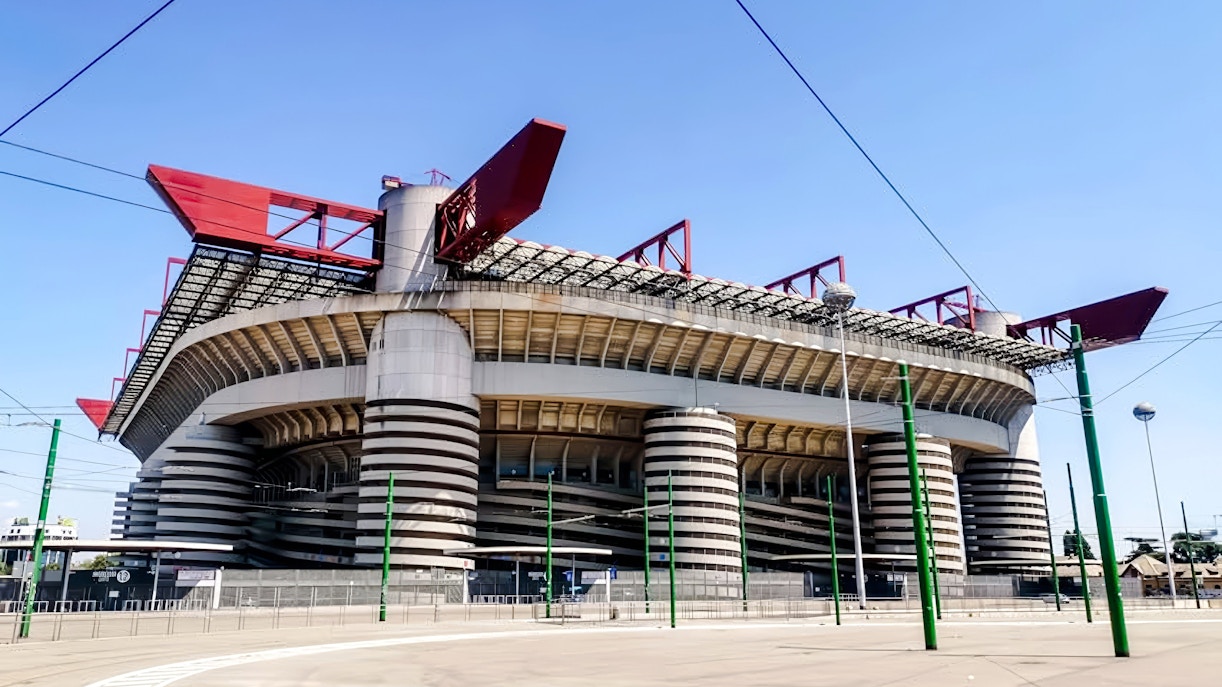
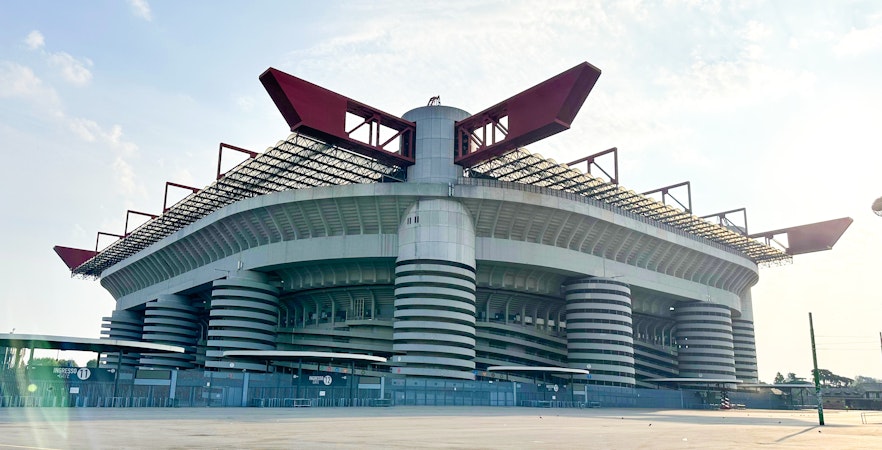
The iconic spiral ramps and red steel towers

Added for the 1990 FIFA World Cup, the eleven cylindrical towers support the stadium roof and create San Siro’s unmistakable industrial skyline.

Placeholder Image Headout Blimp

Brief history of San Siro Stadium

  • 1926: San Siro opens on 19 September, funded by AC Milan president Piero Pirelli and designed by Ulisse Stacchini. Capacity: ~35,000.
  • 1935: The City of Milan purchases the stadium and begins expansions.
  • 1947: Inter Milan starts sharing San Siro, making it the joint home of both Milan clubs.
  • 1950s: A second tier is added, significantly increasing capacity.
  • 1990: Major upgrades for the FIFA World Cup: third tier added, roof installed with 11 cylindrical towers, facilities modernized.
  • 2000s–Today: Hosts Series A matches, European finals, international tournaments, and global concerts, cementing its status as one of Europe’s most historic stadiums.

Who built San Siro Stadium?

Architect Ulisse Stacchini designed San Siro Stadium in 1925–1926. Known for also designing Milan’s Central Railway Station, Stacchini embraced a monumental style that emphasized symmetry and grandeur. Engineer Alberto Cugini collaborated on the project, bringing structural innovation to early 20th-century stadium design.

Architecture of San Siro Stadium

San Siro’s architecture reflects decades of evolution. Built in 1926 as a football-only rectangular stadium, it gained a reinforced concrete second tier in the 1950s, boosting capacity. For the 1990 World Cup, eleven cylindrical towers and a roof supported by red steel girders gave it its iconic industrial look. Exterior spiral ramps ease crowd flow, while steep tiers intensify pitch views and acoustics making San Siro one of Europe’s most recognizable stadiums.

San Siro beyond football

🎤 Concert arena

Hosts international artists and large-scale live events.

🏛️ Museum & tours hub

Operates year-round with guided visits and exhibitions.

🏟️ Cultural landmark

Symbol of Milan’s sporting identity and heritage.

🏗️ Active civic venue

Subject to redevelopment discussions while remaining fully operational.

Frequently asked questions about San Siro Stadium

The stadium’s official name is Stadio Giuseppe Meazza, named after the legendary Italian footballer. Most locals and visitors still refer to it as San Siro.