View 'The Last Supper' | Da Vinci's original painting of a famous Biblical scene

See Milan's crown jewel, The Last Supper painting, a masterpiece by Leonardo da Vinci that transcends time and artistry. This Renaissance artwork shows an important story from the Bible and represents Milan's rich cultural history. Painted on the wall of Santa Maria delle Grazie in Milan between 1495 and 1498, the artwork has been restored and is loved for its creativity and impact. It is famous in pop culture and has influenced lots of art from the Renaissance.

The Last Supper in a nutshell
The Last Supper
  • Official name: The Last Supper, Cenacolo (Italian)
  • Location: Santa Maria delle Grazie church, Milan, Italy (Find on maps)
  • Artist: Leonardo da Vinci
  • Year: Painted between 1495 and 1498
  • Media: Tempera on gesso, pitch, and mastic
  • Dimensions: 460 cm × 880 cm (181 in × 346 in)
  • Style: Renaissance art
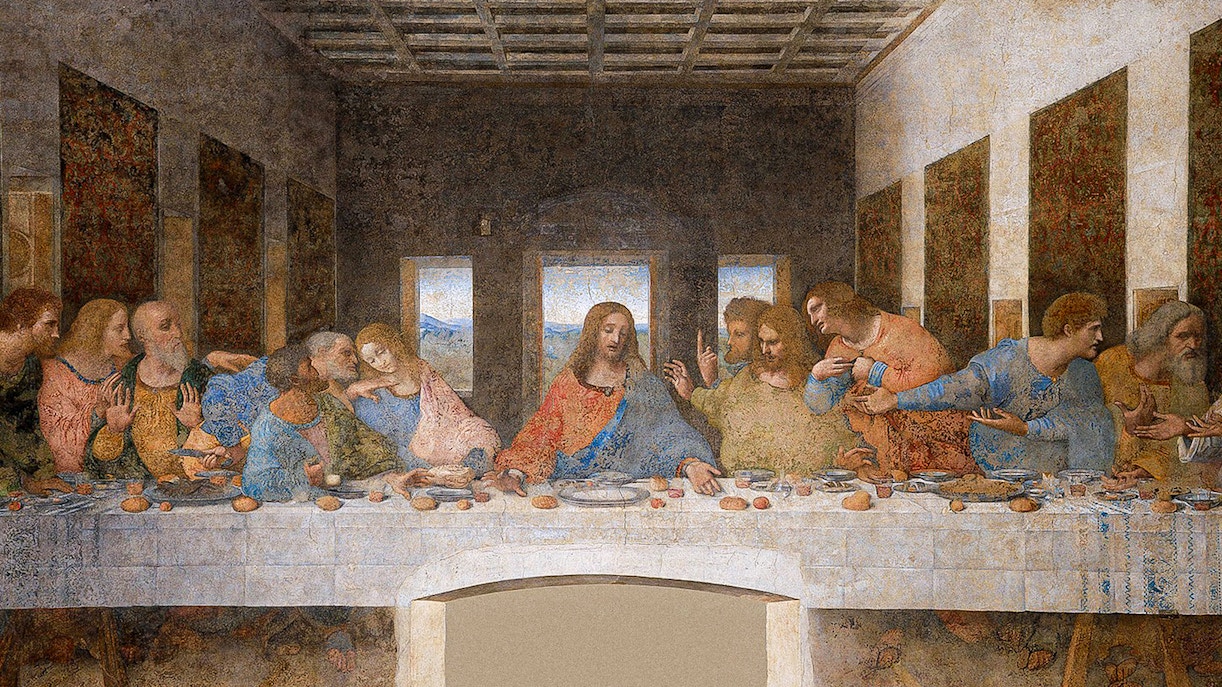
  • Subject: Depicts Jesus and his 12 apostles during the last meal before Jesus' arrest.
  • Timings: Tuesday to Sunday from 8:15am to 7pm
  • Commissioned by: Ludovico Sforza, the Duke of Milan
  • UNESCO World Heritage Site: Since 1980

Why is The Last Supper important?

The Last Supper

The Last Supper is important in Christianity, art history and Milan tourism. It also holds significance for being a masterpiece by Leonardo da Vinci. Painted in the late 15th century, it's renowned for its amazing art techniques and emotional story. It has lasted for 500 years, has survived many catastrophes and holds an irreplaceable position in Milan's cultural tapestry. It acts as a magnetic force, drawing global tourists and art aficionados to the city. The Last Supper's profound impact on Milan's tourism sector underscores its vital role in the city's economy, as well as the immense pride the Milanese people take in safeguarding this iconic work of art.

Plan your Last Supper visit

Opening hours

Tuesday - Sunday: 8:15am to 7pm

Last access: 6:45pm

Closed on: Monday, New Year’s Day and Christmas Day.

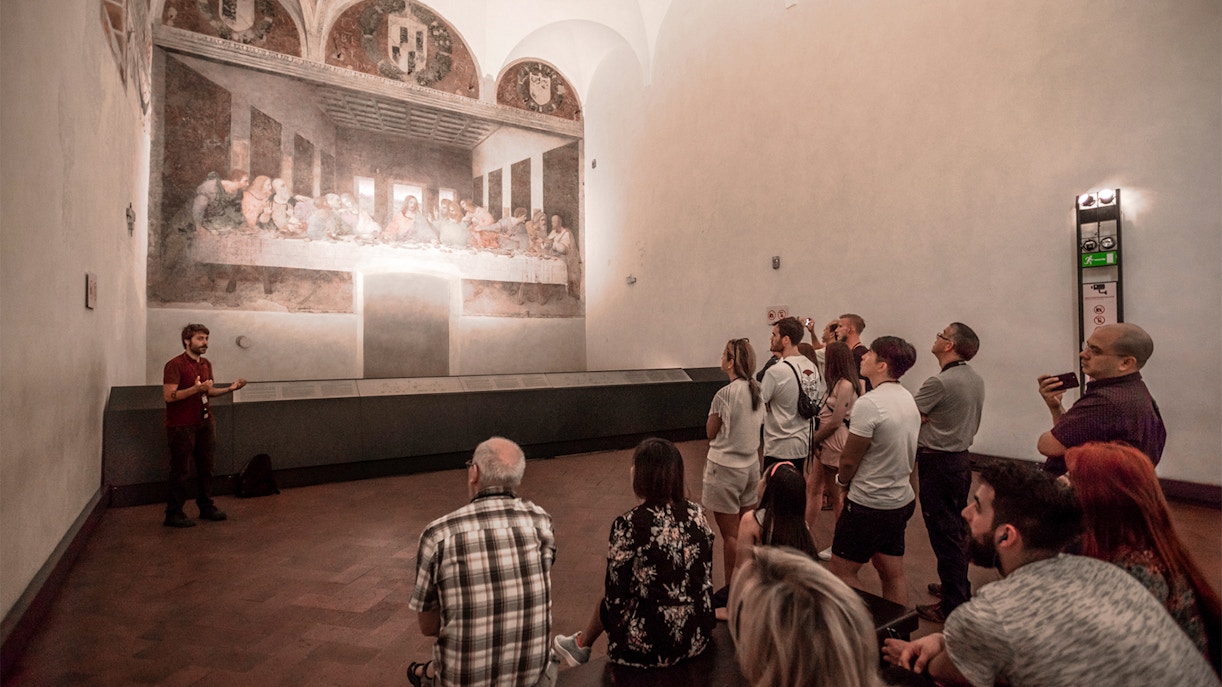
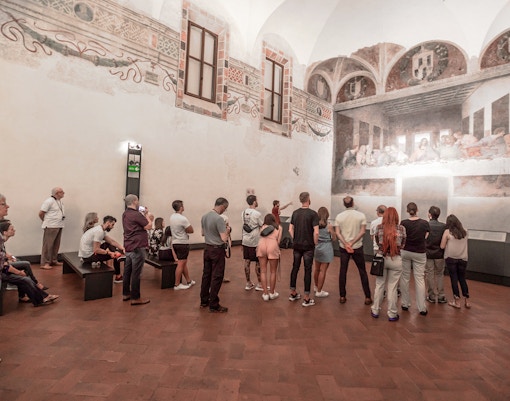
Note: Only a maximum of 18 visitors are allowed in the viewing area for a duration of 15 minutes.

Detailed The Last Supper opening hours

Location

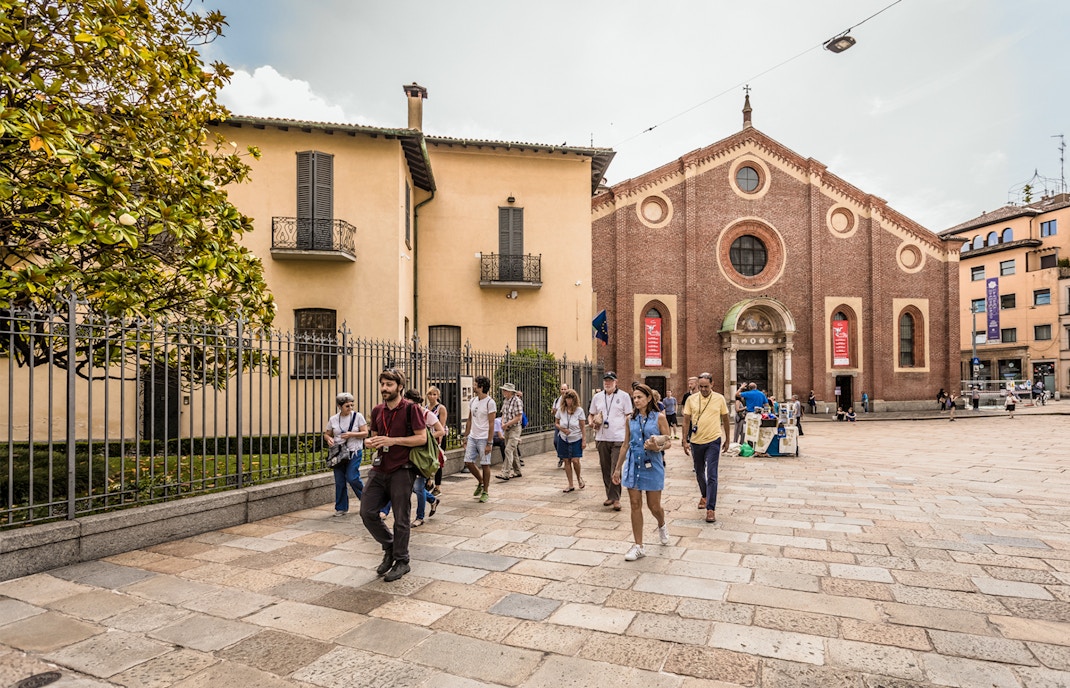
Address: The Last Supper (Cenacolo Vinciano,) Piazza Santa Maria delle Grazie, 2 20123 Milan, Italy

Find on maps

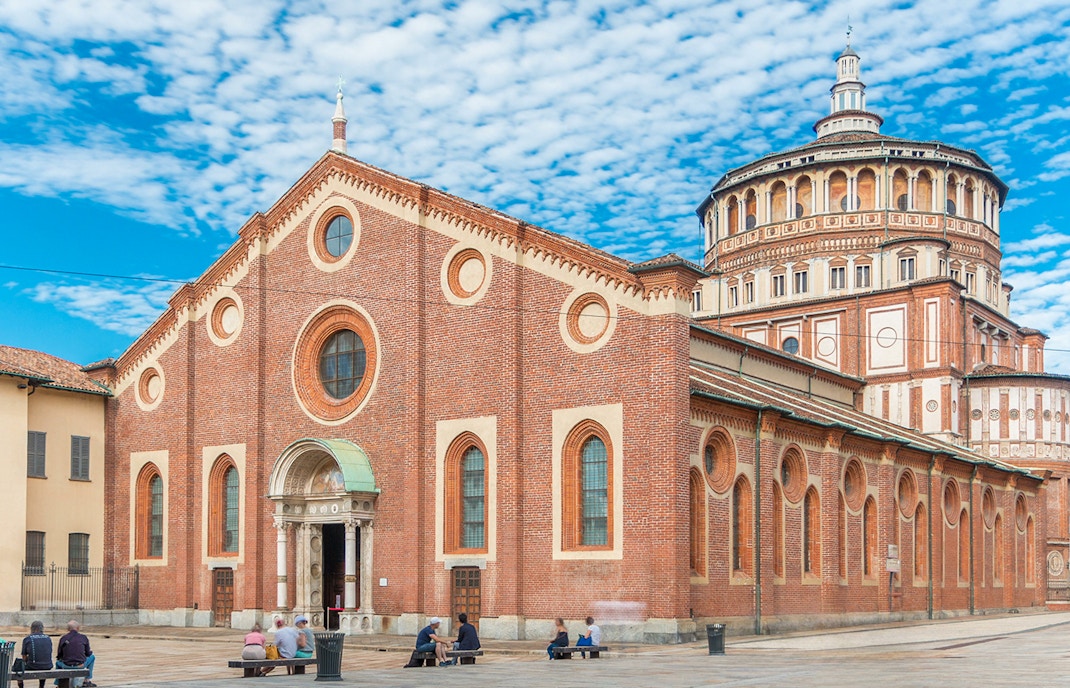
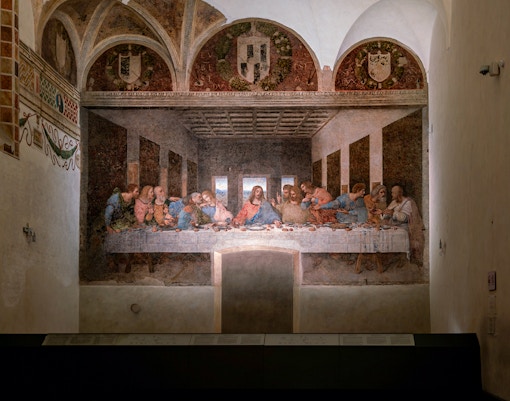
The Last Supper by Leonardo da Vinci is housed in Milan's Santa Maria delle Grazie church, centrally located in Milan, Italy. It can also be found on the wall of the dining room of the former Dominican convent.

Nearest landmark: Church of San Maurizio al Monastero Maggiore, 750 m

Nearest metro station: Cadorna, 600 m

Detailed directions to Last Supper Milan

Who painted The Last Supper painting?

The Last Supper

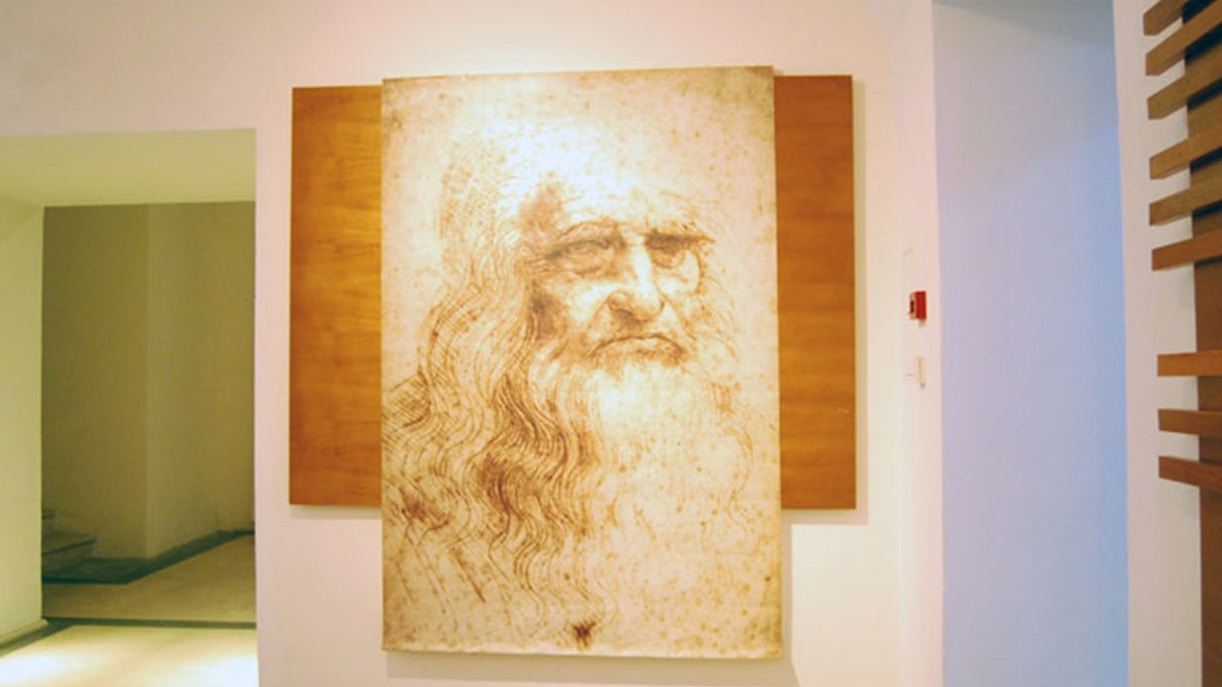
The Last Supper was painted by Leonardo da Vinci, who was much more than just a painter. Renowned for his brilliance during the Renaissance, he was a true polymath with an insatiable curiosity. He paid incredible attention to detail and understood human anatomy like few others. Besides painting the famous The Last Supper, he's also known for the mysterious smile of the Mona Lisa. But his influence wasn't limited to art — he also explored science and new ideas, leaving a lasting mark on our world. Leonardo da Vinci's genius combined art, intellect, and innovation in a truly remarkable one.

Who was Leonardo da Vinci?

The Last Supper: Who is who?

The Last Supper
The Last Supper figures
1/6

Jesus and the apostles

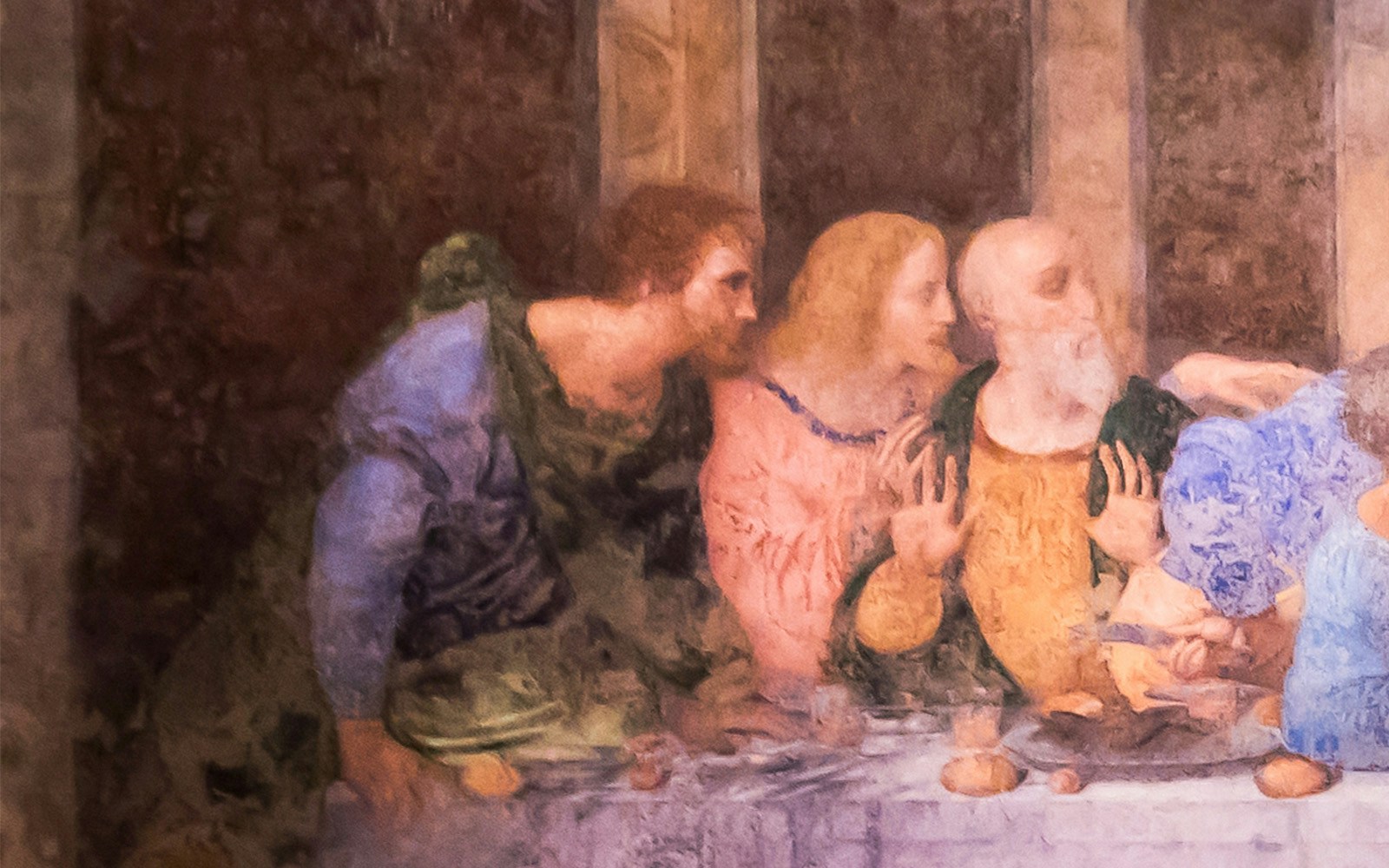
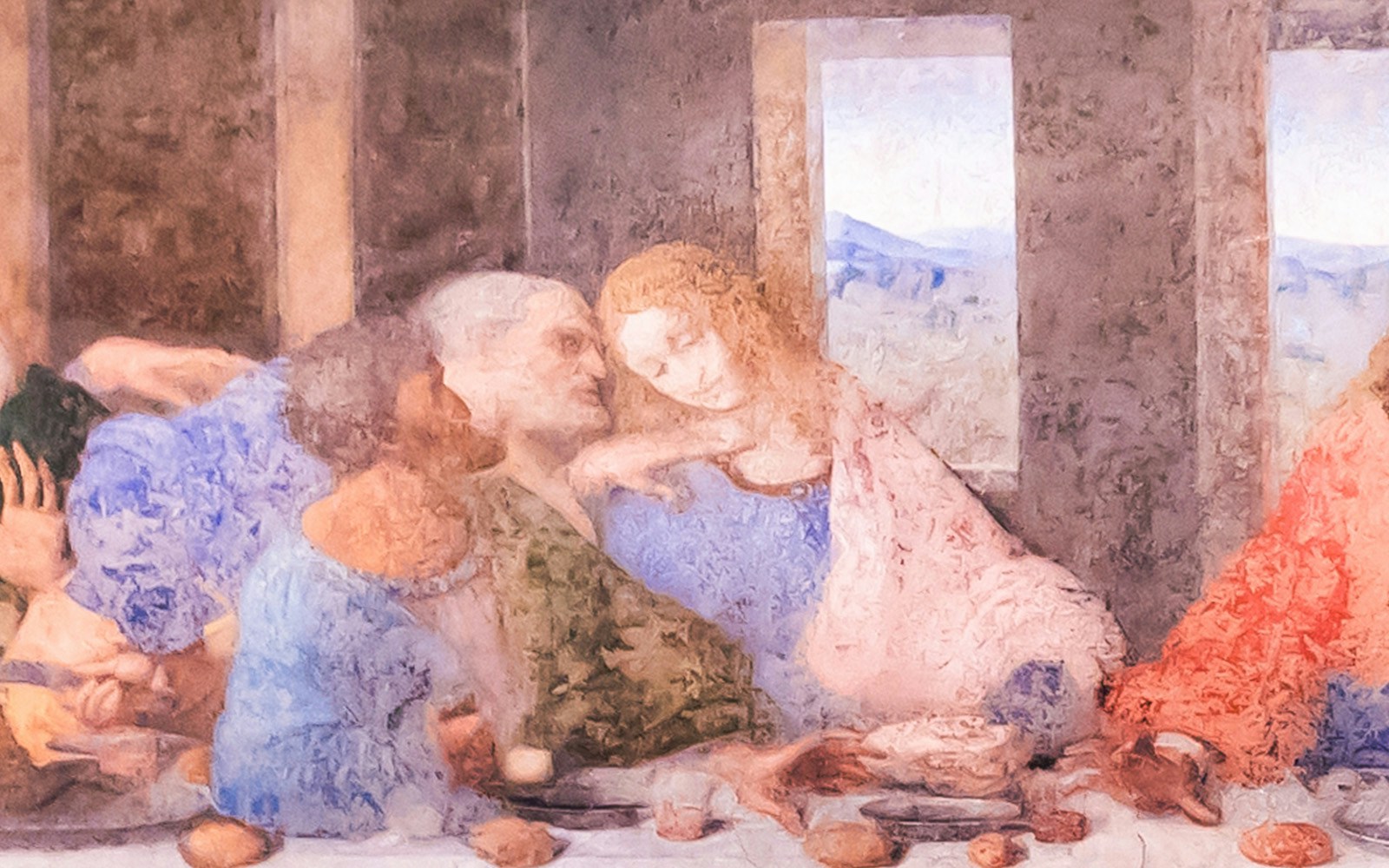
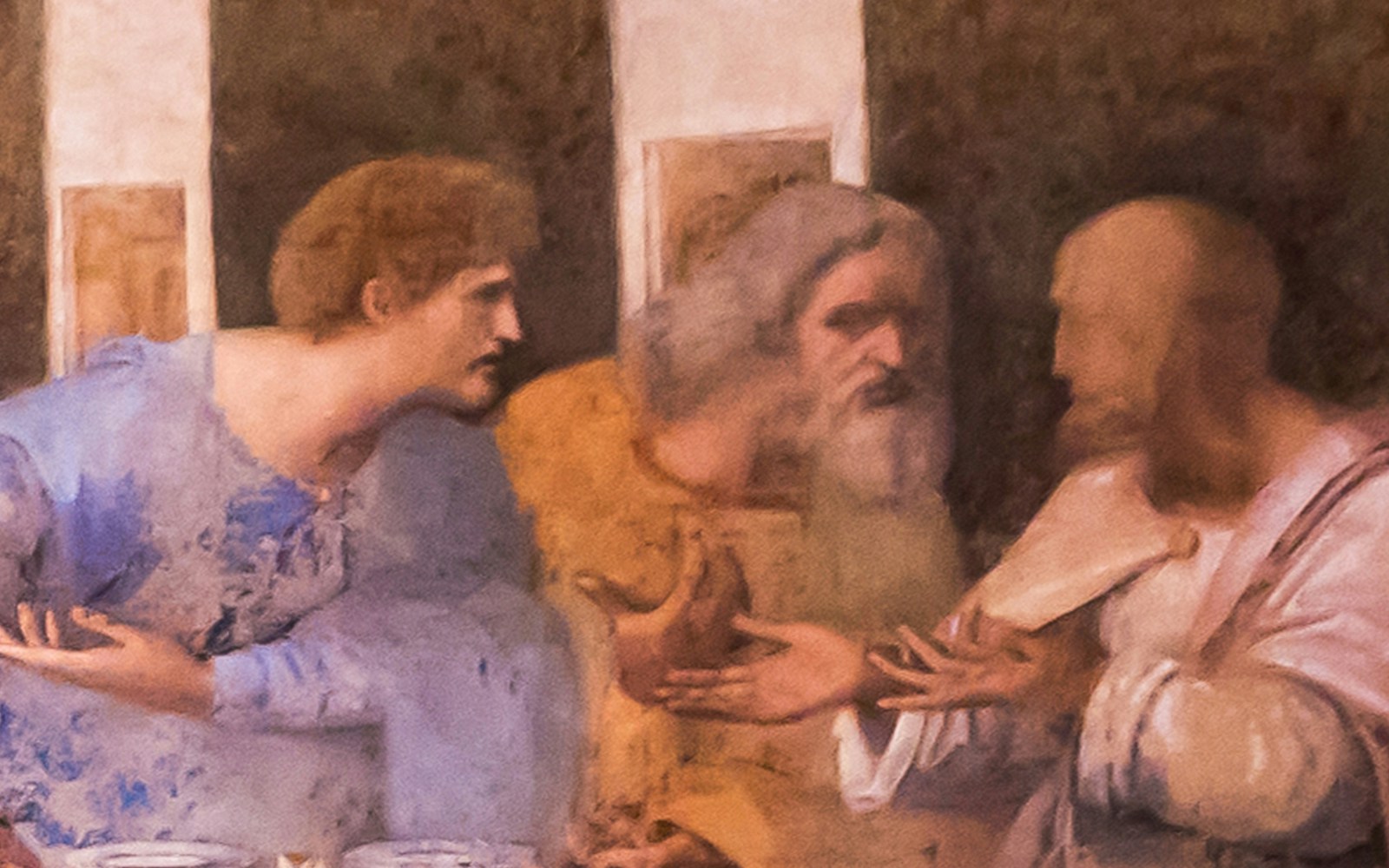
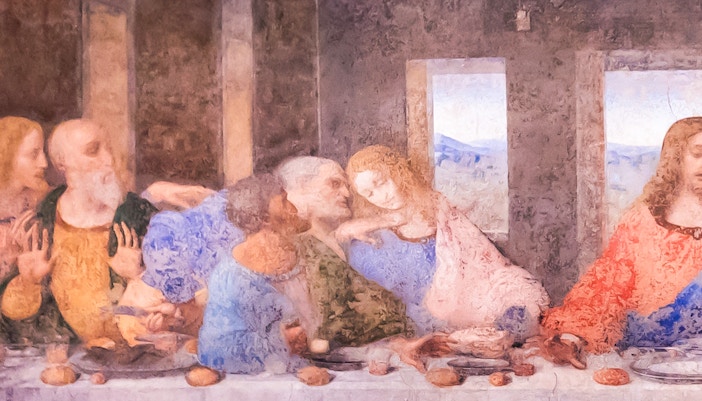
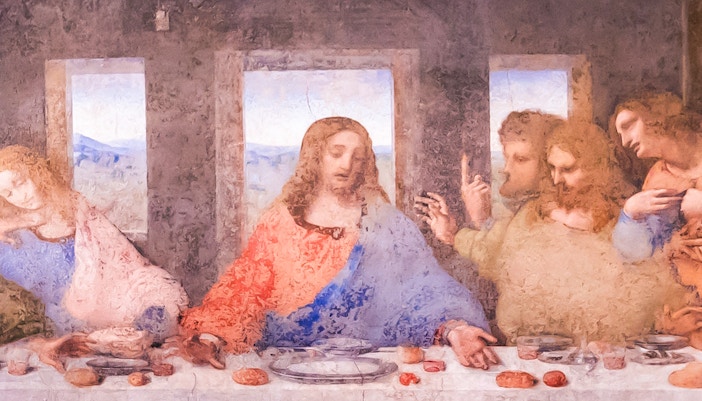
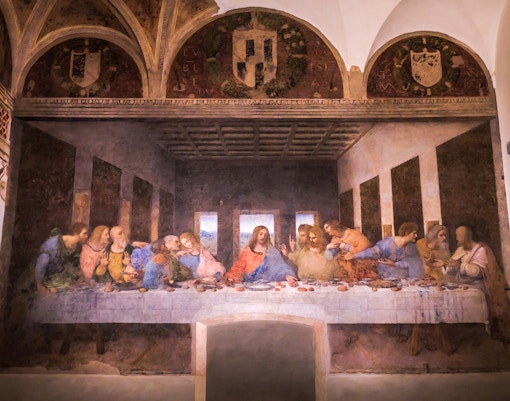
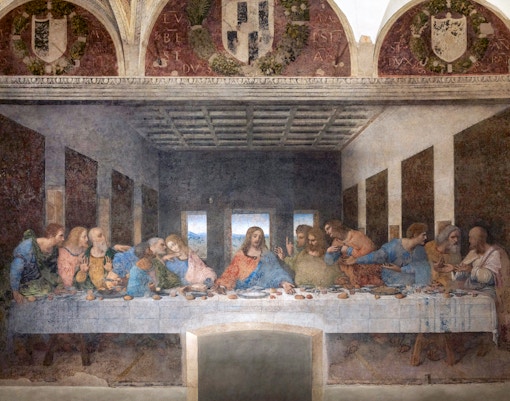
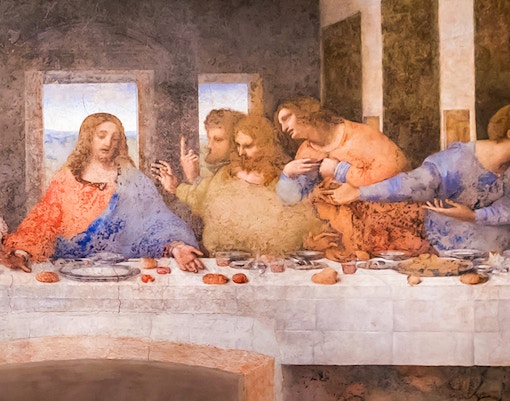
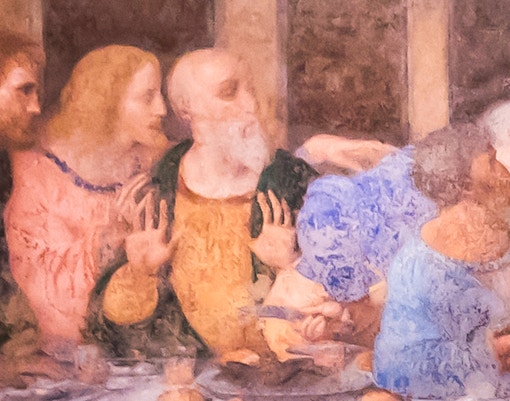
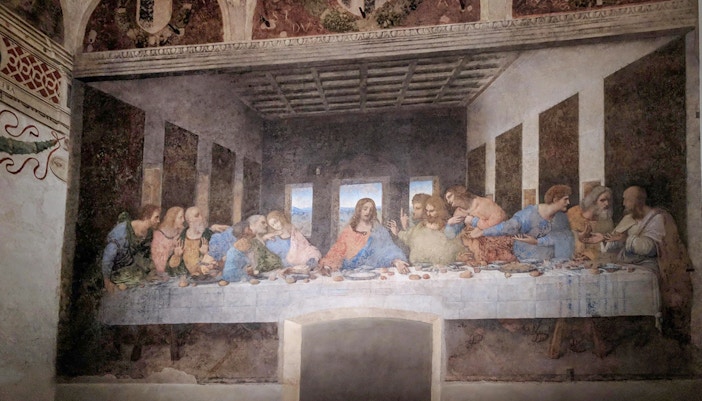
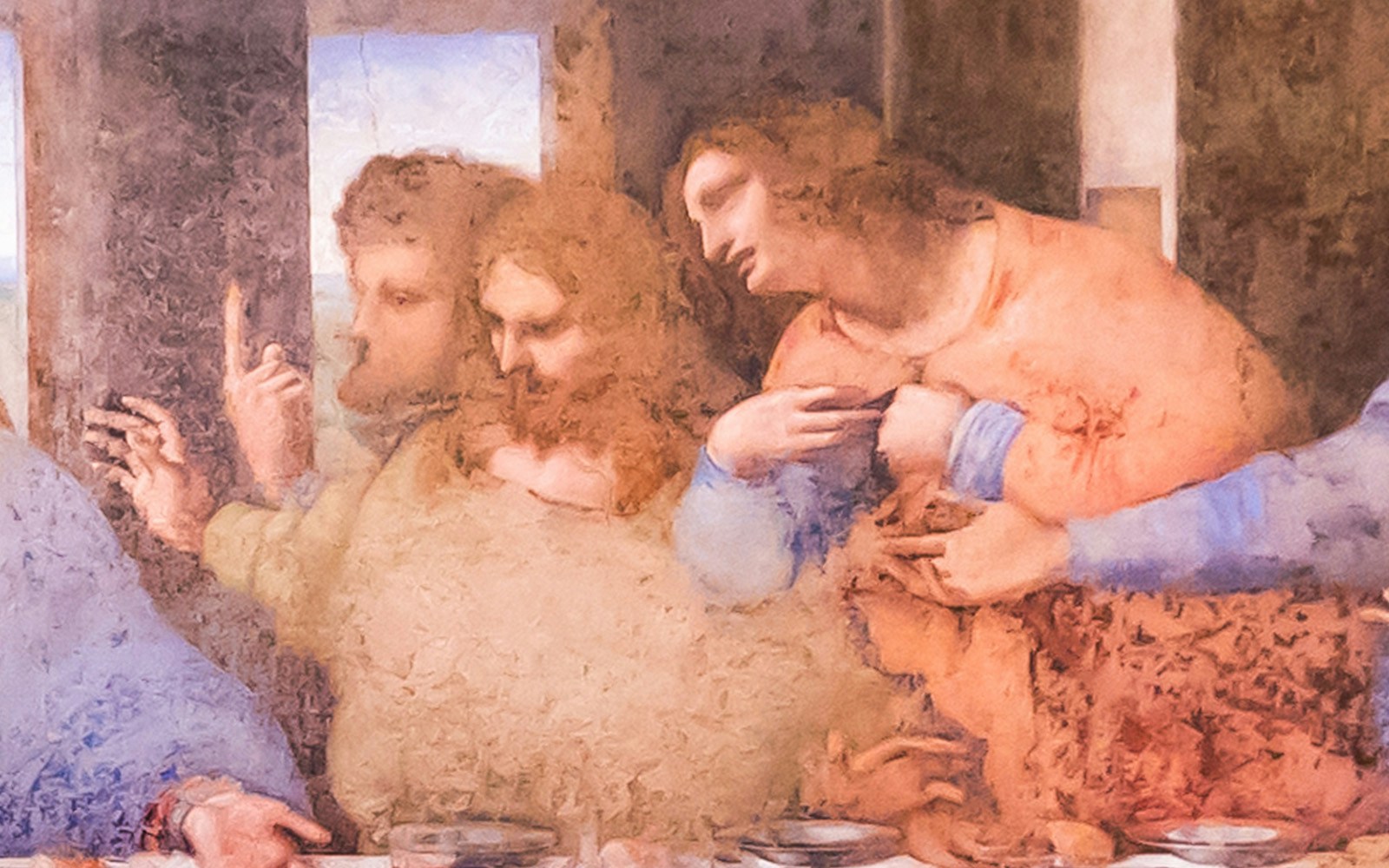
From left to right, the characters represented in the painting The Last Supper are Bartholomew, James, Andrew, Peter, Judas, John, Jesus, Thomas, James Major, Philip, Matthew, Thaddeus, and Simon.

Bartholomew, James and Andrew

Bartholomew, one of the 12 apostles, is also called Nathanael, meaning ‘son of Tolmai’ in Hebrew. In the Gospel of John, Jesus praises him as “a true Israelite, without deceit”. James the Less, son of Alphaeus, spent three years with Jesus, witnessing his teachings and miracles. He's also known as the minor or the younger in some translations. Andrew the Apostle, born between AD 5 and AD 10, was initially a fisherman on the Sea of Galilee. He was Jesus's first disciple and is honored in the Byzantine Church as Protokletos, meaning ‘the first called.’

Peter, Judas and John

Originally Simon, Peter, a Galilean fisherman, was renamed ‘rock’ by Jesus. He led the early Church and was crucified upside-down in Rome by Emperor Nero. Judas Iscariot, from Judah, betrayed Jesus for 30 pieces of silver. Despite being the disciples' treasurer, he was dishonest, and was described as a thief in the Bible. Among the 12 apostles, John is recorded as the youngest, with his brother James also counted among them. John has often been confused for Mary Magdalene due to his feminine features, spurring a conspiracy theory among art lovers.

Jesus Christ

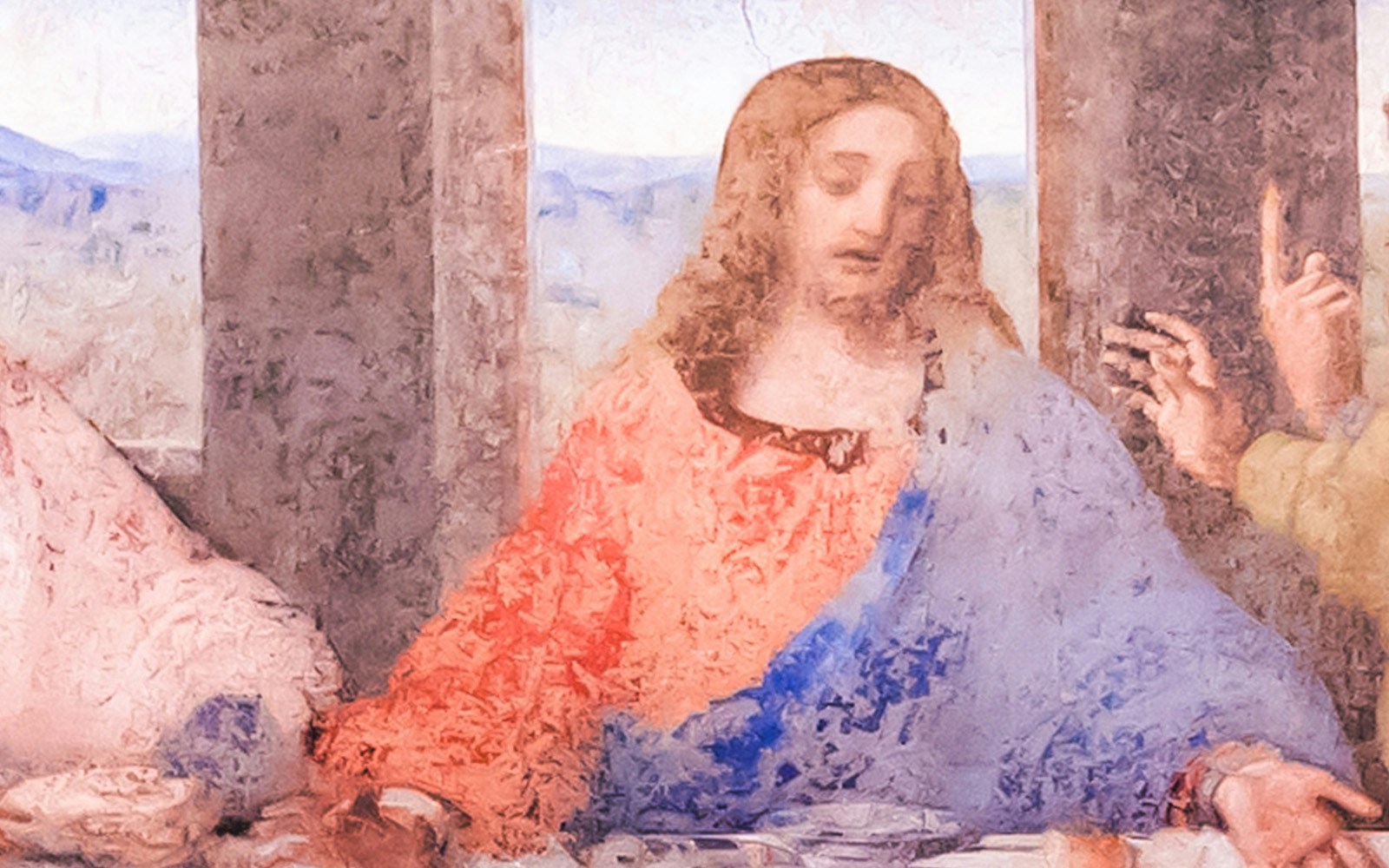
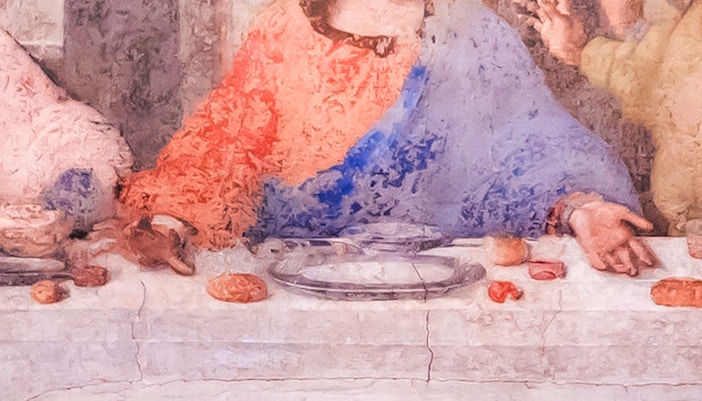
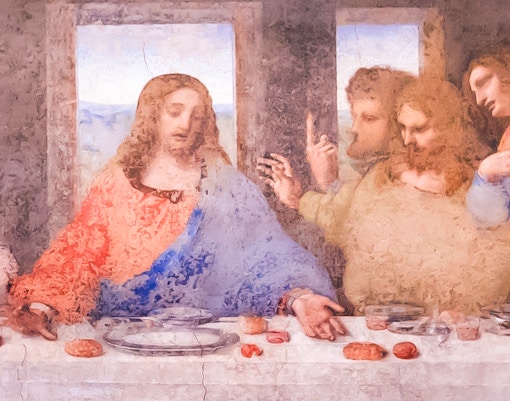
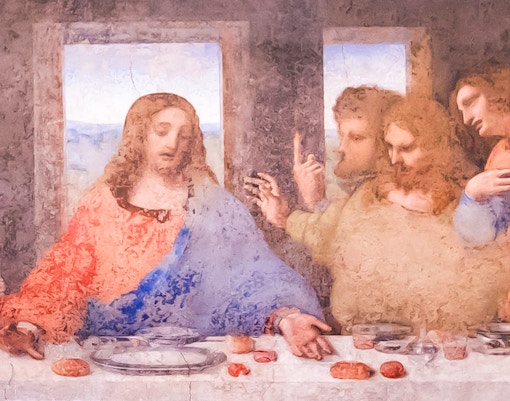
Jesus sits at the center, surrounded by his twelve disciples. He is depicted as the focal point, his serene demeanor contrasting with the turmoil around him. Symbolizing divine grace and leadership, Jesus embodies the spiritual essence of the scene.

Thomas, James Major and Philip

Thomas earned the nickname ‘Doubting Thomas’ for questioning Jesus' resurrection initially. However, he later affirmed his faith, declaring, ‘My Lord and my God,’ upon witnessing Jesus' crucifixion wounds. James the Greater was among Jesus' earliest disciples and the first to be martyred by Herod Agrippa in AD 44. He is also renowned for spreading Christianity in Spain. Philip, hailing from the city of Bethsaida, was one of the disciples present with John the Baptist when he identified Jesus as the Lamb of God.

Matthew, Thaddeus and Simon

Matthew, who hailed from Galilee, witnessed the Ascension of Jesus. As a tax collector, he likely possessed proficiency in both Aramaic and Greek languages. The apostle Jude Thaddeus, also known as Thaddeus or Jude of James, is depicted with a club as his attribute. Icons often show him with a flame around his head, symbolizing his presence at Pentecost. Simon the Zealot joined the apostles at the age of 28 and purportedly spread the Gospel in Egypt. He remains one of the lesser-known apostles.

The painting's subject

The last meal of Jesus with the apostles

Also recognized as Il Cenacolo, Leonardo da Vinci's The Last Supper captures the profound scene detailed in the New Testament, wherein Jesus Christ shares his final meal with his 12 apostles, marking a poignant moment before his crucifixion.

The revelation of betrayal

In this crucial moment, Jesus reveals that one of his closest followers will betray him, stirring intense emotions among the apostles. Leonardo da Vinci's painting vividly captures their shock and confusion as they grapple with this revelation, adding depth to the Last Supper story. One of them even asks, ‘Is it me, my Lord?’ in incredulity.

Departure from traditional iconography

In contrast to traditional representations that depict Jesus with a halo to emphasize his divinity, Leonardo da Vinci's approach in The Last Supper diverges by utilizing perspective and symmetry. Through these artistic techniques, da Vinci directs attention to the central figure, Jesus, without the conventional halo. This deliberate omission underscores Jesus' humanity while acknowledging his divine significance.

Technique and composition of the painting

Medium

During the Renaissance, fresco painting was prevalent, but Da Vinci employed a unique technique for this masterpiece. Unlike traditional frescoes painted on wet plaster, he used tempera on gesso, pitch, and mastic, offering more flexibility and time for meticulous detailing. However, the unconventional method caused paint flaking within a few years due to poor pigment adhesion to the wall.

Perspective

In The Last Supper art, perspective helps make the painting feel real. The lines and positions of things draw your eyes to Jesus in the middle, making him stand out. This makes the scene important and makes you feel like you're there with the characters.

Light and Shadow

Leonardo da Vinci employed chiaroscuro, a method of contrasting light and shadow, to add depth and realism to the figures. Light falls on the apostles' faces, revealing their emotions, while shadows create drama and mystery in the painting.

The Grouping of Apostles

The arrangement of the apostles has stirred much discussion among art historians. Leonardo da Vinci's portrayal depicts Christ's disciples organized in groups of three, a composition laden with symbolic significance. This grouping reflects the doctrine of the Holy Trinity, a central tenet of Christian belief, where Father, Son, and Holy Spirit are united in divine harmony.

The mood of the painting

Anger

Anger simmers within Matthew, his wild, swinging hands and tense posture revealing a simmering frustration. His fervent dedication to his cause fuels the flames of indignation, his righteous anger burning bright against perceived injustices, whether worldly or spiritual.

Shock

Andrew's face registers shock, and his hands are in the air, as if struggling to comprehend the gravity of the momentous occasion. The unexpected revelations and unfolding events leave him stunned, caught in a whirlwind of disbelief and uncertainty, his world momentarily upended by the revelations before him.

Calmness

Amid all the feelings, Jesus sits calmly, his peaceful look and relaxed manner making everyone around him feel safe and sure. His presence is like a steady rock in a rough sea, giving comfort and strength to his followers in their worries and confusion. He shines like a light of unwavering faith and heavenly peace amid all the human struggles and emotions.

Fear

Fear grips the hearts of James Major and Philip, as they sit in stunned silence and turn towards Jesus for more clarity. The grief of not being able to understand the revelation of Christ to its full extent is also clearly visible here.

History of The Last Supper artwork 

1495-1497: Leonardo da Vinci was commissioned by Ludovico Sforza, Duke of Milan, to create The Last Supper as part of the renovation of the Santa Maria della Grazie. He worked on this masterpiece for two years, capturing the pivotal moment when Jesus announced that one of his disciples would betray him.

Early 16th century: The paint deteriorates due to the unconventional medium.

18th century: The painting suffered significant damage due to neglect, wartime bombings, and environmental factors and misguided restoration attempts, resulting in loss of original detail and color.

19th century: Efforts were made to restore the artwork, but challenges persisted.

20th century: The Last Supper survived bombings during World War II, showcasing its resilience. A 21-year restoration project led by Pinin Brambilla Barcilon was initiated. Advanced scientific techniques were employed to remove contaminants and reveal the original brilliance.

Detailed history of The Last Supper

The story of the Last Supper

The Last Supper story

The story of The Last Supper is a rather moving one. The painting portrays the moment when Jesus announces that one of his disciples will betray him. It begins with Jesus and his apostles gathering for a special dinner during Passover. While they enjoyed the meal, Jesus confided in them about what he knew. The apostles couldn't believe it and asserted that none of them would betray him.

Then, Jesus did something important: He took bread, blessed it, and shared it with them. He said the bread was his body, about to be sacrificed for them. He did the same with wine, saying it represented his blood, which would save them. This became the tradition of communion. After that, Jesus surprised everyone by washing their feet, showing that serving others was important. One of the apostles, Peter, did not like it at first, but Jesus explained that it was a lesson in humility.

And so, that night became known as The Last Supper, a time when Jesus showed his love, even in the face of betrayal.

The Last Supper in modern art 

Placeholder Image Headout Blimp
1/6

Salvador Dali’s ‘The Sacrament of the Last Supper’ (1955)

Salvador Dali's ‘The Sacrament of the Last Supper,’ reimagines this iconic scene in his surrealistic style and features elongated, distorted figures in a dreamlike setting.

Andy Warhol's ‘The Last Supper’ Series (1986)

Andy Warhol's series combines fine art and Pop art, elevating commonplace, recognizable imagery to fine art status.

Banksy's ‘The Last Supper’ (2004)

Banksy's version of The Last Supper offers a provocative twist on the iconic biblical scene. This contemporary artwork features Jesus and his disciples enjoying a meal, but their faces are obscured by iconic masks, lending an air of anonymity and intrigue.

Francis Newton Souza's ‘The Last Supper’ (1990)

Francis Newton Souza's artwork reinterprets the classic scene with distorted, anxious apostles.

Zeng Fanzhi's ‘The Last Supper’ (2001)

Known for his expressive style, Fanzhi's interpretation features bold brushstrokes and intense colors, conveying a sense of emotional tension among the disciples.

Peter Greenaway's ‘The Last Supper’ (2007)

In this version, Greenaway explores a unique cinematic format. The artist’s interpretation combines elements of film, visual art, and multimedia to present a contemporary perspective on The Last Supper. 

Frequently asked questions about The Last Supper

The Last Supper is famous for several reasons. It captures a big moment in religious history and focuses on the emotional world of the apostles. It is also famous because of how well it has survived abuse, including a world war, and has had the resilience to last for 500 years.

More reads

Secrets

Book Now

Timings

Book Now

Facts