Visiting La Scala Theater in Milan
La Scala Theater is Milan’s legendary opera house, best known for its red-and-gold auditorium and the museum that traces more than two centuries of opera history. The visit itself is compact, but it is more schedule-sensitive than many travelers expect because auditorium access can shift around rehearsals and performance prep. This guide covers timing, tickets, routes, and the details that matter most.
Quick overview: La Scala Theater at a glance
If you’re deciding whether to book ahead, go with a guide, or just fit La Scala between other Milan sights, start here.
- When to visit: Daily, usually 9:30am–5:30pm. The first hour after opening or the last 90 minutes of the day is noticeably calmer than 11am–2pm, because most central Milan walking tours and Duomo-area visitors arrive in that midday window.
- Getting in: From €12 for standard museum entry. Guided tour options usually start around €25. Booking ahead matters most from May to September and on weekends, when the most convenient afternoon slots go first.
- How long to allow: 1–1.5 hours for most visitors. It stretches closer to 2 hours if you linger in the museum rooms or want a slower, more detailed guided visit.
- What most people miss: The Verdi and Callas memorabilia, plus the instrument and archive rooms that explain why La Scala matters beyond the auditorium itself.
- Is a guide worth it? Yes if you want the stories, rivalries, premieres, and rehearsal context; if you mainly want to see the hall and browse the museum, the official on-site audioguide is usually enough.
🎟️ Guided tour slots for La Scala Theater often fill 2–5 days in advance from May to September. Lock in your visit before the time you want is gone.
Jump to what you need
🕒 Where and when to go
🎟️ Which ticket is right for you?
🗺️ Getting around
🎭 What to see
♿ Facilities and accessibility
Where and when to go
How do you get to La Scala Theater?
La Scala sits in Milan’s historic center, just off Piazza del Duomo and a short walk from both Duomo and Montenapoleone metro stations.
Largo Antonio Ghiringhelli, 1, 20121 Milan, Italy
- Metro: Duomo (M1, M3) → 5-min walk → Walk through Galleria Vittorio Emanuele II to reach Piazza della Scala.
- Metro: Montenapoleone (M3) → 5-min walk → Best if you’re arriving from the fashion district or Brera side.
- Tram: Manzoni Scala stop (Lines 1, 2) → 1-min walk → The easiest surface option if you want to avoid Duomo crowds.
- Taxi / rideshare: Drop-off at Piazza della Scala → 1–2-min walk → Useful if you’re arriving from Milano Centrale with limited time.
Which entrance should you use?
La Scala’s grand facade faces the square, but museum and daytime tour entry usually works through the museum side rather than the main performance entrance.
- Pre-booked tickets and guided tours: For visitors with a reservation. Expect a 5–10 min wait during late-morning and weekend peaks.
- On-the-day tickets: For walk-up museum entry. Expect a 15–30 min wait during May–September afternoons.
When is La Scala Theater open?
- Monday–Sunday: 9:30am–5:30pm
- Last entry: 5pm
When is it busiest? Late morning to early afternoon, especially Friday–Sunday from May to September, when Duomo-area sightseers and city tours spill into La Scala after lunch.
When should you actually go? Aim for opening time or after 3:30pm, when guided groups thin out and you’ll usually have more breathing room in the museum rooms and auditorium boxes.
Which La Scala Theater ticket is best for you
| Ticket type | What's included | Best for | Price range |
|---|---|---|---|
Skip-the-Line Entry & Guided Tour of La Scala Theatre | Skip-the-line entry to La Scala Opera Theatre + 1-hour guided tour + expert English or French-speaking guide | A short Milan itinerary where you want the main stories and the best parts of the museum | €38 |
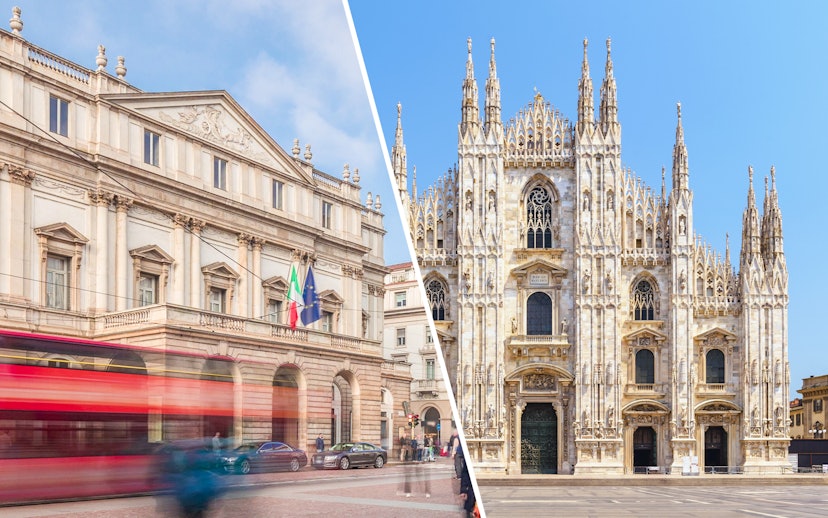
Combo: La Scala Theater + Milan Cathedral Skip-the-Line Guided Tour | Skip-the-line entry to La Scala Theatre + 1-hour guided tour + audio headsets when needed + skip-the-line entry to Milan Duomo + 1-hour guided tour + audio headsets when needed | A same-day Milan plan where you want 2 headline landmarks with one booking | €58 |
YesMilano: Flash, Standard & All-Inclusive City Passes | 24-hour or 3-day pass + public transport + selected museum access + Duomo access on eligible variants + digital maps and audio guides | A city break where La Scala is one stop among several museums | €39 |
How do you get around La Scala Theater?
Inside the theater and museum
La Scala is compact and mostly linear, so it’s easy to navigate, but it’s also easy to leave too early once you’ve seen the auditorium. Think of it as 2 linked experiences: the theater hall viewpoint and the museum rooms that explain why the house matters.
- Museum galleries: Portraits, instruments, librettos, costumes, and archival displays → budget 25–35 min.
- Auditorium boxes: The main theater view, chandelier, stage, and orchestra pit → budget 10–15 min, more if rehearsal activity is visible.
- Temporary exhibit rooms: Rotating displays tied to opera, ballet, or La Scala history → budget 10–15 min.
Suggested route: Start with the museum rooms, then move into the auditorium when your guide or route reaches it, and finish with the Verdi and Callas displays so you don’t make the common mistake of seeing the hall, taking photos, and walking out before the most revealing collections upstairs.
Maps and navigation tools
- Map: On-site layout and official materials focus on the museum route → pick one up at entry or use the official audioguide materials before you arrive.
- Signage: Wayfinding is decent for the museum sequence, but it won’t add much historical context without a guide or audioguide.
- Audio guide / app: Available in multiple languages → useful if you want background on the exhibits without joining a group tour.
💡 Pro tip: Don’t treat the auditorium as the finish line — save 20 minutes for the museum rooms after it, because that’s where the Verdi, Callas, and Toscanini pieces give the theater real meaning.
Get the La Scala Theater map / audio guide
Where are the masterpieces inside La Scala Theater?

Main auditorium
Era: 18th-century theater design
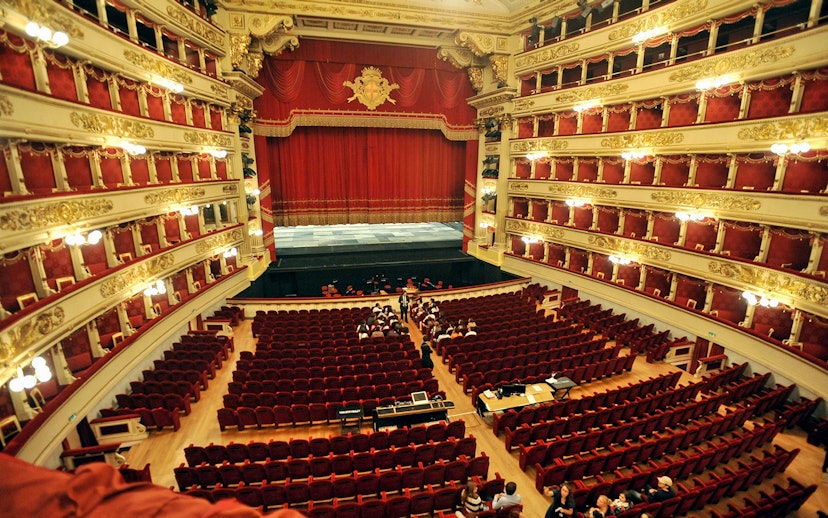
This is the reason most people come: the horseshoe-shaped hall, red velvet boxes, gilded ornament, and huge chandelier deliver the classic La Scala image in seconds. What most visitors miss is how intimate it feels from the side boxes — it’s not just grand, it’s acoustically built for closeness between stage and audience.
Where to find it: Through the museum route, from the public viewing boxes overlooking the theater hall
Verdi memorabilia rooms
Artist: Giuseppe Verdi
These rooms give La Scala its emotional weight, especially if you know how central Verdi was to the house’s identity. The handwritten materials and personal objects are what make the space feel less like a museum and more like a working archive of Italian opera.
Where to find it: In the museum galleries after the auditorium viewpoint, among the composer-focused rooms
Maria Callas costumes and portraits
Artist: Maria Callas
Callas is one of the names that turns La Scala from a beautiful theater into a stage of legend, and the costumes help you feel that immediately. The detail people rush past is how theatrical the garments are up close — embroidery, structure, and wear all reveal how performance shaped them.
Where to find it: In the museum’s performer and costume displays, usually in the later galleries
Historic instrument collection
Attribute — Instrument type: Piano, strings, and period performance instruments
This part of the museum rewards slower looking, especially if you’re interested in how opera is built beyond the singers. The keyboards and string instruments make the house feel connected to rehearsal rooms, orchestras, and craft, not just glamorous opening nights.
Where to find it: In the museum galleries alongside manuscripts, portraits, and design materials
Toscanini and reopening memorabilia
Artist: Arturo Toscanini
These displays connect La Scala to Milan’s 20th-century history, especially the theater’s wartime damage and symbolic reopening. What many people miss is that this section explains why La Scala matters to Milan beyond music — it was also a postwar statement about rebuilding the city’s cultural life.
Where to find it: In the historical rooms of the museum, near the archival and conductor-related displays
Facilities and accessibility
- 🎧 Audioguide: The official audioguide is available in multiple languages and adds useful background if you’re visiting without a live guide.
- 🚻 Restrooms: Restrooms are available during the museum visit, and it’s smarter to use them before you settle into the guided route through the galleries.
- 🪑 Seating: There are places to pause in the museum and foyer areas, but most guided visits are primarily standing.
- 🛗 Elevators: Elevators connect the museum levels, which makes the route easier than many historic theater buildings.
- 🎟️ Ticket desk: On-the-day museum tickets and reserved-entry check-in are handled at the museum side entrance rather than the main evening-performance facade.
- ♿ Mobility: Much of the museum route is accessible by elevator, and wheelchair users can usually be accommodated, though not every historic box and viewing angle offers the same ease of access.
- 👁️ Visual impairments: The official audioguide helps with context, but this is still a strongly visual visit built around display cases, portraits, and the auditorium view.
- 🧠 Cognitive and sensory needs: The quietest time to visit is close to opening or later in the afternoon, while the auditorium and guided tour handovers can feel more intense around late morning.
- 👨👩👧 Families and strollers: The route is manageable with older children, and strollers are easier in museum sections than in tighter viewing areas around the auditorium boxes.
La Scala works best for school-age children, music students, and curious older kids who will actually engage with the theater setting rather than expecting hands-on exhibits.
- 🕐 Time: Plan on about 45–60 minutes with younger visitors and focus on the auditorium first, then 1 or 2 museum rooms rather than every display case.
- 🏠 Facilities: Elevators and indoor galleries make the visit easier than many historic attractions, especially on hot or rainy Milan days.
- 💡 Engagement: Turn the visit into a spotting game by asking kids to find the biggest chandelier, the fanciest costume, and the oldest instrument.
- 🎒 Logistics: Bring as little as possible, book an early slot, and avoid stacking La Scala after a long museum morning if you want children to stay engaged.
- 📍 After your visit: The Galleria Vittorio Emanuele II is a short walk away and gives families an easy reset with gelato, pastry stops, and room to wander.
Rules and restrictions
What you need to know before you go
- Entry requirement: Timed entry is the safest choice, and guided tours work best if you arrive 10–15 minutes early for check-in.
- Bag policy: Small day bags are easiest here, because the museum rooms and auditorium boxes are compact and bulky luggage will only slow you down.
- Re-entry policy: Treat this as a single-flow visit, because once your route is finished it’s rarely worth stepping out and trying to start over.
Not allowed
- 🚫 Food and drink: Eating and drinking belong outside the museum route, so have coffee or water before you enter.
- 🚬 Smoking and vaping: Smoking and vaping are not part of the indoor visit experience and should be kept outside the venue.
- 🐾 Pets: Pets are not a practical fit for the museum and theater environment.
- 🖐️ Touching exhibits: Display cases, costumes, instruments, and archival material are strictly for viewing because many pieces are fragile and irreplaceable.
Photography
Photography is usually allowed in the museum and when viewing the auditorium, but keep it discreet and assume rules may tighten if rehearsals are underway. Flash is best avoided, and tripods or selfie sticks make little sense in the narrow gallery and box spaces. If staff ask you to stop photographing part of the hall during technical activity, it's best to follow their lead.
Good to know
- Surprise rule: The main square facade is not always the right place for daytime visitors, so go straight to the museum entrance side if you already have a booking.
- What catches people out: Rehearsals can affect how long you see the auditorium, which is why the earliest practical slot is usually the safest choice if the hall is your priority.
Practical tips
- Booking and arrival: Book 2–5 days ahead from May to September if you want a specific slot, and arrive 10–15 minutes early because guided groups don’t wait long once check-in closes.
- Pacing: Don’t spend your entire visit in the auditorium boxes and then rush the museum, because the Verdi, Callas, and Toscanini rooms are what give the theater its real depth.
- Crowd management: The best window is right after opening or after 3:30pm, when Duomo spillover traffic eases and the museum feels less compressed.
- Expectation setting: Auditorium access is the headline draw, but it’s not a stage-door experience, so think elegant museum visit rather than behind-the-scenes tour unless you’ve booked a special access product.
- Pairing strategy: If you’re also seeing the Duomo, do La Scala after the cathedral rather than before, because the theater visit is calmer and shorter once your biggest queue of the day is behind you.
What else is worth visiting nearby?
Commonly paired: Milan Cathedral
Distance: 450m — 6-min walk
Why people combine them: They’re close enough for a smooth same-day route, and together they give you Milan’s 2 strongest cultural anchors: the city’s religious landmark and its musical one.
✨ La Scala Theater and Milan Cathedral are most commonly visited together — and simplest to do on a combo ticket. One booking cuts the admin, keeps the pacing tidy, and saves you from lining up separate guided visits.
Commonly paired: Galleria Vittorio Emanuele II
Distance: 250m — 3-min walk
Why people combine them: It’s the natural link between the Duomo and La Scala, so almost everyone passes through it anyway, and it works perfectly for a coffee, pastry, or quick pre-tour pause.
Also nearby
Museo Poldi Pezzoli
Distance: 550m — 7-min walk
Worth knowing: If La Scala leaves you in the mood for a quieter, more intimate museum, this house museum gives you exactly that without another major queue.
Pinacoteca Ambrosiana
Distance: 800m — 10-min walk
Worth knowing: It’s an easy add-on if you want to turn the day into a full art-and-culture route rather than stopping at the theater district.
Eat, shop and stay near La Scala Theater
- On-site: There isn’t a full sit-down café built into the museum visit, so this is better treated as a before-or-after stop rather than a lunch venue.
- Marchesi 1824 (3-min walk, Galleria Vittorio Emanuele II): Pastries, coffee, and a polished setting that suits a pre-visit break if you want something elegant and close.
- Luini (6-min walk, Via Santa Radegonda 16): Famous panzerotti, quick service, and better value if you want a fast bite between La Scala and the Duomo.
- Terrazza Aperol (6-min walk, Piazza del Duomo): Best as a post-visit aperitivo stop, especially if you want Duomo views and don’t mind paying for the location.
- 💡 Pro tip: Eat either before 12 noon or after 2pm around this part of Milan, because the lunch rush around the Galleria and Duomo area is often more frustrating than the theater queues.
- Galleria Vittorio Emanuele II: Luxury boutiques and Milanese window-shopping, just steps away if you want fashion rather than souvenirs.
- Libreria Bocca: Historic bookstore in the Galleria that’s a better fit than generic souvenir shops if you want art books, prints, or a smarter keepsake.
- La Rinascente Duomo: Department-store shopping with food hall options, useful if you want practical shopping and a central location in one stop.
Yes for convenience, no for value. Staying around La Scala puts you within walking distance of the Duomo, Brera, and several museums, which is excellent on a short trip. The trade-off is price: this is one of the most expensive and busiest bases in Milan, so it suits visitors who care more about location than neighborhood calm.
- Price point: Central Milan rates here skew high, especially for hotels facing the Duomo, Galleria, or major shopping streets.
- Best for: Short city breaks where you want to walk to headline sights and keep transit to a minimum.
- Consider instead: Brera if you want a more atmospheric evening neighborhood within easy walking distance, or Porta Venezia if you want better value and still-simple metro access to the center.
Frequently asked questions about visiting La Scala Theater
Most visits take 1–1.5 hours. That’s enough for the auditorium viewpoint and the museum, though guided tours and slower museum browsing can push it closer to 2 hours. If you’re only after a quick look at the theater hall, you can move faster, but that usually means skipping the Verdi and Callas rooms that make the visit richer.
Yes, booking ahead is the safer move if you want a specific time. La Scala doesn’t usually require months of planning for daytime visits, but the most convenient slots can disappear a few days ahead in peak season and on weekends. Advance booking also helps if you want a guided tour rather than just standard museum entry.
Yes, especially if you’re visiting between late spring and early fall or trying to fit La Scala between other central Milan sights. The queues are not Colosseum-level, but a reserved guided entry saves time and removes the guesswork around lines, check-in, and which entrance to use for daytime access.
Arrive 10–15 minutes early. That gives you enough time to find the correct museum-side entrance, check in, and settle before the group moves. If you cut it too fine, you risk starting stressed or missing the opening part of a guided tour, which is where the useful orientation usually happens.
Yes, a small bag or backpack is usually fine. The smarter choice is to travel light, because the museum rooms and auditorium boxes are compact and bulky bags make the visit harder than it needs to be. This is not a good stop for rolling luggage or a full day’s worth of shopping.
Yes, photos are generally allowed during the museum visit and when viewing the auditorium. Flash is best avoided, and staff may tighten photography rules if rehearsals or technical work are happening in the hall. Tripods and selfie sticks are a poor fit for the narrow spaces, even when they’re not explicitly useful.
Yes, La Scala works well for groups. Guided tours are a strong choice because they keep everyone on the same pace and make the short visit feel more substantial. If your group is larger, book ahead and don’t assume you’ll all get the same on-the-day slot, especially in busy months.
Yes, but it suits curious school-age children far better than very young kids. The visit is short and visually impressive, which helps, but it’s still a museum-and-theater experience rather than a hands-on attraction. Families usually do best by focusing on the auditorium first and treating the museum as a selective browse.
Yes, much of the visit is accessible, and elevators make the museum route easier than many historic buildings. The main limitation is that not every historic viewing area or box offers the same access or sightline, so the experience can be slightly different depending on mobility needs. It’s worth flagging accessibility requirements before your visit.
Yes, there are plenty of places to eat nearby, even though the visit itself is not built around food. The Galleria, Piazza del Duomo, and Brera all sit within an easy walk, so coffee before your tour or an aperitivo after works better than trying to plan a meal around the museum itself.
Yes, and that’s the single biggest thing to understand before you go. The auditorium is still a working theater, so rehearsals, technical checks, or performance prep can affect how long you see the hall or from which box you view it. If the theater view matters most to you, choose an earlier slot.
You do not need evening-opera clothing for the daytime museum and theater visit. Smart casual works perfectly well, and comfortable shoes matter more than dressing up. If you’re combining La Scala with the Duomo on the same ticket, remember that the cathedral has stricter clothing rules than the theater.