Work began in 1386, but the cathedral’s “final details” weren’t completed until 1965, one reason the Duomo blends centuries of craft and changing styles into a single building you can still visit today.

Milan’s Duomo is famous for its skyline-dominating spires, but its story is even wilder up close. From a marble quarry gifted just for the cathedral to a rooftop “stone forest,” here are standout facts worth knowing before you visit.
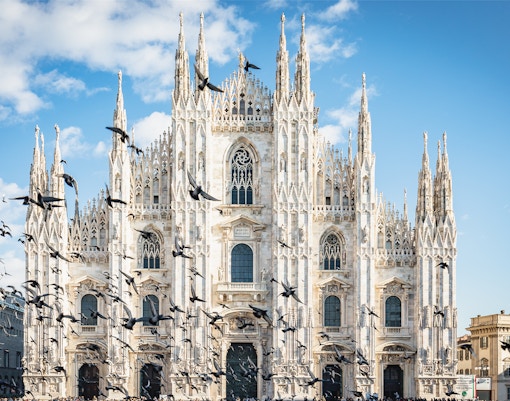
The Duomo di Milano is best known for its dramatic Gothic architecture, its forest of spires on the rooftop terraces, and the Madonnina statue crowning the main spire. It’s also famous for being clad almost entirely in pink-white Candoglia marble.
Unlike many Italian churches built with brick, the Duomo was designed to be covered in Candoglia marble. A dedicated quarry was granted to the cathedral in the late 14th century, ensuring a steady supply of marble transported to Milan via canals.
Yes. Many of the Duomo’s most interesting facts—such as the centuries-long construction, the rooftop spires, and the ongoing restoration work—directly shape the visitor experience. These details help explain why access rules, terraces, museums, and archaeological areas are all part of the cathedral complex today.
The Duomo is considered the largest church in the Italian Republic. While St. Peter’s Basilica is larger, it is located in Vatican City, which is a separate sovereign state and not part of Italy.
Construction of the Duomo began in 1386 and officially concluded in 1965, meaning it took nearly 600 years to complete. This unusually long construction period explains why the cathedral reflects multiple architectural styles and eras.
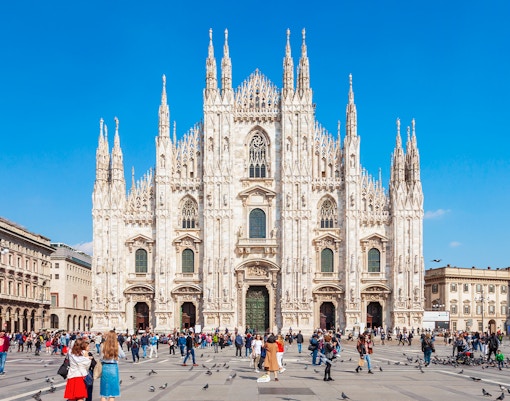
Work began in 1386, but the cathedral’s “final details” weren’t completed until 1965, one reason the Duomo blends centuries of craft and changing styles into a single building you can still visit today.
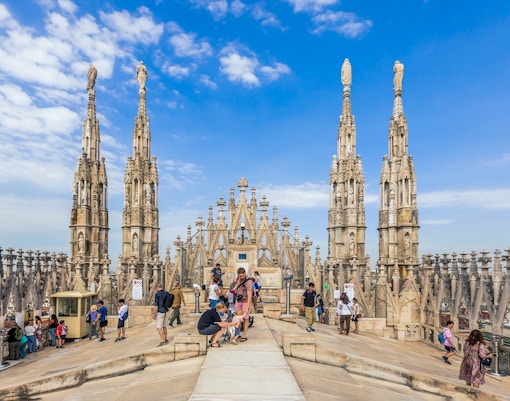
The Duomo’s famous skyline isn’t just one tower: the terraces feature 135 richly ornate spires, many rising about ~17 m above the roofline. Walking the terraces puts you at sculpture-level with this dense “stone forest.” (duomomilano.it, date not shown; en.wikipedia.org, date not shown)
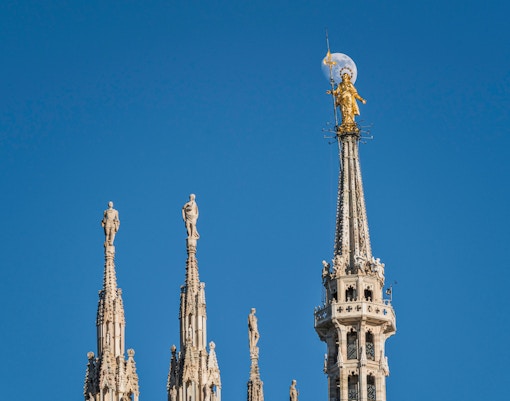
The cathedral’s best-known symbol, the Madonnina, sits atop the main spire. The operator notes the main spire was built 1765–1770, and the Madonnina was placed at the end of 1774, made from gold-embossed copper sheets.
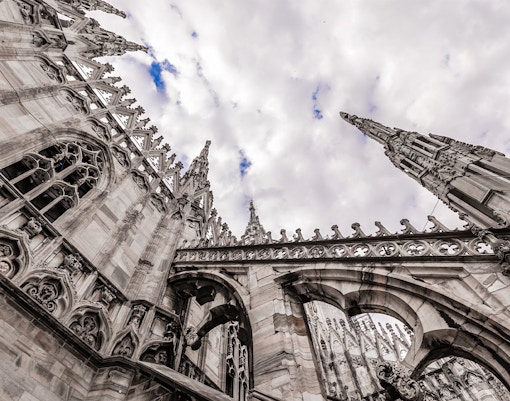
Gian Galeazzo Visconti switched the plan from brick to marble and, on 24 Oct 1387, ceded the Candoglia quarry to the Duomo’s institution—granting free transport to Milan via waterways. It’s a rare case of a monument’s material supply being formally “set up” for it.
The Veneranda Fabbrica del Duomo was established in 1387 and remains responsible for conservation and restoration of the cathedral complex today—one reason upkeep is treated as a permanent “worksite,” not a finished job.
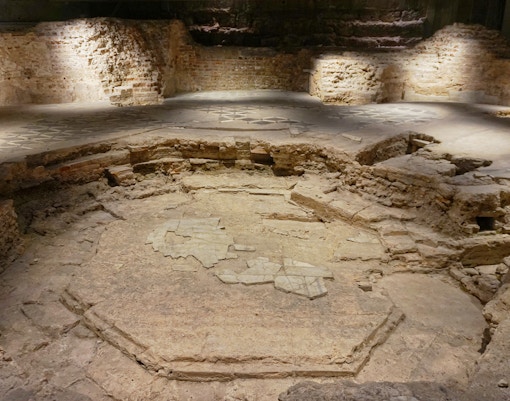
The operator explains the Duomo was built on the area of earlier basilicas Santa Maria Maggiore and Santa Tecla, and that their remains—along with those of the Baptistery of San Giovanni alle Fonti—are still visible in the Archaeological Area.
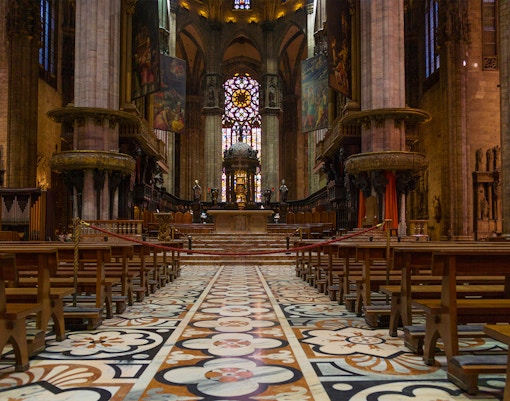
Duomo’s official history notes construction began from the apse, highlighting its “awe-inspiring” stained-glass windows, then moved toward the transept and naves, leaving the long-running challenge of closing the vaults to be solved later. It’s a reminder that parts of what you see were once urgent engineering decisions.
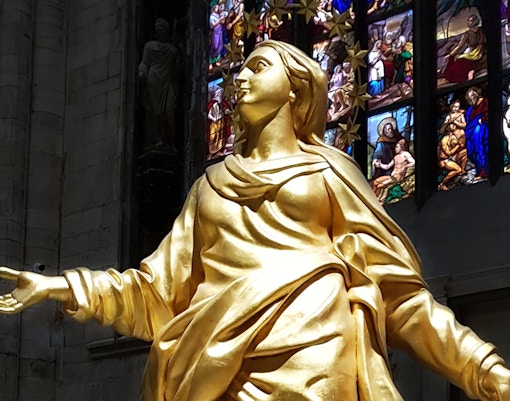
A Duomo Museum guide document explains that the museum courtyard displays a life-size copy of the Madonnina made in 2015, replicating the statue placed on the main spire in 1774. It was designed as a faithful copy so visitors can study it at human scale.
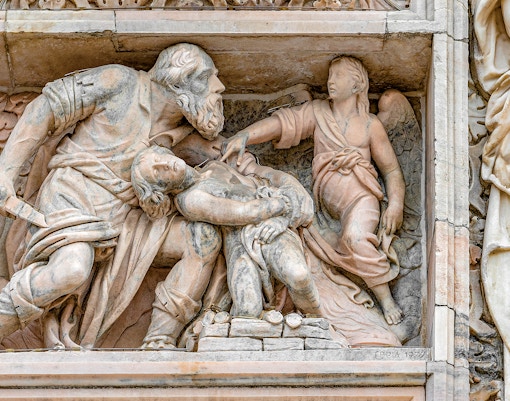
The operator describes the Marble Yard as a laboratory where marble from the quarry is processed into architectural elements, ornaments, sculptures, and statues. In other words, some of the Duomo’s “craft” is not just historical, it’s an active, specialized production process.
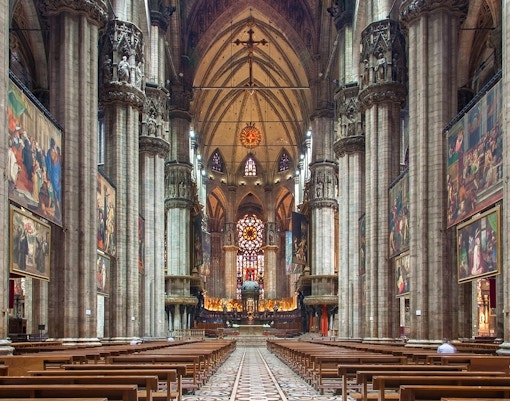
A widely cited reference notes the Duomo is the largest church in the Italian Republic (with St. Peter’s Basilica being larger but located in Vatican City, a separate sovereign state). This matters for visitor expectations: it’s built on an almost stadium-like interior scale.

Reference specifications list a capacity of 40,000 people, underscoring how much the Duomo is built around mass gatherings—not just sightseeing. That scale is why even “quiet” moments inside still feel monumental and why movement/space are part of the experience.
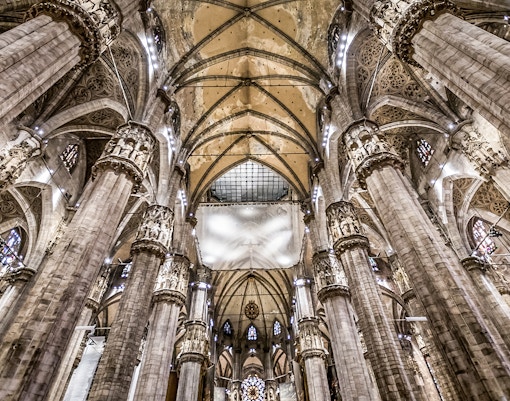
Reference data puts the cathedral’s maximum height at 108.5 m (to the top spire). Even if you never climb the terraces, this figure helps explain why the Duomo dominates Milan’s city-center sightlines and why rooftop views feel unusually elevated for a historic church.